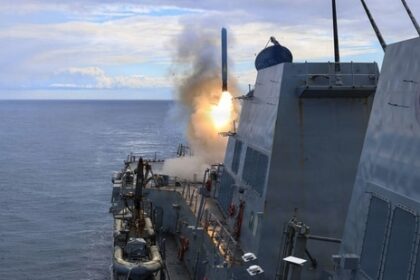



As days pass by, the West Asian scenario is becoming graver and grimmer. The war that began eight weeks ago has passed through two futile talks. Yet the ceasefire with its spirits much stymied, continues. This is despite the US naval blockade off the shore of 13 Iranian ports. Amidst persistent geopolitical tension and mounting supply chain disruptions, a question that haunts is who gains. This tricky question is the key to the regional imbroglio as the UAE after a calculated assessment of its own national interest leaves the 12-member OPEC as well as the broader 10-member OPEC plus. The logical deconstruction of UAE’s historic decision would reveal that the announcement of the exit after almost six decade-long membership of OPEC was not abrupt. Rather ever since the American aggression began to target Iran, and the latter undaunted, retaliated by launching attacks first on the US military bases followed by oil facilities in neighbouring Arab States, a kind of “alarm anxiety” swept across West Asia. Overnight the production of oil got halted and capped to mend the damage.

The shock was an eye-opener for the beleaguered Arab nations in the sense they could no longer depend on the US for security. To add more salt to the wound, Trump reportedly lashed out at the OPEC members saying that US defends them while they exploit this by imposing high oil prices. It was an unexpected affront to members of OPEC. So, while the Arab States of OPEC were perforce compelled to lean towards individual hedging, as Saudi Arabia unilaterally entered a defence pact with Pakistan and received a contingent of around 13,000 Pakistani troops plus a number of fighter jets, the rest of the regional Arab States were left to their own devices. These States pinned their faith on the second talk planned to be held at Islamabad but ultimately when no formal parleys were held, it made them more desperate.
The decision of the UAE implies that internally it was preparing to align more closely with some extra-regional power, probably with the US because trade is always easier to operate under the tutelage of a hegemonic power. So, when Iran attacked the Arab economies, it signalled the beginning of the end of OPEC’s hegemony. UAE was biding time, waiting for the opportune moment to defect.
So inwardly the solidarity among the members was gone as OPEC could neither evolve a common formula for safeguarding the interests of its members nor did it initiate any concrete measure to deter Iran or put sufficient pressure on the US to ease the shipment of energy through the narrow chokepoint of the Strait of Hormuz. All it did was expose its vulnerability in the face of conflict escalation, thus showing cracks and division of an already fractured alliance.
As far as OPEC is concerned, the cartel contributing to roughly 40% of the crude oil output of the world, is virtually led by the Saudis who holds authoritative command over production to maintain price floors and also takes decisions for adjusting production based on revenue, investment etc. Now as the UAE departs, it confirms that regional geopolitics must have spilled over to complicate the coordination and management of the organisation. In recent times the different approaches of both Saudi Arabia and UAE on the issues of Yemen and regional maritime security were clear. So, in all probability the twin factors: The tussle with Saudi Arabia and the calculus of the security of a collective framework versus independent economic risk-taking and manoeuvring were responsible for shaping the UAE’s radical decision.
The announcement of the UAE is bold because it would help the $621.55 billion economy of the Gulf nation to increase its share of the global oil market by freeing it from the obligation of compliance with the OPEC mandate related to supply cuts. As the current market has high oil demand, UAE stands to make a fortune by optimising production capacity of crude from 3.4 million bpd to 5 million bpd and corresponding monetisation of its oil resources. So, this withdrawal would allow the Emirates to insulate its energy strategy from the geopolitical agendas of other members of OPEC and OPEC+, particularly Saudi Arabia.
This has a flip side too as a unilateral move to exert autonomy might prove to be a risky one because the current market remains highly volatile. So, defection from OPEC means not only enfeebling the cartel poised to lose 15% of its capacity but UAE would also run the risk of losing influence over global price-setting mechanisms. That is why, UAE tends to side with the US and deems it suitable to steer clear the constraints to higher production and ramping up its capacity because in future oil demand is poised to stagnate and decline with clean energy ushering in structural changes in the global energy market.
(The views expressed are personal)
This article is authored by Gouri Sankar Nag, professor & head, department of political science, S-K-B University, West Bengal.