


India
oi-Prakash KL

The Supreme Court on Tuesday refused to immediately restore the earlier arrangement under which Hindus and Muslims were allowed to worship at the Bhojshala-Kamal Maula complex at the site on different days.
A Bench led by Chief Justice of India Surya Kant agreed to hear the petitions but denied permission to perform namaz. The apex court was hearing petitions filed by various Muslim parties challenging the Madhya Pradesh High Court judgment, which declared that the historical site in Madhya Pradesh’s Dhar is a Temple dedicated to Goddess Saraswati and prohibited the offering of namaz.
The Supreme Court declined to immediately restore worship arrangements at Madhya Pradesh’s Bhojshala-Kamal Maula complex, hearing challenges to a High Court ruling calling it a temple. It allowed temporary Friday namaz nearby and barred ASI structural changes, with the case to be heard in three weeks.

“Let us not pass any order which can cause tension,” Live Law quoted CJI as stating. The court has asked the Madhya Pradesh government to provide a nearby open space where Muslims can offer Friday namaz between 1 pm and 3 pm as a temporary arrangement until the case is decided. The matter will now be heard after three weeks.
Further, the judges have directed the Archaeological Survey of India (ASI) not to make any structural changes to the monument without its permission.
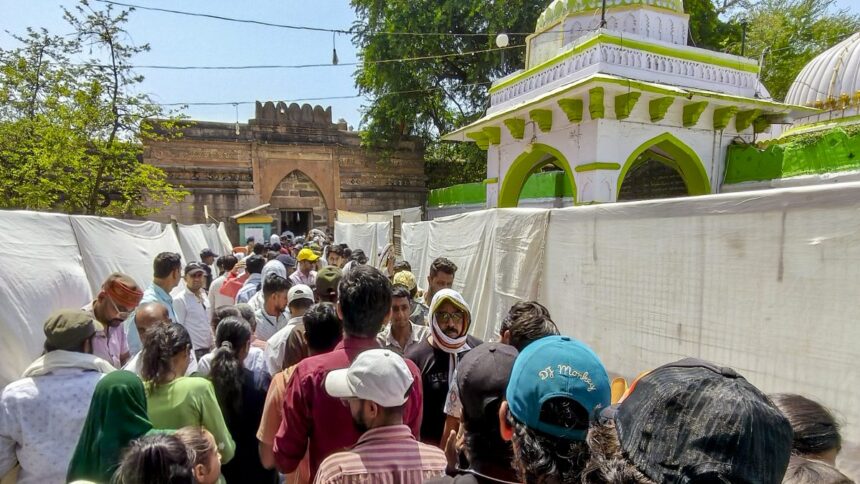
The Bhojshala-Kamal Maula complex in Dhar has divided the Hindus and Muslim communities as both parties have made competing claims. Hindus believe that the site is an ancient temple dedicated to Goddess Saraswati, while Muslims consider it the Kamal Maula Mosque.
The ASI had come up with an arrangement in 2023 where the Hindus were allowed to perform pooja on specified days while Muslims offered namaz.
Taking the ASI’s report into consideration, the Madhya Pradesh High Court ruled that the site is a temple and cancelled the 2003 arrangement in May, this year. As a result, namaz at the site was stopped, though the court said Muslims could seek land elsewhere in Dhar to build a mosque.
However, the Muslims have argued that the verdict given by the Madhya HC disturbed a system that had existed for centuries. The petitioners claim that Muslims have been offering namaz for around 700 to 800 years and that the arrangement allowing both communities to worship peacefully had worked for nearly two decades.
So, they requested the apex court to temporarily restore the earlier system until the final verdict, but the Madhya Pradesh government opposed restoring the previous arrangement. It argued that two months had passed since the High Court’s judgment and reversing the current situation could create administrative difficulties.