


India
oi-Oneindia Staff

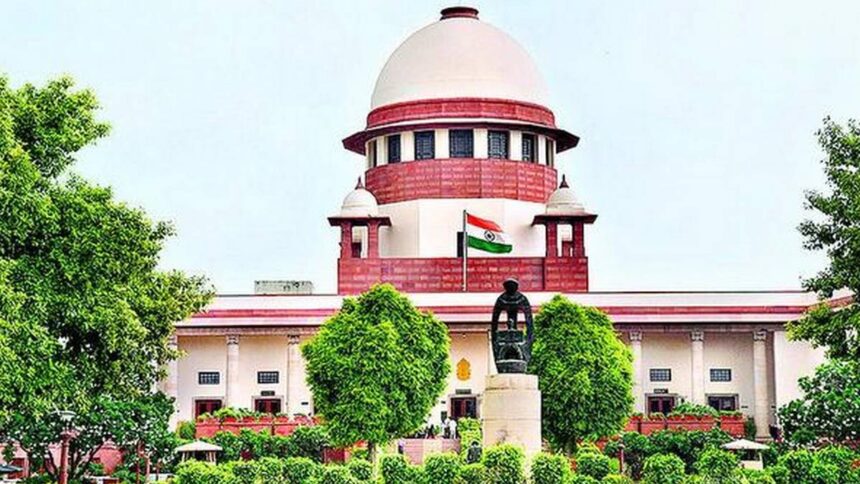
The Supreme Court’s decision not to initiate contempt proceedings after a petitioner-in-person disrupted court proceedings on 10 July has reopened a wider debate on judicial authority, open courts and the risks of viral courtroom clips. Senior advocate and Senior Managing Partner of Mumbai-based dispute resolution firm RKS Associate, Rakesh Kumar Singh said the Bench showed restraint at a moment when it could have easily invoked its contempt powers.
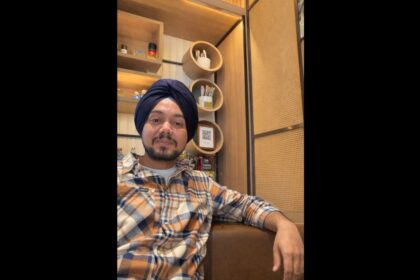
Rakesh Kumar Singh has practised mainly before the Bombay High Court for more than two decades.
On July 10, the Supreme Court, with Justices K.V. Viswanathan and Alok Aradhe, declined contempt proceedings against a disruptive petitioner, citing his condition. Advocate Rakesh Kumar Singh called this restraint an institutional assertion of maturity, sparking debates on courtroom discipline, open justice, and managing distressed litigants.
Sharing his views on the recent event, Rakesh Kumar Singh said the court’s refusal to punish the petitioner was not weakness, but a confident assertion of institutional maturity.

The disruption involved petitioner-in-person Prabal Pratap, who threw case papers in the Supreme Court and abused the Chief Justice of India. The Bench of Justice K.V. Viswanathan and Justice Alok Aradhe declined to initiate contempt action, recording that it was doing so considering the petitioner’s condition. Justice Viswanathan later observed that the man appeared “very disturbed”.
Why the Supreme Court’s contempt restraint matters
Rakesh Kumar Singh said contempt jurisdiction exists to protect the administration of justice, not to avenge insults directed at judges. In his view, the court had the legal power to act under the Contempt of Courts Act and Article 129 of the Constitution, which recognises the Supreme Court as a court of record with contempt powers.
“It was more than the right call. I would say it was the most authoritative act performed in any courtroom in India that day,” Rakesh Kumar Singh said. He argued that no serious criticism would have followed had the Bench proceeded against the petitioner. That, according to him, made restraint more significant.
“An institution that must punish every insult in order to feel secure is an institution that is not secure,” he said. The dignity of a court, Rakesh Kumar Singh added, is not restored merely by punishment. It comes from its ability to protect the judicial process without turning contempt into personal vindication.
RK Singh drew a distinction between excusing conduct and recognising distress. He said there was no justification for abusive behaviour in court, but the Bench appeared to have assessed the situation in real time. By the time the issue arose, he noted, the petitioner had already been removed and the court’s work had moved forward.
In that context, Rakesh Kumar Singh said a contempt committal would have done little to protect any ongoing proceeding. “It would have punished an affliction rather than protected a process,” he said. The court, in his reading, decided that its institutional ego did not require protection.
The petitioner-in-person problem behind the disruption
Rakesh Kumar Singh cautioned against making the petitioner the central story, even though the incident became the most visible part of the case. He pointed to the procedural path that brought the litigant to the Supreme Court. The petitioner had approached a Magistrate seeking registration of an FIR.
His application under Section 173(4) of the Bharatiya Nagarik Suraksha Sanhita was directed to be treated as a private complaint. He then moved the Allahabad High Court, which held that he had an efficacious alternative remedy and sent him back to the trial court. He later approached the Supreme Court in person and lost.
RK Singh said each stage may have been legally correct. Yet, from the litigant’s point of view, the system may have seemed like a series of doors closing. That gap between procedural correctness and lived experience, he suggested, is where many unrepresented litigants begin to break down.
“Those of us who practise know this type of litigant, and we know that he does not arrive at that condition in a single morning,” Rakesh Kumar Singh said. He linked such situations to problems far outside the Supreme Court: police inaction, lack of affordable counsel, poor awareness of legal aid and possible medical distress.
The incident has therefore raised questions not only about courtroom discipline, but also about how the justice system deals with litigants who appear without lawyers. Courts routinely hear petitioners-in-person, but such cases can become difficult when legal frustration, emotional distress and procedural complexity collide in open court.
Live-streaming and the viral clip dilemma
The episode also placed renewed focus on court live-streaming. Rakesh Kumar Singh said live-streaming remains a democratic gain and should not be rolled back because an uncomfortable moment was captured. Open justice, he argued, cannot be treated as a privilege withdrawn whenever the camera records something unpleasant.
At the same time, he supported concerns raised by lawyers about selective circulation of courtroom clips by online channels and commentators. According to him, the purpose of streaming court proceedings is to help citizens understand justice in action, not to turn edited fragments into outrage-driven content.
“A courtroom is not a content pipeline,” Rakesh Kumar Singh said. He drew a line between broadcasting proceedings in the public interest and commercially exploiting a short clip, especially when it involves a distressed litigant. That distinction, he said, is workable and increasingly necessary.
His proposed solution is not to shut cameras, but to regulate downstream use. Singh said a framework is needed to govern the commercial exploitation of live-streamed proceedings. Such a system, in his view, should protect open access while preventing courtroom misfortunes from becoming monetised spectacles.
The 10 July incident has left the Supreme Court facing two linked challenges: preserving dignity in the courtroom and preserving openness outside it. Rakesh Kumar Singh’s argument is that the Bench met the first challenge through restraint. The second now requires rules that protect public access without rewarding distortion, humiliation or selective outrage.