


India
oi-Prakash KL

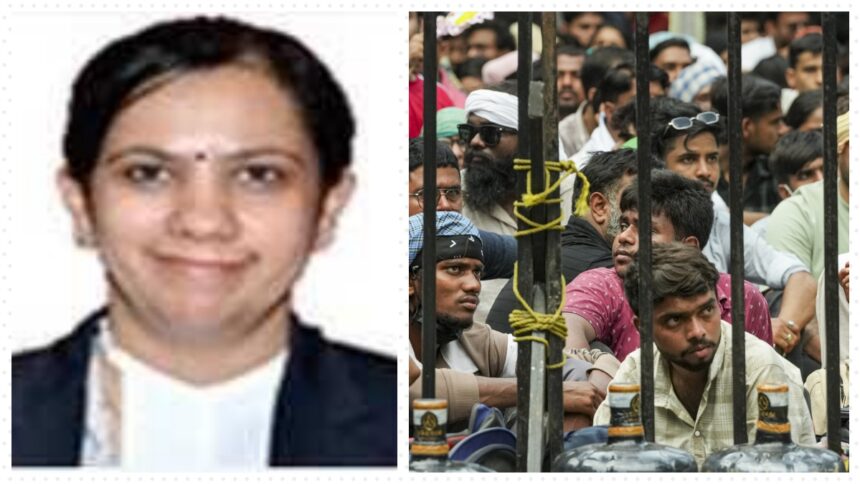
The Delhi High Court has designated Judge Anu Grover Baliga as the Special Judge of a newly created fast-track court to exclusively hear criminal cases related to question paper leaks and the use of unfair means in public examinations.
The decision was taken amid the protests at Jantar Mantar by youths over the alleged NEET-UG 2026 paper leak.
Delhi High Court designated Judge Anu Grover Baliga as Special Judge for a fast-track court handling exam paper leak cases, following protests and PM Modi’s promise of stricter laws, as activist Sonam Wangchuk concluded his hunger strike.

Judge Baliga has been transferred from her post as Judge-in-Mediation at the Delhi High Court Mediation and Conciliation Centre to take charge at the Rouse Avenue Court Complex with immediate effect, News18 reported citing an official order issued on July 23.
As an apparent attempt to build confidence in the eyes of protestors, Prime Minister Narendra Modi, in a late-night video, said that the Centre will bring in stricter anti-leak legislation.
The Union Cabinet is set to review the proposed measures on Friday, with the government pushing to get the bill passed in Parliament next week. He stated, “I know that paper leak is not an ordinary issue. It is very painful for lakhs of students and their guardians.”
“Numerous effective measures have been taken in the past two and a half months since the paper leak incident. The culprits have been caught and are in jail. Our most important responsibility was to ensure that students’ year is not wasted. The government used all its might to ensure that 22 lakh students could take their exams in the shortest possible time,” he added.
Speaking about the proposed fast-track courts, he added, “On the 19th July, the results were declared. I directed the departments today to establish a fast-track court. The departments presented me with the resolution late at night. This resolution, along with the provision for a fast-track court and harsh punishment, will be discussed in the cabinet tomorrow. After the suggestions of cabinet colleagues, it will be finalised, and since the second week of Parliament is starting from Monday, efforts will be made to get that bill passed in the House as soon as possible.”
On the other hand, climate activist Sonam Wangchuk ended his 26-day hunger strike on Friday at Medanta Hospital in Gurugram in the presence of Union ministers JP Nadda and Jitendra Singh. He had backed the protests in the national capital, demanding the resignation of Education Minister Dharmendra Pradhan.
“I’m grateful and happy to break my fast. Thank you,” Wangchuk said. He then thanked his wife saying, “Gitanjali has always been by my side. I don’t want to thank you but express my feelings.”
END OF HUNGER… BEGINNING OF ACCOUNTABILITY…!
Sonam Wangchuk ends his fast after 26 days upon getting assurance from the government and members of parliament of all political parties that the issue of accountability in the failing examination system will be discussed on the… pic.twitter.com/0C9YX5VlsL— Sonam Wangchuk (@Wangchuk66) July 24, 2026
Welcoming the climate activist’s decision to end the hunger strike, Prime Minister Narendra Modi wished Wangchuk a speedy recovery.
“I urge Sonam ji to follow his routine as per the doctors’ advice and regain his old weight as soon as possible. I pray to the Lord that Sonam ji remains healthy,” PM Modi said in a post on X.
Wangchuk started his indefinite fast on June 28 after joining student-led demonstrations spearheaded by the Cockroach Janta Party (CJP) at Jantar Mantar. The group has been demanding systemic educational reforms, accountability for exam failures, and the resignation of Union Education Minister Dharmendra Pradhan.