By using this site, you agree to the Privacy Policy and Terms of Use.
Accept
Next India Magazine
  • Home
    • Home 2
    • Home 3Hot
    • Home 4
    • Home 5New
  • Home
  • Opinion

    That Provide Critical Analysis on Political Decision-Making

    krutikadalvibiz@gmail.com

    Analyzing Global Dynamics and Unraveling Key Policy Initiatives

    krutikadalvibiz@gmail.com

    Luxurious Stays Redefining Hospitality at Hotel Havens

    krutikadalvibiz@gmail.com

    Electric Cars Subsidies by German Taxpayers End Up on Foreign Roads

    krutikadalvibiz@gmail.com

    Challenge and Inspire Future of Political Thought

    krutikadalvibiz@gmail.com

    Assessing the Diplomatic Challenges and Global Security

    krutikadalvibiz@gmail.com
  • World
  • Politics
  • Market
  • Health
  • Insurance
  • Pages
    • Blog Index
    • Contact US
    • Search Page
    • 404 Page
    • Technology
    • World
  • Pages
    • Blog Index
    • Search Page
    • 404 Page
  • Technology
    TechnologyShow More
    Dr. Nishant Sawant: The Mind Behind Secure Digital Progress
    4 Min Read
    NASA’s Artemis II Mission Rekindles Humanity’s Dream of Deep Space Exploration
    5 Min Read
    Buying a Car Will Soon be Like Buying a Phone, Why Your Next Car Could be an EV
    Hands-On With the iPhone 13, Pro, Max, and Mini
    4 Min Read
    Explained: What are Smart Glasses and How Do It Work?
    4 Min Read
  • Posts
    • Post Layouts
      • Standard 1
      • Standard 2
      • Standard 3
      • Standard 4
      • Standard 5
      • Standard 6
      • Standard 7
      • No Featured
    • Gallery Layouts
      • Layout 1
      • Layout 2
      • layout 3
    • Video Layouts
      • Layout 1
      • Layout 2
      • Layout 3
      • Layout 4
    • Audio Layouts
      • Layout 1
      • Layout 2
    • Post Sidebar
      • Right Sidebar
      • Left Sidebar
    • Review
      • Stars
      • Scores
      • User Rating
    • Content Features
      • Highlight Shares
      • Inline Mailchimp
      • Print Post
      • Inline Related
      • Source/Via Tag
      • Reading Indicator
      • Content Size Resizer
    • Table of Contents
      • Full Width
      • Left Side
    • Sponsored Post
  • Contact
  • Pages
    • Search Page
    • 404 Page
Reading: The economic centre of gravity is moving east
SUBSCRIBE
Next India MagazineNext India Magazine
Font ResizerAa
  • My Saves
  • Economics
  • Technology
  • My Interests
  • World
  • My Feed
  • History
  • Business
  • Technology
  • Lifestyle
  • Fashion
  • Health
  • Technology
  • World
Search
  • Pages
    • Blog Index
    • Contact Us
    • Search Page
    • 404 Page
  • Home
    • Home 1
    • Home 2
    • Home 3
    • Home 4
    • Home 5
  • Home
  • Blog
  • Categories
    • Technology
    • Lifestyle
  • Personalized
    • My Feed
    • My Saves
    • My Interests
    • History
  • Demos
  • Categories
    • Technology
    • Business
    • Fashion
    • Economics
  • Bookmarks
  • Categories
    • Technology
    • Health
    • World
  • More Foxiz
    • Blog Index
    • Sitemap
  • Bookmarks
  • Contact
  • More Foxiz
    • Sitemap
Have an existing account? Sign In
Follow US
  • Home
  • World
  • Contact
  • Blog
© Foxiz News Network. Ruby Design Company. All Rights Reserved.
BusinessLifestyleStartup

The economic centre of gravity is moving east

India Times Now
Last updated: August 2, 2026 3:40 pm
India Times Now
6 Min Read
Share
SHARE

For most of the modern era, the world’s economic centre of gravity sat far from Asia’s eastern half. That is changing. Trade, investment, manufacturing and, increasingly, innovation are shifting toward what is now being called the Global East, the broad sweep of economies running from India across Southeast Asia and out into the Pacific.
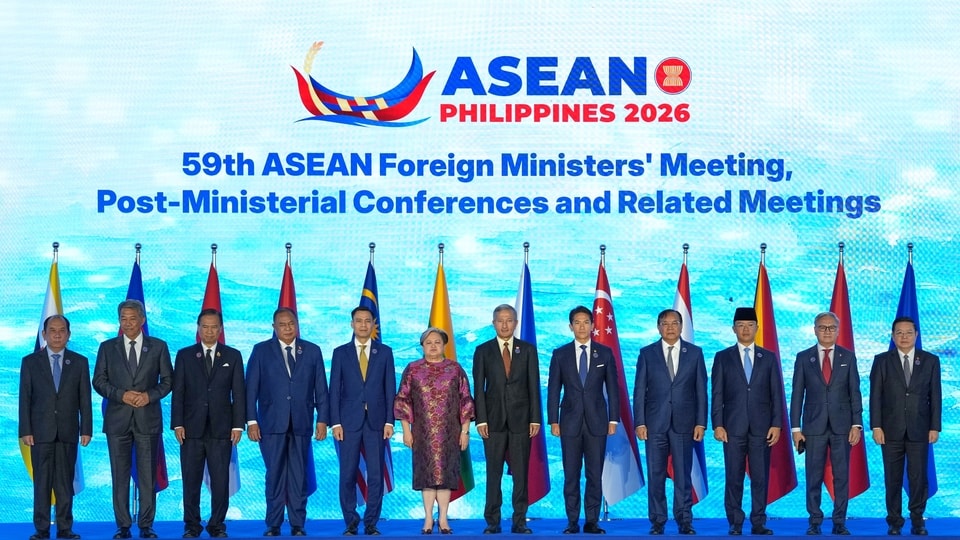
ASEAN (AP)
ASEAN (AP)

For the first time in a long while, the economies of this region are in a position to shape the terms of their own growth. They hold a rising share of the world’s people, its producers, its savings and its new demand. The question is no longer whether the Global East will matter to the world economy. It is what kind of economy the region chooses to build among itself–how open, how connected, how resilient. When ministers, investors and company leaders gathered in Singapore for GEC East, the eastern edition of the Global Economic Cooperation forum a few days ago, they came to discuss how to build this together.

The past few years have sharpened the need for ever-closer cooperation. Supply shocks, from a pandemic to conflict, have reminded everyone that an efficient economy is not automatically a secure one. The lesson most governments drew was not to turn inward, but to broaden out–to widen their sources of supply, deepen the partners they can count on, and build more of what matters within trusted networks. For the sectors that decide long-term competitiveness, such as semiconductors, medicines, clean-energy technology and critical minerals, resilience has come to mean something close to economic security. The encouraging part is that this is a positive-sum project. Building more capacity in more places makes the whole system steadier.

India’s own Act East Policy keeps Southeast Asia and ASEAN at the centre of how we engage with the wider region, supporting ASEAN’s centrality and the region’s own outlook on the Indo-Pacific. India’s maritime vision, launched a decade ago as SAGAR–Security and Growth for All in the Region–was widened in 2025 into MAHASAGAR, which folds economic diplomacy, technological connectivity and sustainability into the same frame. The thread running through all of it is the concept of a free, open and inclusive region, open to all comers.

Underneath the doctrine sits a fast-evolving economic reality. Trade between India and ASEAN already runs past a hundred billion dollars a year, and the two are updating the agreement that governs it to fit ever-growing economies. Capital is moving with the trade: Singapore is now the single largest source of foreign investment into India, and its long-horizon funds are building positions in Indian infrastructure and technology. India and Japan have set a target of ten trillion yen of Japanese investment over the coming decade; India and Korea are working to roughly double their trade by 2030. Payment systems are being stitched together so money can move as easily as goods, from Singapore across to the Gulf. And practical frameworks such as India’s Indo-Pacific Oceans Initiative, are turning shared intentions into working projects on connectivity, clean energy and maritime safety.

Moreover, we are seeing a real shift in how regional economies are working with one another. Cross-border investment here once meant discrete projects – a plant, a port, a stake in a company. It increasingly means whole ecosystems: electronics and advanced manufacturing, healthcare innovation, clean energy, digital infrastructure. The aim is to knit these into integrated regional value chains that draw on each economy’s complementary strengths–for example, India’s scale and manufacturing depth backed by technology innovation, Singapore’s capital and connectivity and the strengths of each regional economy – so the pieces are built to fit together rather than compete. What emerges is a production map with more than one pathway through it, and an investor base that takes a position in the ecosystem rather than any single asset within it. That is the work of the coming years, and it is how the Global East gets built.

The most durable connections in all of this are people-to-people. Economies are, in the end, joined by a diaspora that carries trust and capital across borders, by the students and professionals who move abroad and bring skills home, and by universities and institutions that decide to work together. This also contributes to a trust factor that ties strategic, economic and social imperatives together, and results in a shared commitment towards building the region as a true global engine and innovation powerhouse.

(The views expressed are personal)

This article is authored by Priyam Gandhi-Mody, executive director, Future Economic Cooperation Council (FECC).


Share This Article
Facebook Email Copy Link Print
Previous Article Veteran Mountaineer Nirmal Purja Found Dead After Broad Peak Avalanche in Gilgit-Baltistan
Next Article Who Is the Man Who Threw a Slipper at Pappu Yadav? Police Reveal Key Details
Leave a Comment Leave a Comment

Leave a Reply Cancel reply

Your email address will not be published. Required fields are marked *

You Might Also Like

BusinessLifestyleStartup

Mis-selling regulations need a lot more teeth

It has taken more than 20 years of bank branches…

9 Min Read
BusinessLifestyleStartup

‘Through ruin and rapture…’: Mouni Roy shares first post since split rumours with husband Suraj Nambiar

Amid rumours of her split with husband Suraj Nambiar, actor…

3 Min Read
BusinessLifestyleStartup

Twin Falls drive-by shooting: Gunfire erupts at Trotter Drive home; is it connected to Idaho In-N-Out shooting?

Twin Falls police are investigating a drive-by shooting that took…

4 Min Read
BusinessLifestyleStartup

Sonu Nigam performs on stage despite suffering from nerve-related heath condition for over a week: ‘Show must go on’

For singer Sonu Nigam, the show must go on! The…

3 Min Read
Next India MagazineNext India Magazine
Follow US
© 2026 Next India Magazine powered by India Times Now. All Rights Reserved.
Welcome Back!

Sign in to your account

Username or Email Address
Password

Lost your password?