



Business
oi-Swastika Sruti

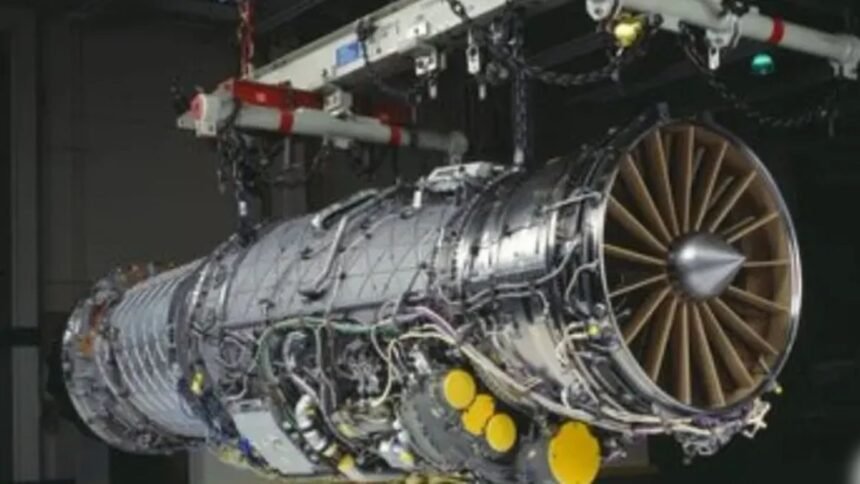
The Reliance Industries Limited and British aerospace manufacturer Rolls-Royce have declared their intention to study the feasibility of developing a home-grown fighter jet engine for the AMCA program of India.

Reliance Industries and Rolls-Royce will study the feasibility of developing indigenous fighter jet engines for India’s AMCA program, exploring the establishment of an Aerospace Gas Turbine Complex for the engine’s complete lifecycle.
This partnership may prove to be crucial in India’s quest to develop expertise in jet engine technology used for fighter jets and to reduce dependence on external parties for this essential defense technology.
On Friday, the two firms stated that they plan to study the possibility of establishing an Aerospace Gas Turbine Complex in India. This complex could encompass all aspects of engine design, engineering, manufacture, testing, production, and maintenance into one ecosystem.
News Alert! Reliance Industries, Rolls-Royce announce partnership to make engine for Indias Advanced Medium Combat Aircraft programme. pic.twitter.com/iJxHi42fya
— Press Trust of India (@PTI_News) August 14, 2026
However, it should be noted that this is just an exploratory step and the firms have not signed a joint venture or agreement yet.
Proposed Aerospace Gas Turbine Complex In India
Under the proposed plan, Reliance and Rolls-Royce would explore creating a specialised facility that could support the complete lifecycle of advanced aero-engine development.
The proposed complex would potentially cover:
- Engine design and engineering
- Manufacturing
- Testing and certification-related capabilities
- Production
- Maintenance and long-term support
- Development of future power and propulsion technologies
The companies said the facility could eventually become a wider platform for advanced aerospace propulsion, rather than being limited to a single aircraft programme.
Reliance Industries Limited (Reliance) and Rolls-Royce (LSE: RR., ADR: RYCEY) today announced their strategic intent to partner and offer capabilities for the design, development, manufacturing and delivery of a sovereign indigenous combat engine for Indias Advanced Medium… pic.twitter.com/0zFn8zqusb
— ANI (@ANI) August 14, 2026
What Reliance And Rolls-Royce Will Bring
The suggested partnership would be a collaboration between two firms in different industries.
The Rolls Royce would be able to provide expertise in the development of aero-engines, engineering, and propellers.
On the other hand, the Reliance Industries would offer its expertise in manufacturing, technology, and implementation of projects.
Thus, both sides are expected to benefit from the synergies of the collaboration.
Anant Ambani Highlights Strategic Self-Reliance
Reliance Industries Executive Director Anant Ambani said the proposed partnership reflects the importance of developing sovereign capabilities in strategically important technologies.
He said India’s strategic autonomy requires domestic capabilities in critical technologies and described the proposed collaboration as an effort to combine Rolls-Royce’s propulsion expertise with Reliance’s manufacturing and execution capabilities.
According to Ambani, the long-term objective is to develop an aero-engine ecosystem that can become self-reliant and eventually compete globally.
Rolls-Royce Calls It A Major Milestone
Rolls-Royce CEO Tufan Erginbilgic said the proposed initiative would bring together the company’s long-standing engineering expertise and Reliance’s capabilities in India’s industrial sector.
He described the proposal as a major step towards creating a stronger and more self-reliant aerospace ecosystem in India.
For Rolls-Royce, the proposed project could also deepen its involvement in India’s growing aerospace and defence manufacturing sector.
Why The AMCA Engine Is So Important
The Advanced Medium Combat Aircraft (AMCA) is India’s planned fifth-generation stealth fighter programme.
The aircraft is being developed with advanced capabilities, including stealth features, modern sensors and electronic warfare systems. But one of the most difficult parts of developing a modern fighter is its propulsion system.
India has historically relied on foreign manufacturers for fighter aircraft engines. Developing a powerful and reliable indigenous combat engine has therefore remained a major technological challenge.
A domestic engine capability would give India greater control over a critical part of its fighter aircraft supply chain.
Indigenous Engine Could Benefit Future Fighter Projects
The significance of the proposed project would go beyond the scope of AMCA.
Development of a state-of-the-art combat engine needs skills and technologies including those of advanced materials, precision engineering, testing, and maintenance.
If India were to develop such technology, it might be used in future fighter aircraft and other military aerospace projects.
It will also enable Indian industry to have a bigger presence in the international aerospace value chain.
Proposal Is Not Yet A Finalised Joint Venture
Despite the strategic significance of the announcement, the proposed partnership should not be confused with a completed agreement.
Reliance and Rolls-Royce have only announced their intention to explore the establishment of the Aerospace Gas Turbine Complex.
The companies have not yet announced details such as the total investment, ownership structure or a definite timeline for the facility.
The proposal will therefore have to go through further discussions and the necessary approvals before an operational project can take shape.
Could Collaboration Expand Beyond AMCA?
The proposed cooperation could eventually extend beyond the AMCA engine.
The companies have indicated that the proposed facility could support opportunities across defence and civil aerospace, as well as emerging power and propulsion technologies.
If developed as a broader aerospace centre, it could potentially support multiple engine and propulsion programmes over time.
That would make the proposed complex relevant not only to India’s fighter aircraft ambitions but also to its wider goal of building a competitive aerospace manufacturing industry.