



I have spent years walking into dairy sheds that most people never get to see. Not the postcard version — the cow in a green field, the milkman on a bicycle at dawn — but the everyday, working version: Concrete floors, a rope, a bucket, a system built to get milk out the door quickly, every single morning.
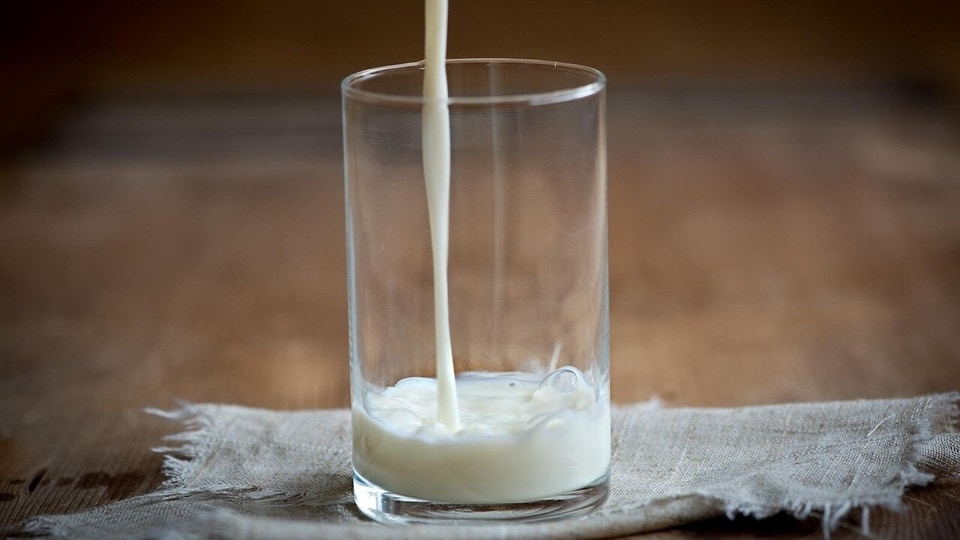
Most of us never walk in behind the carton. It’s just how the supply chain is built. A clean label and a price per litre are all we usually see, and there’s nothing wrong with wanting to know a little more about what sits behind them. So here is some of what I’ve seen, said plainly, because I think it’s worth knowing rather than worth worrying about.
In several of the sheds I’ve visited, I’ve seen: Bottles and syringes of oxytocin, a hormone sometimes injected into cows to force milk to flow faster. Its use for this purpose is against the law in India, and has been for years, yet it keeps turning up, often enough that it looks less like a rare lapse and more like a habit in parts of the supply chain.
It’s worth being precise about what that injection actually does. In a calf’s natural feeding, the act of suckling triggers a cow’s body to release oxytocin, which makes the muscle-like cells around the udder contract and push milk down so the calf can drink. That’s the same mechanism a handler is exploiting with a syringe, except the dose is higher than the body would produce on its own, delivered without the cue that would normally accompany it, and repeated at nearly every milking. Vets and handlers who’ve spoken about the practice describe it as a hard, forced letdown rather than the gentler version that a suckling calf would trigger, and it’s a jolt to the cow’s system that gets repeated twice a day, day after day.
This is not just my observation. Other organisations have documented rampant use of oxytocin and largely unsupervised milking practices across different states. Different visits, different regions, similar findings, which is part of why it’s worth taking seriously rather than treating as one unlucky shed.
I want to be careful here, because I don’t think fear is useful and I don’t want to overstate what isn’t settled. Researchers don’t have firm answers on what, if anything, repeated oxytocin exposure means for someone drinking the milk afterwards, and I won’t pretend otherwise. What I can say is simpler: This is a banned practice, it’s more common than most people realise, and right now there’s no easy way for a shopper to know whether a particular bottle came from a treated animal or not. That’s less a health verdict than a gap in information — and gaps like that are usually worth closing, not fearing.
One more detail worth knowing: Where the milking itself takes place, and what the years leading up to it look like for the animal. In several sheds, cows are milked in conditions well below what most of us would consider clean. I’ve also seen cows kept tethered in place for most of the day, with little room to move, and nose ropes used to control and steer them during handling — a method that keeps an animal compliant through discomfort rather than training. Over time, that combination shows up on the animals themselves: Swollen joints from standing on hard concrete for years, and skin infections that go untreated because no one is checking for them.
None of this is because farmers are careless or uncaring people. Most are working inside a system that rewards speed and volume, with very little checking along the way. If there’s a gap here, it’s oversight, not in anyone’s character.
There’s a bigger fact sitting underneath all of this: A cow only produces milk after giving birth, so a dairy operation depends on keeping her in a near-constant cycle of pregnancy and calving to keep the milk flowing at all. Her calf is usually separated from her early and often allowed only a limited share of her milk, if any, before the rest is taken for sale.
Occasionally that separation happens the hard way. On some farms, when a calf dies while its mother is still lactating, farmhands make what’s known as a khal bacha — a dummy calf built from the skin of the dead calf, propped up with hay, so that the mother’s body is tricked into believing her calf is still alive and keeps producing milk. It’s a small, specific detail, but it says something larger: The entire system runs on a mother’s biology being read, managed, and in this case, deceived, for the sake of an uninterrupted milk supply.
FSSAI has, over the past year, been tightening its rules on milk adulteration and on the use of banned hormonal boosters in cattle. That’s a reasonable, useful thing to know: Regulators are treating this as a real gap worth closing, and rules on paper are only as good as the checking that happens on the ground. It’s simply where things currently stand, and where a bit more public attention could help.
Most of us pour milk for our families without a second thought, and there’s nothing wrong with that trust in ordinary times. This isn’t written to unsettle that trust; it’s written in the hope that a little more curiosity, here and there, is a healthy thing. When more people start asking simple questions like where our milk comes from, how are the animals milked, what happens to their calves; suppliers have more reason to tighten their own practices. Right now, almost nobody asks, mostly because almost nobody knows there’s anything to ask about.
I’m not suggesting anyone give up milk. I’m suggesting the question is worth asking once in a while — of your diary, your brand, your local doodhwala. You may not always get a full answer, and that’s all right. Even the asking nudges a supply chain that has long assumed nobody is paying attention. A little visibility, over time, tends to make things better.
(The views expressed are personal)
This article is authored by Abhishek Pandey, CEO, Sentient.