

By using this site, you agree to the Privacy Policy and Terms of Use.
Accept
Next India Magazine
  • Home
    • Home 2
    • Home 3Hot
    • Home 4
    • Home 5New
  • Home
  • Opinion

    That Provide Critical Analysis on Political Decision-Making

    krutikadalvibiz@gmail.com

    Analyzing Global Dynamics and Unraveling Key Policy Initiatives

    krutikadalvibiz@gmail.com

    Luxurious Stays Redefining Hospitality at Hotel Havens

    krutikadalvibiz@gmail.com

    Electric Cars Subsidies by German Taxpayers End Up on Foreign Roads

    krutikadalvibiz@gmail.com

    Challenge and Inspire Future of Political Thought

    krutikadalvibiz@gmail.com

    Assessing the Diplomatic Challenges and Global Security

    krutikadalvibiz@gmail.com
  • World
  • Politics
  • Market
  • Health
  • Insurance
  • Pages
    • Blog Index
    • Contact US
    • Search Page
    • 404 Page
    • Technology
    • World
  • Pages
    • Blog Index
    • Search Page
    • 404 Page
  • Technology
    TechnologyShow More
    Ramya Sudha Vinukonda: A Biology Teacher Turning Government School Classrooms into Spaces of Possibility
    6 Min Read
    Dr. Nishant Sawant: The Mind Behind Secure Digital Progress
    4 Min Read
    NASA’s Artemis II Mission Rekindles Humanity’s Dream of Deep Space Exploration
    5 Min Read
    Buying a Car Will Soon be Like Buying a Phone, Why Your Next Car Could be an EV
    Hands-On With the iPhone 13, Pro, Max, and Mini
    4 Min Read
  • Posts
    • Post Layouts
      • Standard 1
      • Standard 2
      • Standard 3
      • Standard 4
      • Standard 5
      • Standard 6
      • Standard 7
      • No Featured
    • Gallery Layouts
      • Layout 1
      • Layout 2
      • layout 3
    • Video Layouts
      • Layout 1
      • Layout 2
      • Layout 3
      • Layout 4
    • Audio Layouts
      • Layout 1
      • Layout 2
    • Post Sidebar
      • Right Sidebar
      • Left Sidebar
    • Review
      • Stars
      • Scores
      • User Rating
    • Content Features
      • Highlight Shares
      • Inline Mailchimp
      • Print Post
      • Inline Related
      • Source/Via Tag
      • Reading Indicator
      • Content Size Resizer
    • Table of Contents
      • Full Width
      • Left Side
    • Sponsored Post
  • Contact
  • Pages
    • Search Page
    • 404 Page
Reading: Elections Don’t Crown Kings: Minister Scindia’s ‘Arrogant’ Guna Exchange Raises Big Questions
SUBSCRIBE
Next India MagazineNext India Magazine
Font ResizerAa
  • My Saves
  • Economics
  • Technology
  • My Interests
  • World
  • My Feed
  • History
  • Business
  • Technology
  • Lifestyle
  • Fashion
  • Health
  • Technology
  • World
Search
  • Pages
    • Blog Index
    • Contact Us
    • Search Page
    • 404 Page
  • Home
    • Home 1
    • Home 2
    • Home 3
    • Home 4
    • Home 5
  • Home
  • Blog
  • Categories
    • Technology
    • Lifestyle
  • Personalized
    • My Feed
    • My Saves
    • My Interests
    • History
  • Demos
  • Categories
    • Technology
    • Business
    • Fashion
    • Economics
  • Bookmarks
  • Categories
    • Technology
    • Health
    • World
  • More Foxiz
    • Blog Index
    • Sitemap
  • Bookmarks
  • Contact
  • More Foxiz
    • Sitemap
Have an existing account? Sign In
Follow US
  • Home
  • World
  • Contact
  • Blog
© Foxiz News Network. Ruby Design Company. All Rights Reserved.
World

Elections Don’t Crown Kings: Minister Scindia’s ‘Arrogant’ Guna Exchange Raises Big Questions

India Times Now
Last updated: September 19, 2026 5:49 am
India Times Now
6 Min Read
Share
SHARE

India

oi-Gaurav Sharma

Time
Updated: Saturday, September 19, 2026, 11:10 [IST]

There is a simple truth at the heart of every democracy: the politician gets the chair, but the people own the mandate.

Every election begins with a politician asking, or I would say literally begging for votes.

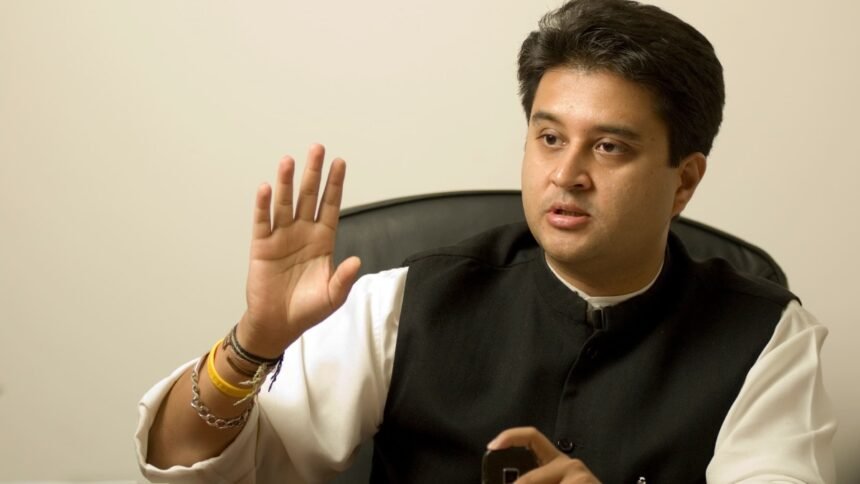
Residents in Guna halted Minister Jyotiraditya Scindia’s convoy over a road issue, with Scindia later announcing ₹3 crore for the project, highlighting the public’s role in ensuring representatives address basic civic concerns.

People also trust the bogus promises made by politicians and trust them for five years. But once the election results come out, the convoy cars begin moving with security escorts, red beacons and closed doors. Giving a loud message that there is always a danger to the same politician who had promised to stay with common people.

Jyotiraditya Scindia

They start behaving as though the voters now owe them obedience.

That is precisely why the recent episode involving Union Minister Jyotiraditya Scindia in Guna deserves attention-not merely as a viral political confrontation, but as a reminder of what democratic power is supposed to mean.

A viral video shows residents stopped Minister Scindia’s convoy over a long-pending road problem. Carrying placards and raising the slogan “Road nahi to vote nahi” (No roads, No Votes), they wanted the road built before the next election.

Citizen: “Please get the road built on time, otherwise we won’t vote.”

Scindia: “Never use this language in front of me.” 🤬 pic.twitter.com/2QtDkAwDVg

— Gems (@gemsofbabus_) September 18, 2026

To which, Scindia responded sharply, telling the resident not to use “this language” with him and asking him to MAKE A REQUEST instead. He said it was his responsibility to get the work done.

There is an important distinction here. A public representative is absolutely entitled to disagree with the manner in which a citizen raises a grievance. But the larger question is uncomfortable: why should a voter have to sound like a petitioner when speaking to the person whose job is to represent that voter?

The resident was not asking for a personal favour. He was raising a civic issue-something as basic as a usable road.

And democracy was designed precisely for such conversations.

Interestingly, the confrontation was followed by action. Scindia subsequently announced ₹3 crore for the road project and directed officials to move ahead with the process, with construction to begin after the monsoon.

That raises another question: should citizens have to stop convoys, raise slogans and threaten electoral consequences before routine civic problems receive attention?

The deeper problem is not unique to one politician, one party or one state.

Across India, politicians can slowly become surrounded by an ecosystem that insulates them from ordinary citizens. Supporters cheer. Officials stand in attendance. Security personnel clear the way. Cameras record speeches. Meetings are carefully organised. And somewhere in that carefully managed political world, the messy voice of the ordinary voter can become an interruption.

But that interruption is democracy.

The farmer who asks for irrigation. The parent who asks for a functioning government school. The commuter who complains about potholes. The shopkeeper who wants drainage fixed. The unemployed graduate demanding opportunities. The elderly citizen waiting for a pension.

They are not doing politicians a favour by raising these questions.

They are the reason politicians are in office.

The Constitution does not create political royalty. Elections do not crown kings. A minister does not become a ruler because an election was won. An MLA does not acquire ownership of a constituency. An MP does not become the master of the people whose votes sent them to Parliament.

They become public representatives.

And representation comes with an obligation to listen-even when the question is uncomfortable, the tone is angry or the criticism is inconvenient.

There is also a lesson for citizens. “No road, no vote” is not merely a slogan. The vote is one of the most powerful instruments available to ordinary people in a democracy. Citizens have every right to judge representatives on issues that matter to them and to communicate their demands peacefully.

Politicians, meanwhile, should remember something even more fundamental:

A convoy can stop traffic. It cannot stop accountability.

A security cordon can keep people physically away. It cannot permanently keep their questions away.

An election victory lasts for a term. Public trust lasts only as long as people believe their representatives remember who gave them power.

The most dangerous moment for a democracy is not necessarily when citizens shout at their leaders.

It may be when leaders stop listening.

Because the real hierarchy in a democracy is not complicated.

The people vote.
The politician serves.
The government answers.

And when that order is forgotten, the ballot box has a remarkably effective way of reminding everyone who the real boss is.


TAGGED:ArrogantBigCrownDontelectionsExchangeGunaKingsMinisterquestionsraisesScindias
Share This Article
Facebook Email Copy Link Print
Previous Article President Herzog lauds Israeli Ahmadiyya Muslims as embodiment of ‘shared life, tolerance’
Next Article Shot down in Iran, hunted for 50 hours: Pete Hegseth explains how America brought ‘Dude 44’ home |US
Leave a Comment Leave a Comment

Leave a Reply Cancel reply

Your email address will not be published. Required fields are marked *

You Might Also Like

World

Trump Plans Granite White House Helipad for New Presidential Helicopters

President Donald Trump says construction has begun on a granite…

6 Min Read
World

The ‘Undruggable’ Finally Falls: Pancreatic Cancer’s ‘Master Switch’ Finally Turned Off After 40 Years

Feature oi-AK Khan Updated: Monday, June 8, 2026, 12:57 Imagine…

18 Min Read
World

India’s Got Latent Season 2 Featuring Alia Bhatt In The Upcoming Episode? Check Now

Entertainment oi-Oneindia Staff Published: Wednesday, May 20, 2026, 12:45 India's…

4 Min Read
World

Jammu and Kashmir Weather: Holy Amarnath Yatra Suspended Amid Heavy Rainfall, Landslide

India oi-Gaurav Sharma Published: Saturday, August 8, 2026, 12:27 One…

2 Min Read
Next India MagazineNext India Magazine
Follow US
© 2026 Next India Magazine powered by India Times Now. All Rights Reserved.
Welcome Back!

Sign in to your account

Username or Email Address
Password

Lost your password?