


India
oi-Ashish Rana

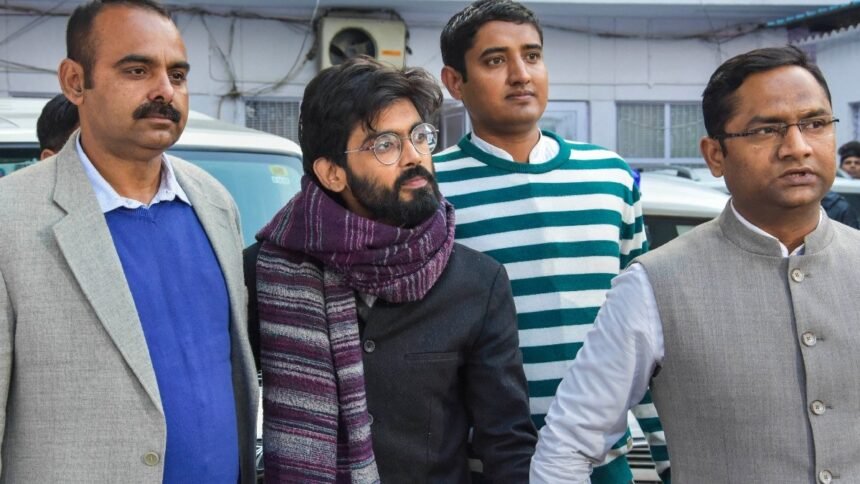
A Delhi court on Tuesday granted interim bail to activist Sharjeel Imam for seven days so that he can attend his cousin’s wedding. The court allowed his release from 4 October to 10 October in the 2020 North-East Delhi riots case for larger conspiracy.

Delhi court granted activist Sharjeel Imam seven-day interim bail from October 4 to October 10 to attend his cousin’s wedding, continuing proceedings in the 2020 North-East Delhi riots larger conspiracy case.
Karkardooma Court Additional Sessions Judge Sameer Bajpai passed the bail orders, however, the written orders was not available immediately.
Sharjeel Imam Gets Seven-Day Bail
Imam has been in jail from last six years in connection with Delhi riots case. He has been granted temporary release only for attending the family wedding and it doesn’t change the ongoing case against him.
Sharjeel Imam was arrested by Delhi Police on 28 January, 2020. He was later booked under Unlawful Activities (Prevention) Act (UAPA). The police have accused him for being one of the major people behind the larger conspiracy for Delhi riots.
What Happened During 2020 Delhi Riots?
Violence broke out in North-East Delhi on February 23, 2020, after clashes between groups during protests and counter-protests linked to the Citizenship Amendment Act (CAA).
The violence continued for several days and left 53 people dead, while hundreds of others were injured. The case has since involved several accused people and has been heard by courts at different levels.
The Delhi Police has opposed the bail pleas of Imam and former JNU student Umar Khalid. The police have described them as the alleged “masterminds” of the violence.
Regular Bail Pleas To Be Heard Soon
Imam’s interim bail comes a day after the Delhi High Court postponed the hearing of his regular bail plea along with Umar Khalid’s petition. The matter is now scheduled to be heard on September 30.
Earlier, on July 5, Judge Bajpai rejected fresh bail applications filed by Imam and Khalid. The court referred to a Supreme Court order dated January 5, which had refused bail to both accused and laid down conditions for filing fresh pleas.
The accused had also referred to a May 18 Supreme Court judgment in another case. In that ruling, a bench of Justices BV Nagarathna and Ujjal Bhuyan raised “serious reservations” about parts of the reasoning used in the January 5 order.
Judge Bajpai noted that the two Supreme Court rulings had differences and that the issue had been referred to a larger bench. The trial court said it could not consider the fresh regular bail pleas until the issue is settled by the Supreme Court.