



Business
oi-Madhuri Adnal

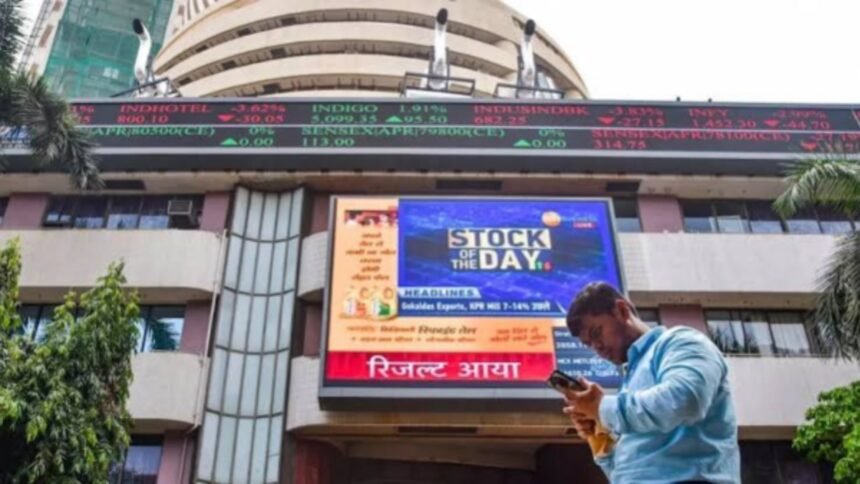
The Sensex and Nifty opened sharply lower on Monday, September 28, as investors returned to the market with fresh concerns over rising crude oil prices and the ongoing tensions between the United States, Iran and Israel.
The weak opening came after both benchmark indices had gone through a seven session losing streak before recovering slightly on Friday. The markets are also keeping a close watch on oil prices after talks between the US and Iran hit a roadblock over the weekend.
On Monday, September 28, Indian stock indices Sensex and Nifty opened lower due to rising crude oil prices and US-Iran-Israel tensions, reversing Friday’s gains after a seven-session slump. Foreign investors sold Rs 3,694 crore worth of shares on Friday.

US President Donald Trump said he had rejected an Iranian proposal to reopen the Strait of Hormuz and bring an end to the fighting. Iran, meanwhile, said on Sunday that diplomacy remained the only way to resolve the conflict involving the US and Israel.
The early market signals had already pointed to a cautious start. GIFT Nifty futures were trading at 23,111 points at 7:41 am. The Nifty 50 had closed at 23,140.50 on Friday.
At 9:17 am, the Sensex was down 512.04 points, or 0.69 per cent, at 73,383.70. The fall widened to more than 690 points by 9:21 am. Just three minutes later, the index was down around 700 points.
The combined market capitalisation of BSE listed companies stood at around Rs 4,82,16,004 crore when trading began. By 10.15 am, it had fallen to about Rs 4,77,19,611 crore. That means nearly Rs 4.9 lakh crore in market value was wiped out in just over an hour.
Crude oil prices were another major concern for investors on Monday.
Brent crude futures climbed 2.1 per cent to $106.49 a barrel, taking their gains this month to nearly 18 per cent. US crude futures also rose 1.5 per cent to $93.84 a barrel.
Oil prices have been closely watched by markets since late February, when the US and Israel launched joint strikes on Iran, triggering a wider conflict in the Middle East.
Trump said talks with Iran would continue this week despite rejecting Tehran’s proposal over the Strait of Hormuz. Iran, however, has not indicated that it is ready to change its position.
For India, higher crude prices can add to concerns over inflation and the country’s import bill, making oil movements an important factor for investors.
Foreign investors have also remained cautious about Indian equities.
According to provisional data cited by Reuters, foreign investors sold Indian shares worth Rs 3,694 crore on Friday. Their total selling in September has now reached around $1.8 billion, while their selling for the year so far stands at $25.86 billion.
So, what is behind Monday’s steep fall? Here are five factors weighing on the market:
1. Oil crosses the $100 mark
Crude oil has once again become a major concern for Indian markets.
Brent crude has stayed above $100 a barrel as tensions involving the US and Iran continue. For India, expensive oil can quickly become a problem because the country depends heavily on imports to meet its crude requirements.
A prolonged rise in oil prices can increase the country’s import bill and put pressure on inflation and the rupee. Companies that spend heavily on fuel and transportation can also face higher costs.
2. Rising US bond yields
The rise in US Treasury yields is another factor making investors cautious.
When returns on US government bonds increase, investors may find dollar based fixed income assets more attractive than taking on the additional risk associated with emerging markets such as India.
Higher oil prices are adding to concerns about inflation in the US as well. If inflation remains elevated, investors may expect interest rates to stay higher for longer, which could further influence global fund flows.
3. Foreign investors continue to pull money out
Foreign investor selling has also remained a pressure point for Indian equities.
Global investors have been cautious amid concerns over oil prices, interest rates and geopolitical developments. When large amounts of foreign money leave the Indian market, heavyweight stocks often come under pressure.
That can have a direct impact on the Sensex and Nifty because several large companies, particularly in banking and other major sectors, carry significant weight in the indices.
4. Banking stocks take a beating
Banking and financial stocks were among the major casualties in Monday’s early trade.
The sector accounts for a sizeable portion of the benchmark indices. So when major banks and financial companies fall together, the effect is quickly felt in the Sensex and Nifty.
The weakness in these stocks therefore added to the market’s early losses.
5. Global uncertainty keeps investors cautious
There is also a broader risk aversion running through global markets.
The continuing tensions involving the US and Iran have pushed oil prices higher while adding uncertainty for investors. At the same time, rising bond yields are making financial conditions less comfortable.
Indian markets were already under pressure before Monday’s session. The Sensex had closed at 73,896 on Friday, while the Nifty ended at 23,140.50. Both indices had recorded seven straight weekly losses.
Against that backdrop, weaker global signals were enough to trigger another round of selling on Monday morning, leaving investors staring at one of the sharpest early market declines in recent weeks.