


India
oi-Ashish Rana

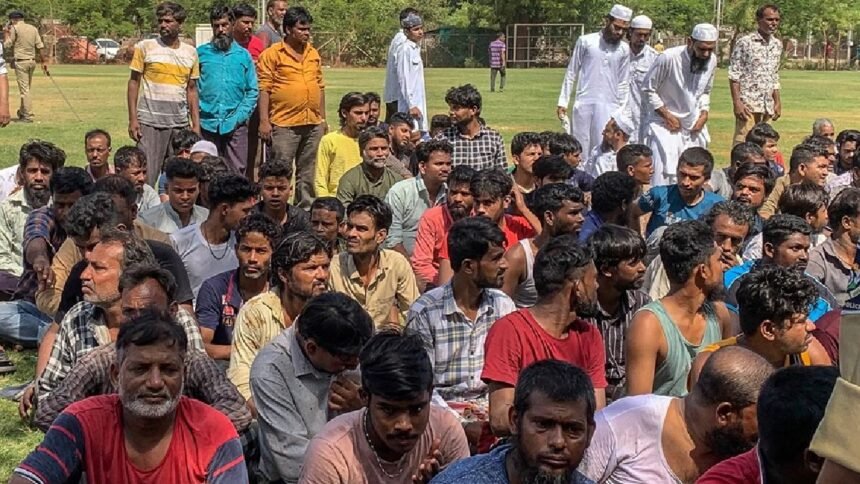
Authorities in Jammu and Kashmir have started moving Bangladeshi nationals allegedly staying illegally in the Union Territory as part of a deportation drive. On Monday, 150 such people were shifted to West Bengal, officials said.

Jammu and Kashmir authorities are deporting 600 identified illegal Bangladeshi immigrants, having sent 150 to West Bengal on Monday and scheduling another deportation for October 7, following the Union Home Ministry’s HLCDC initiative.
The administration, assisted by the Jammu and Kashmir Police, had conducted a survey across the Kashmir Valley and identified around 600 Bangladeshi nationals allegedly living illegally in the region.
150 Bangladeshis Flown To West Bengal
These people were kept in a camp manned by the Srinagar Police, from where they are being transported to Bagdogra for a final pushback to their country of origin, they said.
On Monday, a batch of 150 people was flown on a special Indian Air Force plane to Bagdogra, where they were handed over to Border Security Force (BSF) personnel, the officials said.
Another batch of 150 Bangladeshis will be deported on October 7, they said.
600 Bangladeshis Identified Across J&K
This development comes after the Union Home Ministry constituted a High-Level Committee on Demographic Change (HLCDC) to identify illegal immigrants living in border areas.
The Jammu and Kashmir administration had informed the HLCDC that around 600 Bangladeshis had been identified across various districts of the Union Territory.
The Ministry of Home Affairs constituted the HLCDC on May 26 to study demographic changes arising from illegal immigration and other factors and to recommend measures to address them. It has been asked to submit its report within one year.
What The Demographic Change Panel Is Studying
The HLCDC had sought details from states and Union Territories regarding “visible changes” in religious demography across districts, industrial clusters and border districts over the last 15 years, the officials said.
In a letter dispatched to states and UTs over the last two months, the Committee sought “time-series data” indicating changes over the years, alongside other administrative datasets, an assessment by state governments of “major trends” in demographics, and data on the religious composition of tribal populations since 2011, they said.
The Committee, headed by Justice Prakash Prabhakar Navlekar (Retired), will scientifically assess demographic changes occurring in various parts of the country due to illegal immigration and other abnormal reasons, analyse their causes, and recommend appropriate policy, legislative, and administrative measures.