



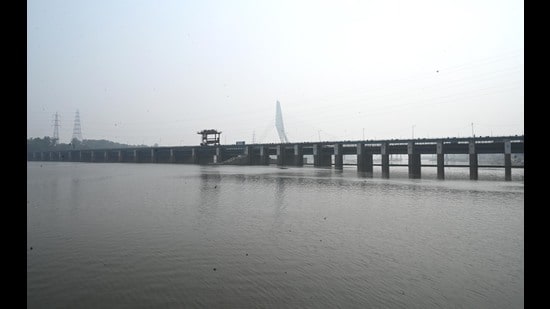
New Delhi: While faecal coliform levels in the Yamuna marginally dipped in April compared to March, the river remained highly polluted and severely exceeded safe limits, according to the Delhi Pollution Control Committee’s (DPCC’s) latest report.

The April report (released May 8) showed that faecal coliform level — a key indicator of sewage — peaked at 310,000 MPN/100ml (most probable number per 100 ml), far above the safe standard of 2,500 MPN/100ml. The level peaked at 400,000 in March, and 110,000 in February.
The biological oxygen demand (BOD) level, which indicates the amount of oxygen organisms need to survive in the water, followed a similar trend. It peaked at 58 milligrams per liter (mg/l) in April, compared to a peak of 60 mg/l in March — both close to 20 times the safe limit of 3 mg/l. In February, these levels peaked at 36 mg/l.
As the lean (dry) seasonprogresses, reduced environmental flow and rains mean the water level dips, allowing pollution levels to also accumulate and spike.
Comparison with last year’s April data shows that while the BOD is higher in 2026, faecal coliform levels are lower. In APirl 2025, the BOD peaked at 56 mg/l, but faecal coliform was 1.5 million MPN/100ml.
The highest BOD and faecal coliform counts were both recorded at Asgarpur, where the river exits Delhi, a sign of sewage and pollutants accumulating throughout Delhi’s stretch of the river, according to the report.
The DPCC also released the monthly assessment of major drains entering the Yamuna, and found that no drain met the BOD standard of 30 mg/l set for drains. The worst impacted was the Sahibabad drain, with a BOD of 180 mg/l, followed by Tughlakabad drain (170).
While in March, the BOD peaked at 300 mg/l in the Sahibabad drain, followed by UP’s Banthala drain at 160 mg/l, the data shows.
Meanwhile, experts said the river’s water quality will continue to suffer until the monsoon arrives. “In the lean season, low river flow traps sewage and effluents, leading to elevated pollution levels. Monsoon rains only offer an artificial cleanup, as the slightly cleaner water is merely the result of heavy water discharges from the Hathnikund barrage,” said Bhim Singh Rawat, a Yamuna activist and member of the South Asia Network on Dams Rivers and People (SANDRP).
Rawat added that data from drains clearly shows until they start meeting the standards, the river will continue to suffer.
To assess Yamuna’s water quality, samples are manually collected from eight different locations across the river: Palla (where the Yamuna enters Delhi), Wazirabad, ISBT Kashmere Gate, ITO bridge, Nizamuddin bridge, Okhla barrage, Agra Canal and Asgarpur (where the river exits Delhi).
However, Delhi may soon start getting real-time data, as the DPCC operationalises 41 real-time online monitoring systems (OLMS).