


By using this site, you agree to the Privacy Policy and Terms of Use.
Accept
Next India Magazine
  • Home
    • Home 2
    • Home 3Hot
    • Home 4
    • Home 5New
  • Home
  • Opinion

    That Provide Critical Analysis on Political Decision-Making

    krutikadalvibiz@gmail.com

    Analyzing Global Dynamics and Unraveling Key Policy Initiatives

    krutikadalvibiz@gmail.com

    Luxurious Stays Redefining Hospitality at Hotel Havens

    krutikadalvibiz@gmail.com

    Electric Cars Subsidies by German Taxpayers End Up on Foreign Roads

    krutikadalvibiz@gmail.com

    Challenge and Inspire Future of Political Thought

    krutikadalvibiz@gmail.com

    Assessing the Diplomatic Challenges and Global Security

    krutikadalvibiz@gmail.com
  • World
  • Politics
  • Market
  • Health
  • Insurance
  • Pages
    • Blog Index
    • Contact US
    • Search Page
    • 404 Page
    • Technology
    • World
  • Pages
    • Blog Index
    • Search Page
    • 404 Page
  • Technology
    TechnologyShow More
    Dr. Nishant Sawant: The Mind Behind Secure Digital Progress
    4 Min Read
    NASA’s Artemis II Mission Rekindles Humanity’s Dream of Deep Space Exploration
    5 Min Read
    Buying a Car Will Soon be Like Buying a Phone, Why Your Next Car Could be an EV
    Hands-On With the iPhone 13, Pro, Max, and Mini
    4 Min Read
    Explained: What are Smart Glasses and How Do It Work?
    4 Min Read
  • Posts
    • Post Layouts
      • Standard 1
      • Standard 2
      • Standard 3
      • Standard 4
      • Standard 5
      • Standard 6
      • Standard 7
      • No Featured
    • Gallery Layouts
      • Layout 1
      • Layout 2
      • layout 3
    • Video Layouts
      • Layout 1
      • Layout 2
      • Layout 3
      • Layout 4
    • Audio Layouts
      • Layout 1
      • Layout 2
    • Post Sidebar
      • Right Sidebar
      • Left Sidebar
    • Review
      • Stars
      • Scores
      • User Rating
    • Content Features
      • Highlight Shares
      • Inline Mailchimp
      • Print Post
      • Inline Related
      • Source/Via Tag
      • Reading Indicator
      • Content Size Resizer
    • Table of Contents
      • Full Width
      • Left Side
    • Sponsored Post
  • Contact
  • Pages
    • Search Page
    • 404 Page
Reading: Yamuna pollution indicator slightly better in April but exceeds safe limits
SUBSCRIBE
Next India MagazineNext India Magazine
Font ResizerAa
  • My Saves
  • Economics
  • Technology
  • My Interests
  • World
  • My Feed
  • History
  • Business
  • Technology
  • Lifestyle
  • Fashion
  • Health
  • Technology
  • World
Search
  • Pages
    • Blog Index
    • Contact Us
    • Search Page
    • 404 Page
  • Home
    • Home 1
    • Home 2
    • Home 3
    • Home 4
    • Home 5
  • Home
  • Blog
  • Categories
    • Technology
    • Lifestyle
  • Personalized
    • My Feed
    • My Saves
    • My Interests
    • History
  • Demos
  • Categories
    • Technology
    • Business
    • Fashion
    • Economics
  • Bookmarks
  • Categories
    • Technology
    • Health
    • World
  • More Foxiz
    • Blog Index
    • Sitemap
  • Bookmarks
  • Contact
  • More Foxiz
    • Sitemap
Have an existing account? Sign In
Follow US
  • Home
  • World
  • Contact
  • Blog
© Foxiz News Network. Ruby Design Company. All Rights Reserved.
BusinessLifestyleStartup

Yamuna pollution indicator slightly better in April but exceeds safe limits

India Times Now
Last updated: May 10, 2026 9:49 pm
India Times Now
4 Min Read
Share
SHARE

New Delhi: While faecal coliform levels in the Yamuna marginally dipped in April compared to March, the river remained highly polluted and severely exceeded safe limits, according to the Delhi Pollution Control Committee’s (DPCC’s) latest report.

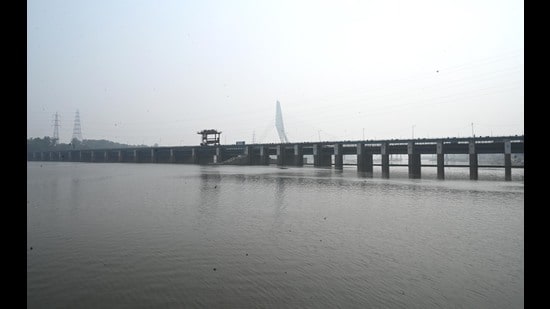
As the lean (dry) season progresses, reduced environmental flow and rains mean the water level dips, allowing pollution levels to also accumulate and spike (Hindustan Times)

The April report (released May 8) showed that faecal coliform level — a key indicator of sewage — peaked at 310,000 MPN/100ml (most probable number per 100 ml), far above the safe standard of 2,500 MPN/100ml. The level peaked at 400,000 in March, and 110,000 in February.

The biological oxygen demand (BOD) level, which indicates the amount of oxygen organisms need to survive in the water, followed a similar trend. It peaked at 58 milligrams per liter (mg/l) in April, compared to a peak of 60 mg/l in March — both close to 20 times the safe limit of 3 mg/l. In February, these levels peaked at 36 mg/l.

As the lean (dry) seasonprogresses, reduced environmental flow and rains mean the water level dips, allowing pollution levels to also accumulate and spike.

Comparison with last year’s April data shows that while the BOD is higher in 2026, faecal coliform levels are lower. In APirl 2025, the BOD peaked at 56 mg/l, but faecal coliform was 1.5 million MPN/100ml.

The highest BOD and faecal coliform counts were both recorded at Asgarpur, where the river exits Delhi, a sign of sewage and pollutants accumulating throughout Delhi’s stretch of the river, according to the report.

The DPCC also released the monthly assessment of major drains entering the Yamuna, and found that no drain met the BOD standard of 30 mg/l set for drains. The worst impacted was the Sahibabad drain, with a BOD of 180 mg/l, followed by Tughlakabad drain (170).

While in March, the BOD peaked at 300 mg/l in the Sahibabad drain, followed by UP’s Banthala drain at 160 mg/l, the data shows.

Meanwhile, experts said the river’s water quality will continue to suffer until the monsoon arrives. “In the lean season, low river flow traps sewage and effluents, leading to elevated pollution levels. Monsoon rains only offer an artificial cleanup, as the slightly cleaner water is merely the result of heavy water discharges from the Hathnikund barrage,” said Bhim Singh Rawat, a Yamuna activist and member of the South Asia Network on Dams Rivers and People (SANDRP).

Rawat added that data from drains clearly shows until they start meeting the standards, the river will continue to suffer.

To assess Yamuna’s water quality, samples are manually collected from eight different locations across the river: Palla (where the Yamuna enters Delhi), Wazirabad, ISBT Kashmere Gate, ITO bridge, Nizamuddin bridge, Okhla barrage, Agra Canal and Asgarpur (where the river exits Delhi).

However, Delhi may soon start getting real-time data, as the DPCC operationalises 41 real-time online monitoring systems (OLMS).


Share This Article
Facebook Email Copy Link Print
Previous Article Libra Horoscope for Today May 11, 2026, Monday – Protect Your Peace By Setting Clear Boundaries
Next Article Capricorn Horoscope for Today May 11, 2026, Monday – Win With Calm Focus, Clear Plans, And Fair Boundaries
Leave a Comment Leave a Comment

Leave a Reply Cancel reply

Your email address will not be published. Required fields are marked *

You Might Also Like

BusinessLifestyleStartup

Doctor shares 4 steps to quit tobacco smoking, and 6 warning signs that should not be ignored

There are very few people who are unaware of the…

5 Min Read
BusinessLifestyleStartup

Ludhiana: Garbage piles up in SBS Nagar open plot as civic body yet to begin waste collection, residents flag health concerns

An open area in front of Block D at Shaheed…

3 Min Read
BusinessLifestyleStartup

St. George’s Hospital gets new mortuary after nine-year citizen campaign, opens Tuesday

Mumbai: Nearly nine years after a Colaba resident launched a…

3 Min Read
BusinessLifestyleStartup

Working long hours? These new Amkette mice are built for everyday productivity (HT Tech)

A mouse is one of the most-used tools on any…

5 Min Read
Next India MagazineNext India Magazine
Follow US
© 2026 Next India Magazine powered by India Times Now. All Rights Reserved.
Welcome Back!

Sign in to your account

Username or Email Address
Password

Lost your password?