


West Asia is undergoing a transformation that defies the traditional blueprints of regional stability. For decades, the geopolitical architecture of the Persian Gulf rested on two pillars: The institutional cohesion of OPEC, led by Saudi Arabia, and the predictable, if hostile, continuity of the Islamic Republic in Tehran. This month, both pillars have crumbled. The formal withdrawal of the UAE from OPEC on May 1, followed by the profound leadership vacuum in Iran following the February decapitation strikes, has catalysed a period of intense fragmentation. We are no longer witnessing a simple rivalry between established States but a frantic unbundling of alliances where economic survival and regime preservation are forcing once nthinkable pivots. This dual crisis of energy and authority is not merely a regional tremor; it is a global event that fundamentally alters the cost of energy, the nature of maritime security, and the future of superpower influence in the region.

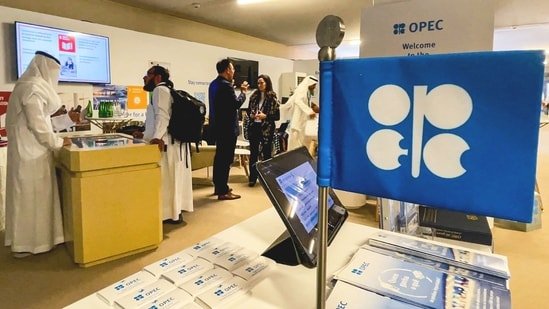
The exit of the UAE from OPEC is the most significant fracture in the cartel’s modern history, representing a decisive break from the Saudi-led regional order. By leaving the organisation, Abu Dhabi has effectively jettisoned the production quotas that long constrained its ambitions. With ADNOC’s capacity nearing five million barrels per day, the UAE is prioritising the monetisation of its resources before the global energy transition plateaus oil demand. This is a move toward radical economic autonomy. However, the timing mid conflict and mid-crisis suggests that this is as much a security calculation as a financial one. The UAE, having absorbed a disproportionate share of missile and drone punishment during the spring escalation, has concluded that collective Gulf mechanisms like the GCC no longer provide credible protection. By producing at full capacity, Abu Dhabi is signalling a strategic alignment with the Trump administration’s demand for lower energy prices, effectively trading its role in the oil cartel for a bespoke, high-tech security umbrella provided by Washington and, increasingly, Jerusalem.
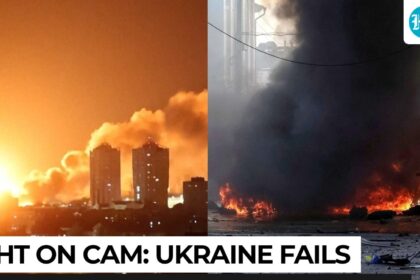
While the Gulf monarchies navigate this institutional divorce, Iran is facing a crisis of identity and existence. The assassination of Supreme Leader Ali Khamenei in late February and the subsequent targeting of the senior leadership have left the Islamic Republic in a state of terminal exhaustion. The transition currently underway in Tehran is not the seamless democratic uprising many in the West envisioned but a messy, fragmented struggle for control between a decimated Revolutionary Guard and a weaponless opposition. The failure of a massive domestic uprising to take hold, despite the decimation of the regime’s top tier, highlights a dangerous vacuum. Iran is currently a wounded regional power, lashing out through militarised regional postures to prove it still possesses a deterrent. Its recent drone strikes across several neighbouring states indicate that the regime is no longer viewing the region through the lens of statecraft but survival.
The impact of this fragmentation on regional geopolitics is a shift toward issue-specific, transactional alliances. The old Arab consensus has been replaced by an agile statecraft where countries like the UAE and Israel coordinate on defence technology while Saudi Arabia attempts to hold a shrinking OPEC together. The Saudi-Emirati rift, once whispered in corridors, is now an open geopolitical reality, with competing visions for security in Yemen and Somalia. This fragmentation has also led to the decentralisation of the energy order. With the UAE operating as a free agent, OPEC’s ability to act as a price floor has been structurally weakened. For regional neighbours, this means a more volatile security environment where the traditional big brother role of Saudi Arabia is contested, and small, wealthy States use their financial and technological networks to craft independent foreign policies.
Globally, the consequences are profound and favour the world’s largest energy consumers. India and China, as the primary importers of Gulf crude, stand to benefit materially from a fragmented OPEC. If production quotas remain unenforced and the UAE continues its surge, a sustained decline in crude prices could provide a massive tailwind for global economic growth, easing inflationary pressures that have haunted the 2020s. However, this economic boon comes with a significant security cost. The fragmentation of the region means that the protection of the Strait of Hormuz and other critical maritime corridors is no longer a shared regional responsibility. The world is moving toward a more conditional form of cooperation, where the US may offer maritime protection only to those partners who align with its transactional energy goals, leaving others to navigate a grey zone of deep-sea vulnerability and proxy sabotage.
Furthermore, the Iranian transition holds the potential for a massive shift in global oil reserves. If a more West-leaning or even a stable, decentralised government emerges in Tehran, the world’s third largest oil reserves could finally be integrated into the global market without the weight of sanctions. This would effectively end the era of energy scarcity and permanently shift the balance of power away from traditional petrostates. Yet, the risk remains that the current vacuum in Tehran could lead to a failed State scenario, where Iranian proxies in Lebanon, Iraq, and Yemen operate with even less restraint, turning the Levant and the Red Sea into permanent combat zones. This would force a total reimagining of global logistics, as the Suez Canal route remains perpetually threatened by non-State actors no longer tethered to a central Iranian command.
The events of May 2026 represent a final break with 20th century West Asia. The UAE’s departure from OPEC and the shattering of the Iranian leadership have ended the era of monolithic blocs and predictable cartels. We are entering a period of managed instability where power is measured by technological agility and the ability to pivot between competing superpowers. For the global community, the immediate reward of cheaper energy must be weighed against the long-term risk of a region that no longer possesses the institutional mechanisms to contain its own conflicts. As the Saudi-led order fades and the Islamic Republic teeters, the burden of stability is shifting to a new, fragile network of transactional alliances. India, China, and the West must now learn to navigate a region where the only constant is fragmentation, and where the security of the global economy is increasingly tied to the survival of a few agile, but highly exposed, regional actors.
(The views expressed are personal)
This article is authored by Gunwant Singh, scholar, international relations and security studies, Jawaharlal Nehru University, New Delhi.