


Bengaluru
oi-Madhuri Adnal

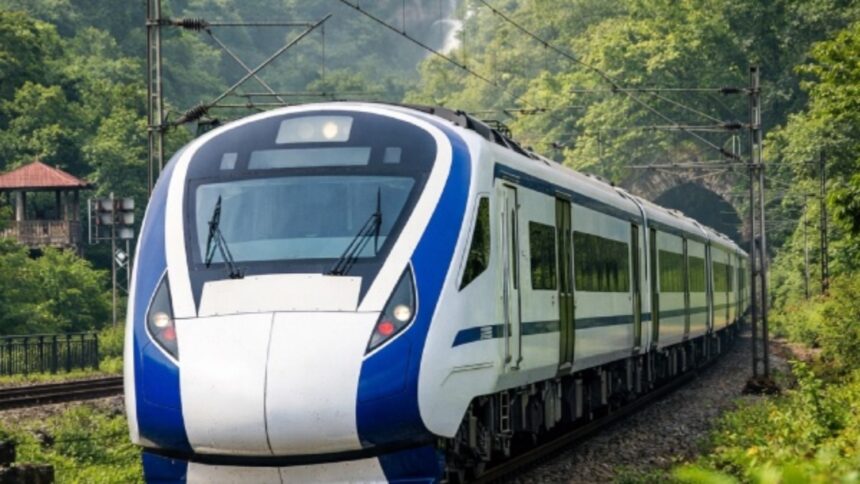
Mangaluru-Bengaluru Vande Bharat Express trial on Sakleshpur-Subrahmanya Road ghat section will begin trial run from August 11.
The trials run will continue till August 20 and the Railways will use specially built 20-coach Vande Bharat rake, equipped with an Automatic Emergency Braking (AEB) system.
The Mangaluru-Bengaluru Vande Bharat Express will undertake trial runs from August 11-20 on the Sakleshpur-Subrahmanya ghat section using a specially built 20-coach rake equipped with an Automatic Emergency Braking system. These extensive safety trials by RDSO are necessary for regulatory approval before the train service can commence commercial operations.
The 20-coach rake was built at the Integral Coach Factory (ICF) in Chennai and has since been assigned to the Mysuru Division. It is currently stationed at Pandavapura Railway Station in Mandya district.

Engineers from the Research Designs and Standards Organisation (RDSO), the research wing of Indian Railways, are set to conduct extensive safety and performance trials on one of India’s toughest railway sections.
The Vande Bharat Express train was originally slated to begin in June after Union Minister of State for Railways V Somanna announced it. However, the rollout was delayed because Railways did not have a Vande Bharat rake fitted with the AEB system required for the Western Ghats section.
For years, people travelling between Bengaluru and coastal Karnataka have been waiting for a Vande Bharat service. The proposed train is expected to cut travel time and offer a faster, more comfortable journey for thousands of passengers, including tourists, students, professionals and business travellers heading to Mangaluru, Udupi and Dakshina Kannada.
The biggest obstacle to running the Bengaluru-Mangaluru Vande Bharat Express train is the Sakleshpur-Subrahmanya Road route which is a very crucial ghat section.
The route has a steep gradient of 1 in 50, which means the track rises or falls by one metre for every 50 metres. Trains passing through this section need precise speed control and a highly reliable braking system to ensure safe operations.
Because of the difficult terrain, the Commissioner of Railway Safety has capped the maximum speed at 30 kmph on this stretch. The restriction is based on safety requirements of the ghat section, not the capabilities of the train.
While Vande Bharat trains are already equipped with advanced electro-pneumatic disc brakes and regenerative braking, railway authorities believe an additional safety layer is essential for this route. The AEB system constantly monitors the train’s speed and can apply the brakes automatically if necessary, helping reduce the risk of accidents on steep gradients.
Why Railways Waited For This Special Rake
Conventional trains travelling through the ghat section are usually assisted by banker locomotives, which are attached at Sakleshpur or Subrahmanya Road to help push the train up the steep climb.
That approach, however, is not suitable for the Vande Bharat.
Unlike conventional trains, the Vande Bharat is built as an integrated trainset with a streamlined aerodynamic nose. Railway officials say attaching a banker locomotive would require removing the train’s nose cone, transporting it separately during the journey and refitting it afterwards. The entire process would take far longer than the 15 minutes usually required for conventional trains, making it impractical for a premium semi-high-speed service.
The newly built 20-coach Vande Bharat rake comes with an integrated Automatic Emergency Braking system, which is expected to do away with the need for banker locomotives if it clears all safety and performance tests.
What Will Be Tested?
During the trial run, the railways experts will not only test how fast a train can run instead, the experts will evaluate how the 20-coach Vande Bharat handles one of the country’s toughest railway sections. The team will closely examine its performance on steep gradients, sharp curves and braking zones, while assessing braking efficiency, stability, ride quality and overall safety.
The trials will be supervised by the Mysuru Division of South Western Railway. Divisional Railway Manager Mudit Mittal said a team from the Research Designs and Standards Organisation (RDSO) will arrive shortly to conduct the scheduled tests.
When Will The Train Start Running?
The trial runs scheduled between August 11 and 20 are only the first step before the service can be launched.
Once testing is complete, the results will be reviewed by the Railway Board and the Commissioner of Railway Safety. The Bengaluru-Mangaluru Vande Bharat can begin commercial operations only after it receives all mandatory safety approvals.
Only then will Indian Railways announce the train’s launch date, timetable, stoppages, fares and ticket booking details.
For now, passengers should view the trials as an important milestone rather than the official launch of the service. Even so, they mark the strongest sign yet that the long-awaited Bengaluru-Mangaluru Vande Bharat is moving closer to reality. If the train successfully clears all tests, travellers can soon look forward to a faster, smoother and more comfortable journey through one of India’s most scenic railway routes.