



India
oi-Swastika Sruti

The Maharashtra Food and Drug Administration (FDA) has suspended the licences of 14 establishments linked to quick-commerce platforms including Blinkit, Zepto and Instamart after inspections found several food-safety and hygiene violations.

Maharashtra FDA suspended 14 licences of quick-commerce platforms Blinkit, Zepto, and Instamart after inspections of 86 establishments found food-safety and hygiene violations, resulting in 60 improvement notices.
The state-wide inspection drive was conducted on Thursday at 86 establishments involved in storing, selling and delivering food through online platforms.
The inspections found issues ranging from pest infestations and poor hygiene to improper food storage and expired products. The FDA issued 60 improvement notices and temporarily suspended operations at one facility.
Of the 14 suspended licences, five were linked to Blinkit, five to Zepto and two to Instamart, while the remaining action involved other establishments covered during the inspection drive.
Maharashtra: The Food and Drug Administration conducted a special inspection drive across 86 establishments selling items via online platforms like Zepto, Blinkit & Instamart. 1 establishment was ordered to halt operations, 60 improvement notices were issued, and 14 licenses were… pic.twitter.com/HG8D1nXOL3
— ANI (@ANI) August 14, 2026
Blinkit Facilities Found With Hygiene And Temperature Issues
There were various Blinkit-related establishments being scrutinized by the FDA in Mumbai.
During the inspection in one of the Blinkit-related establishments in Malad West, it was discovered that the chiller room was functioning at 6 degrees Celsius, which was more than the required temperature as specified by the FDA.
In the establishment, there were no medical examination records of some 40 food handlers. Some of the employees lacked basic protective clothing like headgear, apron, and gloves.
The other Blinkit establishment in Ghatkopar had drainage and waste disposal issues. Also, it had temperature control problems related to the frozen goods and uncovered light fixtures in the area where unpacked food was kept.
The inspection was 34 out of 74 or 46 percent and was thus considered non-compliant.
Also, there was an infestation of cockroaches, damaged floors and ceilings, poor housekeeping and improper segregation of food products.
Zepto Facility Suspended Over Expired Food
Another factory located in Lohegaon, Pune, affiliated with Zepto, too had its license revoked after an inspection was conducted there.
It was discovered that certain food items were being kept past their “Use By” dates at this plant.
It was also found by the FDA that the plant did not follow the practice of FIFO (First In, First Out) and FEFO (First Expiry, First Out).
There were issues related to hygiene in storing food items and pest control at this plant.
Storage conditions in cold storages were also an issue.
FDA observed that the response from this plant was not satisfactory during the hearing after the inspection.
Other establishments connected with Zepto in Mumbai received improvement notices.
Instamart Facilities Reported Cockroach And Rodent Problems
Some of the most serious pest-related findings involved establishments linked to Instamart. At Swinsta ENT Pvt Ltd in Warje Jakat Naka, Pune, the FDA found an active cockroach infestation. The facility’s licence was suspended.
Officials also found problems with the cold chain for frozen food, temperature-control failures and deficiencies in hygiene and pest-control measures.
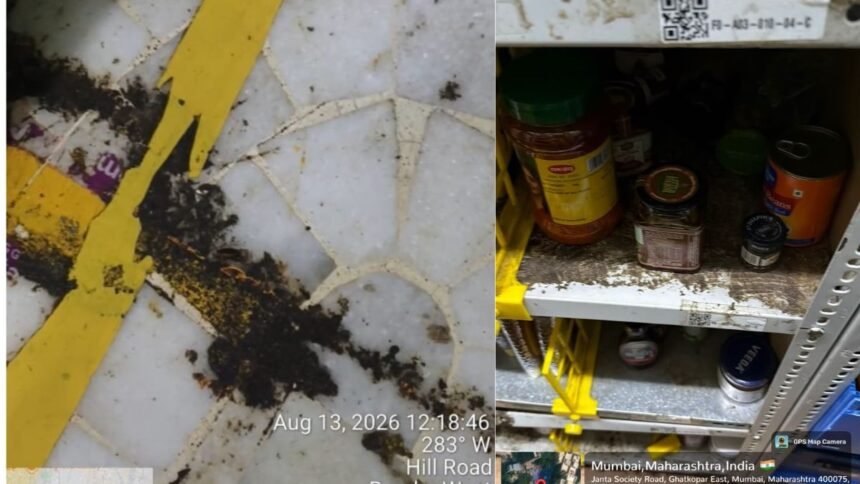
At an Instamart-linked facility on Hill Road in Bandra West, inspectors reported heavy rodent droppings near food packages.
A lizard infestation was also reported, along with rusted storage racks and wider hygiene problems. The establishment scored 63 out of 140 during the inspection.
Expired Chicken Found At Another Instamart Facility
At another Instamart-linked facility operated by Rajidi Retail in Azad Nagar, Andheri West, inspectors found expired poultry being stored at an incorrect temperature.
The product identified was Zorabian Chicken Curry Cut. According to the FDA, it was stored at around 8°C, instead of the required 0°C to 4°C range cited for the product.
The expired stock was discarded at the facility.
Inspectors also found overcrowded storage conditions at an Instamart facility on Mahakali Caves Road in Andheri East. Food bags were reportedly kept directly on the floor, while the facility did not have air curtains at its main entry points.
Bollywood Cafe At Film City Also Raided
The FDA’s inspection drive extended beyond quick-commerce facilities.
Officials also raided Bollywood Cafe at Dadasaheb Phalke Film City in Goregaon East, Mumbai.
Inspectors reportedly found food being prepared in unhygienic conditions. The inspection also found a severe fly infestation, dirty drains and rusty and unclean surfaces being used for food preparation.
The FDA initiated action against the cafe under Section 69 of the Food Safety and Standards Act.
What The Maharashtra FDA Action Means
The inspection drive highlights the importance of food-safety standards in the rapidly expanding quick-commerce sector.
Quick-commerce companies rely on dark stores and other facilities to store food and deliver it to customers within a short period. This makes proper temperature control, pest management, hygiene and stock rotation particularly important.
Food products that are expired, improperly stored or exposed to pests can pose health risks to consumers.
The FDA’s action also shows that online delivery does not change the basic food-safety responsibilities of businesses. Food stored for quick delivery must still meet the standards prescribed by regulators.
14 Licences Suspended, 60 Improvement Notices Issued
The Maharashtra FDA’s latest inspection covered 86 establishments across the state.
The action taken includes:
- 14 licences suspended
- 60 improvement notices issued
- One facility ordered to temporarily stop operations
- Expired food discarded where detected
Further action initiated against establishments found violating food-safety requirements
The findings are significant as millions of consumers now depend on quick-commerce platforms for groceries, packaged food, dairy products, frozen items and other daily essentials.