


India
oi-Madhuri Adnal

India is working to avoid a repeat of the disagreement that surfaced at the last BRICS foreign ministers’ meeting, with negotiators now trying to find common ground on how the grouping should address the ongoing conflict in West Asia.
According to The Indian Express, BRICS Sherpas, the senior negotiators representing the 11-member grouping – have been working late into the night ahead of the leaders’ summit in New Delhi on September 12 and 13.
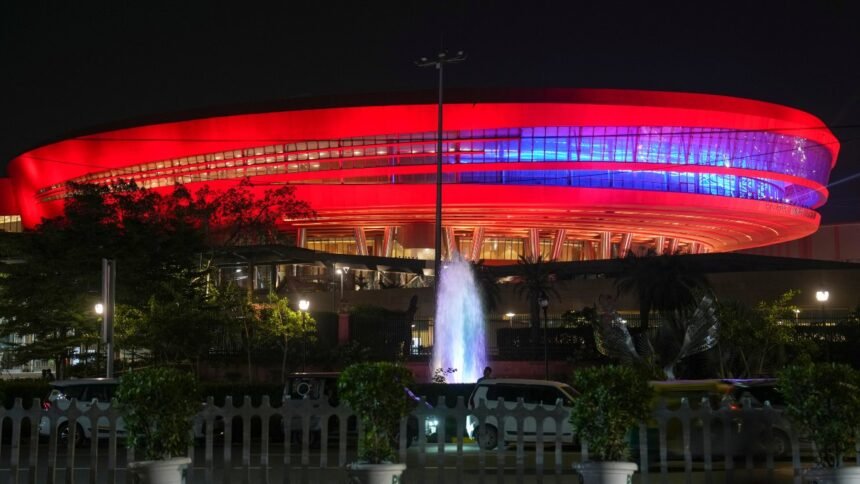
India is hosting the expanded BRICS summit in New Delhi on September 12-13, focusing negotiations on the West Asia conflict to achieve a unified declaration despite differing member stances from Iran and the UAE.
The most difficult part of the negotiations is the wording on the West Asia conflict. Iran, the UAE and Saudi Arabia are all part of the expanded BRICS grouping, but their positions on the conflict do not fully align.

The Indian Express reported that Indian officials are holding separate discussions with representatives of Iran and the UAE in an effort to bring the two sides closer to a common position before the summit.
“We would like to have a BRICS’ Delhi declaration, which is a consensus document, in all the paragraphs. Efforts are underway to achieve that outcome. We are optimistic we can accomplish that,” a senior Indian official told the newspaper.
Why Iran and UAE are at the centre of the talks
The differences come against the backdrop of the continuing conflict in West Asia and the tensions involving Iran and the US.
According to The Indian Express, Iran has targeted US bases in the Gulf region, including in the UAE, since the conflict began on February 28, leaving Tehran and Abu Dhabi on opposing sides of the issue.
India is now trying to prevent those differences from spilling into the BRICS declaration.
Indian officials are working with representatives from Russia, Brazil and Egypt as part of the effort to find wording that can be accepted by all members.
The issue had already proved difficult in May, when BRICS foreign ministers met in New Delhi. Russian Foreign Minister Sergey Lavrov had then urged the Iranian and UAE ministers to hold direct talks.
India could not get all members to agree on a joint statement after the two-day meeting. Instead, it issued a chair statement and an outcome document that acknowledged the differences.
The chair statement referred to “differing views among some members” on the West Asia situation and said BRICS countries had put forward their “respective national positions”.
Strait of Hormuz crisis adds to India’s concerns
The crisis around the Strait of Hormuz has added another layer to the discussions.
The important shipping route has become a major concern for economies around the world, with the disruption affecting energy supplies and pushing up prices. Delhi therefore wants the summit declaration to address the crisis while ensuring that the language is acceptable to all BRICS members.
Despite the disagreement over West Asia, officials said the summit would cover a much wider range of subjects, including food and energy security, climate change and the economic impact of global developments.
Who is expected at the BRICS summit?
Russian President Vladimir Putin’s participation has been confirmed. Officials are also preparing for the expected presence of Chinese President Xi Jinping, Iranian President Masoud Pezeshkian, South African President Cyril Ramaphosa and Indonesian President Prabowo Subianto.
Brazilian President Luiz Inacio Lula da Silva is not expected to attend. He had visited New Delhi for the AI summit in February and will instead send a senior government representative.
Prime Minister Narendra Modi is scheduled to hold bilateral meetings with Putin and Pezeshkian on Friday, officials said.
What is on the BRICS agenda?
The Ministry of External Affairs said the summit will begin on Saturday with a closed-door meeting of BRICS members.
The session will be held under the theme “Inclusive Global Governance and Strengthening Multilateralism”.
The leaders will later visit the ‘Bharat Innovates Exhibition’, followed by a family photograph and a joint tree-planting ceremony. The first day’s programme will end with a dinner hosted by Modi.
On Sunday, leaders from BRICS countries, partner nations and outreach invitees will attend an open session titled “Resilience, Innovation, Cooperation and Sustainability: Shaping the Future for Inclusive Global Growth”.
India’s chairship is centred on the theme “Building for Resilience, Innovation, Cooperation and Sustainability”, with the government describing it as a people-centric approach based on the principle of “humanity first”.
The four areas will guide India’s priorities during the chairship.
The resilience agenda includes health, agriculture, food and energy security, disaster risk reduction and supply chains. Innovation will focus on startups, MSMEs, science and technology, entrepreneurship, research and development, Digital Public Infrastructure and artificial intelligence.
The cooperation pillar covers multilateralism, reforms to global governance institutions and development-related cooperation among BRICS members.
The sustainability agenda includes renewable energy, climate action, adaptation, nature-based solutions and sustainable consumption.
Among the initiatives expected to come out of the summit are cooperation on smart grids and energy storage, urban infrastructure and an MSME cooperation portal.
India hosts expanded BRICS grouping
This is India’s turn to host the expanded BRICS grouping.
India had previously hosted the summit in 2012 in Delhi and again in 2016 in Goa. The 2021 summit was held virtually because of the Covid pandemic.
BRICS originally consisted of Brazil, Russia, India, China and South Africa. The grouping expanded in 2024 with Egypt, Ethiopia, Iran, the UAE and Saudi Arabia joining. Indonesia became a member in 2025.
Belarus, Bolivia, Kazakhstan, Cuba, Malaysia, Nigeria, Thailand, Uganda, Uzbekistan and Vietnam joined as BRICS partner countries last year.
The expanded grouping now has 11 members and represents around 49.5% of the world’s population, about 40% of global GDP and approximately 26% of global trade.