



Chennai
oi-Prakash KL

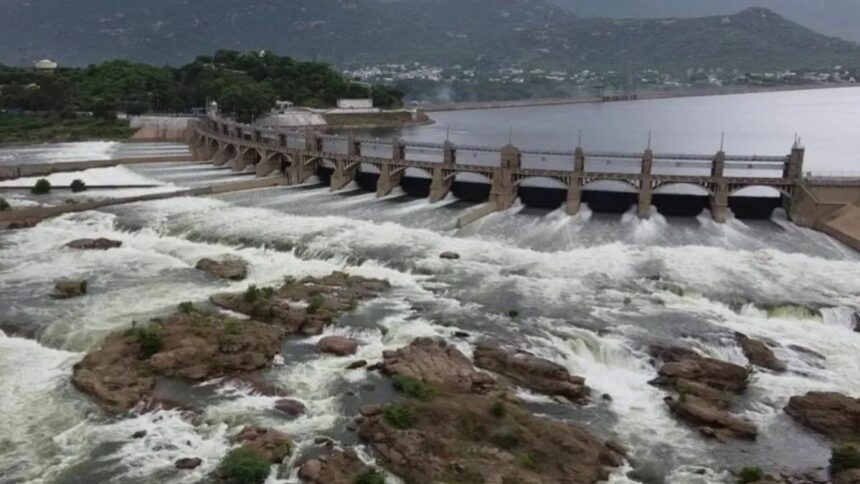
Water released from the Kabini reservoir in Karnataka arrived at Biligundulu, the entry point of the Cauvery river in Tamil Nadu, on Tuesday morning.
The Stanley Reservoir in Mettur will take seven to eight days to reach the 100-foot mark, provided the discharge from Karnataka continues at a steady rate of over 25,000 cusecs, Deccan Herald reported.
Water released from Karnataka’s Kabini reservoir reached Tamil Nadu’s Biligundulu; Mettur Dam may reach 100 feet in 7-8 days with sustained inflow over 25,000 cusecs, following improved monsoon rains in the Cauvery basin.

According to the official data, the water level at the Mettur Dam stood at 73.18 feet against its full reservoir level of 120 feet, with storage recorded at 35.49 tmcft, as on Tuesday. The gates of the dam usually conventionally opened for delta crop cultivation only when the water level crosses 90 feet and approaches 100 feet.
According to Tamil Nadu Water Resources Department officials, the Kabini reservoir was discharging approximately 25,000 cusecs as of Monday evening. They added that Tamil Nadu would receive a higher volume at Biligundulu once water from the Krishnarajasagara (KRS) dam is also released.
Based on current calculations, a sustained inflow of 25,000 cusecs over a 24-hour period would raise the Mettur Dam’s water level by about four feet. It is estimated that reaching the 100-foot threshold would require seven to eight days, if Karnataka continues to maintain or increase the current rate of water release.
Meanwhile, storage levels in upstream reservoirs have shown marked improvement following the revival of monsoon rains across the Cauvery basin. The KRS reservoir in Mandya district recorded a rise of nearly 12 feet over the past week. On July 27, the reservoir level was at 91.70 feet with an inflow of 2,100 cusecs. By August 3, the level had breached the 100-foot mark, touching 102.09 feet at 8 p.m., as inflow surged past 30,000 cusecs following heavy rainfall in Kodagu district, particularly in Bhagamandala, according to a report in The Hindu.
Inflow into the KRS reservoir was recorded at 32,149 cusecs at 8 p.m. on August 3, while outflow was restricted to 1,884 cusecs to meet canal and drinking water requirements. Officials noted that while the water level rises rapidly in the KRS until the 100-foot mark, the rate of increase slows thereafter due to the expanding span of the backwater, the report said.
At the Harangi dam in Kodagu, inflow and outflow were both recorded at 7,000 cusecs on August 3, though the inflow has since declined. The dam’s level stood at 2,856.92 feet against its maximum capacity of 2,859 feet.
Rainfall in Kodagu has receded, with the district recording an average of 19.52 mm in the 24 hours ending 8 a.m. on August 3. Bhagamandala received 60.90 mm, Madikeri 54.40 mm, and Sampaje 67.60 mm during this period.
The improved storage position has brought relief to farmers and has somewhat eased tensions between Karnataka and Tamil Nadu over the sharing of Cauvery waters.