

By using this site, you agree to the Privacy Policy and Terms of Use.
Accept
Next India Magazine
  • Home
    • Home 2
    • Home 3Hot
    • Home 4
    • Home 5New
  • Home
  • Opinion

    That Provide Critical Analysis on Political Decision-Making

    krutikadalvibiz@gmail.com

    Analyzing Global Dynamics and Unraveling Key Policy Initiatives

    krutikadalvibiz@gmail.com

    Luxurious Stays Redefining Hospitality at Hotel Havens

    krutikadalvibiz@gmail.com

    Electric Cars Subsidies by German Taxpayers End Up on Foreign Roads

    krutikadalvibiz@gmail.com

    Challenge and Inspire Future of Political Thought

    krutikadalvibiz@gmail.com

    Assessing the Diplomatic Challenges and Global Security

    krutikadalvibiz@gmail.com
  • World
  • Politics
  • Market
  • Health
  • Insurance
  • Pages
    • Blog Index
    • Contact US
    • Search Page
    • 404 Page
    • Technology
    • World
  • Pages
    • Blog Index
    • Search Page
    • 404 Page
  • Technology
    TechnologyShow More
    Dr. Nishant Sawant: The Mind Behind Secure Digital Progress
    4 Min Read
    NASA’s Artemis II Mission Rekindles Humanity’s Dream of Deep Space Exploration
    5 Min Read
    Buying a Car Will Soon be Like Buying a Phone, Why Your Next Car Could be an EV
    Hands-On With the iPhone 13, Pro, Max, and Mini
    4 Min Read
    Explained: What are Smart Glasses and How Do It Work?
    4 Min Read
  • Posts
    • Post Layouts
      • Standard 1
      • Standard 2
      • Standard 3
      • Standard 4
      • Standard 5
      • Standard 6
      • Standard 7
      • No Featured
    • Gallery Layouts
      • Layout 1
      • Layout 2
      • layout 3
    • Video Layouts
      • Layout 1
      • Layout 2
      • Layout 3
      • Layout 4
    • Audio Layouts
      • Layout 1
      • Layout 2
    • Post Sidebar
      • Right Sidebar
      • Left Sidebar
    • Review
      • Stars
      • Scores
      • User Rating
    • Content Features
      • Highlight Shares
      • Inline Mailchimp
      • Print Post
      • Inline Related
      • Source/Via Tag
      • Reading Indicator
      • Content Size Resizer
    • Table of Contents
      • Full Width
      • Left Side
    • Sponsored Post
  • Contact
  • Pages
    • Search Page
    • 404 Page
Reading: Emergency 1975 Anniversary: How Bihar And JP Movement Became The Face Of India’s Fight For Democracy
SUBSCRIBE
Next India MagazineNext India Magazine
Font ResizerAa
  • My Saves
  • Economics
  • Technology
  • My Interests
  • World
  • My Feed
  • History
  • Business
  • Technology
  • Lifestyle
  • Fashion
  • Health
  • Technology
  • World
Search
  • Pages
    • Blog Index
    • Contact Us
    • Search Page
    • 404 Page
  • Home
    • Home 1
    • Home 2
    • Home 3
    • Home 4
    • Home 5
  • Home
  • Blog
  • Categories
    • Technology
    • Lifestyle
  • Personalized
    • My Feed
    • My Saves
    • My Interests
    • History
  • Demos
  • Categories
    • Technology
    • Business
    • Fashion
    • Economics
  • Bookmarks
  • Categories
    • Technology
    • Health
    • World
  • More Foxiz
    • Blog Index
    • Sitemap
  • Bookmarks
  • Contact
  • More Foxiz
    • Sitemap
Have an existing account? Sign In
Follow US
  • Home
  • World
  • Contact
  • Blog
© Foxiz News Network. Ruby Design Company. All Rights Reserved.
World

Emergency 1975 Anniversary: How Bihar And JP Movement Became The Face Of India’s Fight For Democracy

India Times Now
Last updated: June 25, 2026 4:39 pm
India Times Now
5 Min Read
Share
SHARE

Contents
Allahabad Verdict And The Road To EmergencyBihar’s JP Movement Led The Fight For DemocracyPress Censorship And Arrest Of Opposition LeadersEmergency’s Lessons For Modern India

India

oi-Ashish Rana

Time
Published: Thursday, June 25, 2026, 22:05 [IST]

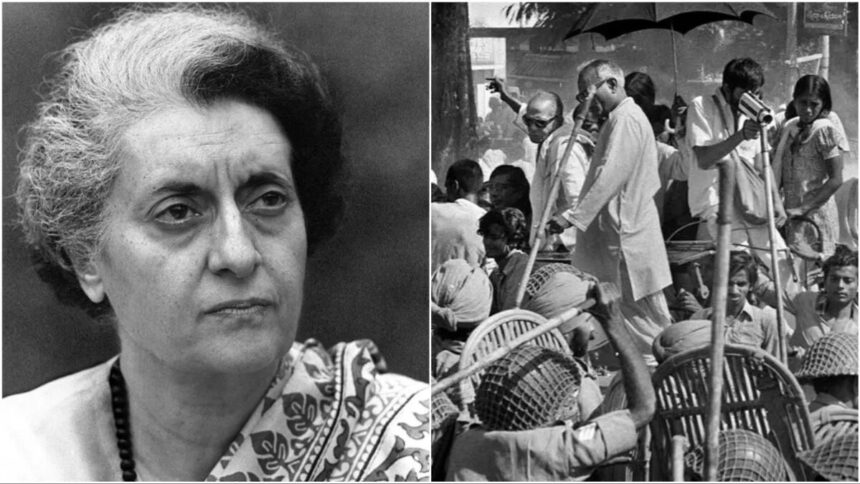
The Emergency imposed on June 25, 1975, remains one of the most debated and defining moments in India’s democratic history. Marking 51 years since the proclamation, the period continues to be remembered as a time when constitutional freedoms, civil liberties and democratic institutions came under severe strain. It also serves as a reminder of the sacrifices made by thousands who resisted authoritarian rule, particularly under the leadership of Loknayak Jayaprakash Narayan.

Emergency 1975 Anniversary

India’s Emergency, declared June 25, 1975, following PM Indira Gandhi’s invalidated election, suspended civil liberties and imposed media censorship. The JP Movement in Bihar, led by Jayaprakash Narayan, spearheaded resistance against authoritarian rule.

Allahabad Verdict And The Road To Emergency

The political crisis that culminated in the Emergency began on June 12, 1975, when the Allahabad High Court declared the election of then Prime Minister Indira Gandhi invalid. Instead of stepping down after the verdict, the Congress government chose to retain power.

On the night of June 25, 1975, the Emergency was declared across the country. Fundamental rights were curtailed, civil liberties were suspended and political opponents were detained without due process. The period witnessed widespread restrictions on democratic freedoms, creating an atmosphere of uncertainty and fear.

The article argues that the Emergency represented a time when protecting political authority took precedence over safeguarding democratic values and constitutional principles.

Bihar’s JP Movement Led The Fight For Democracy

According to the article, Bihar emerged as the strongest centre of resistance against the Emergency under the leadership of Loknayak Jayaprakash Narayan.

The movement gained momentum with the call for “Sampoorna Kranti” (Total Revolution) from Patna’s Gandhi Maidan. It evolved beyond opposition to a government and became a campaign for political reform, transparency and democratic renewal.

Thousands of students, farmers, teachers, youth and ordinary citizens joined the movement. Many were arrested and imprisoned, but continued to oppose authoritarian rule despite facing significant hardships.

The article credits Bihar and Jayaprakash Narayan with giving the nationwide movement the strength needed to challenge the Emergency and defend democratic ideals.

Press Censorship And Arrest Of Opposition Leaders

The article recalls that one of the defining features of the Emergency was strict censorship of the media. Newspapers were required to obtain official approval before publishing sensitive reports, while journalists and media organisations operated under heavy restrictions.

It states that freedom of expression suffered significantly during the period as critical voices were silenced and dissent was suppressed.

Several prominent opposition leaders, including Loknayak Jayaprakash Narayan, Atal Bihari Vajpayee, Lal Krishna Advani, George Fernandes and Nanaji Deshmukh, were imprisoned along with thousands of political workers and activists.

According to the article, many of those detained were jailed because of their commitment to democratic governance and constitutional rights, making the Emergency one of the most controversial phases in India’s political history.

Emergency’s Lessons For Modern India

The article says the Emergency continues to serve as an important lesson on the dangers of concentrating excessive political power in the hands of a few individuals. It argues that such concentration weakens institutional checks and balances while putting constitutional values at risk.

Referring to the present government, the article states that under Prime Minister Narendra Modi, governance has focused on transparency, wider public participation and inclusive development. It highlights the guiding principle of governance as “Sabka Saath, Sabka Vikas, Sabka Vishwas, Sabka Prayas.”

It further says that poor people, women, youth, Scheduled Castes, Scheduled Tribes, backward classes and marginalised communities have become central participants in India’s development journey, while democratic participation has expanded.

The article concludes by urging young Indians to remember the sacrifices made during the Emergency and to remain committed to protecting the Constitution, democratic institutions and the rights of every citizen. It pays tribute to those who resisted authoritarian rule, with special recognition for the people of Bihar and the leadership of Loknayak Jayaprakash Narayan in defending India’s democratic spirit.


TAGGED:AnniversaryBiharDemocracyEmergencyFaceFightIndiasMovement
Share This Article
Facebook Email Copy Link Print
Previous Article ‘Not okay with it’: Sunitha hits back at Chinmayi Sripaada after being called out for saying ‘his eyes, his wish’
Next Article Maa Inti Bangaaram box office collection day 7: Samantha Ruth Prabhu film ends week 1 with ₹35 crore
Leave a Comment Leave a Comment

Leave a Reply Cancel reply

Your email address will not be published. Required fields are marked *

You Might Also Like

World

Leo Horoscope for Today May 07, 2026, Thursday – You Balance the Spotlight, Surprise Plans, and a Tough Task with Confidence!

Lifestyle -Darshana Tiwari Published: Thursday, May 7, 2026, 0:00 Leo…

4 Min Read
World

Opposition Targets VD Satheesan Over Ex-EC Official Appointment in Kerala

India -Gaurav Sharma Updated: Sunday, May 24, 2026, 13:41 A…

7 Min Read
World

Punjab To Get Basmati Centre Of Excellence, CM Bhagwant Singh Mann Announces

India oi-Gaurav Sharma Published: Thursday, April 23, 2026, 13:34 Punjab…

6 Min Read
World

This Week’s Top Military: Keep Your Eye on the Bomb and Don’t Drop It

Good web design has visual weight, is optimized for various…

4 Min Read
Next India MagazineNext India Magazine
Follow US
© 2026 Next India Magazine powered by India Times Now. All Rights Reserved.
Welcome Back!

Sign in to your account

Username or Email Address
Password

Lost your password?