



Canberra, The Iran war reminds us small strategic moves can mushroom into expanding military commitments. The United States decided to blockade Iranian ports by controlling access to and from the vital Strait of Hormuz, as a response to Iran’s asserting control over it – which it had long threatened to do if attacked.

In its list of conditions to end the war, Iran is for the first time demanding recognition of its sovereignty over the waterway – considered the world’s most critical energy corridor.
The Strait of Hormuz is one of the world’s key maritime choke points: strategic corridors where large volumes of global trade pass through extremely limited space.
A heavy price has often been paid for assuming this type of operation will be over quickly and easily.
America’s allies might wisely consider this history now – particularly as the April 25 anniversary of the disastrous Gallipoli campaign, which aimed to open the way to the Black Sea during World War I, approaches.
Gallipoli was about controlling sea routes
By early 1915, Europe’s most powerful states – including Britain and its empire – had been at war for months, with no end in sight. Keeping Britain and France’s ally, Russia, in the fight meant delivering it a steady stream of munitions and other critical war materials.
The only realistic route lay through the Ottoman controlled Dardanelles, the straits linking the Mediterranean and Black Seas, between the peninsula of Gallipoli and Asia minor.
And since the Ottoman Empire was already at war with Britain, France and Russia, this would necessitate Allied forces attempting to destroy Turkish resistance to force a way through.
After months of discussion, the Allies settled on a purely naval operation: no need for army support. It was mostly the brainchild of Winston Churchill, then First Lord of the Admiralty.
If the cream of the Royal Navy needed to stay in home waters to contain the threat of a powerful German navy in the North Sea, obsolescent warships could carry the day. This “side show”, the Allies concluded, could be called off at any time.
Other leading government ministers and admirals, including the prime minister and secretary of state for war, supported Churchill’s plan – or appeared to. Privately, some had deep reservations.
Why did it fail?
When sailing in open water, naval forces are safe from most land-based weapons. However, when they are constrained in limited waters, such as maritime choke points, they become extremely vulnerable to attack from land . An expensive warship can be damaged or destroyed by much cheaper land-based artillery.
British decision-makers underestimated Turkish defences and ignored disagreeable intelligence. With the outbreak of World War I, Turkish forces had set about reinforcing heavy artillery on both shores of the straits and laid mines in the waters.
When the Anglo-French fleet attempted to clear a path with minesweepers, the Turkish batteries rained fire on them, driving them off. Then, when the old battleships advanced to knock the guns out, they too came under artillery fire and rapidly fell prey to unswept sea mines, losing nearly one third of the armada.
As historian Jörn Leonhard wrote, “With just one minelayer, the Turkish navy had successfully sealed the mouth of the Dardanelles.”
Things got much worse. With British prestige now at stake, the Allies escalated their efforts. On April 25, 1915, Allied ground troops intervened in an attempt to finally crush the coastal defences.
As historian John H. Morrow Jr insightfully describes: “There they would remain for the next eight months, through bloody attacks and counter-attacks, as both sides launched ferocious and suicidal assaults against each other. The troops now mown down by shell or machine-gun and rifle fire fell in frenzied hand-to-hand combat, as men bit, punched, bludgeoned, and stabbed each other to death, all to no avail.”
Though outnumbered, Turkish forces held superior positions and proved a formidable opponent. There were roughly 483,000 Allied and Turkish military casualties. The Allies were forced to withdraw.
4 lessons of Gallipoli
1. Beware of the allure of the dominant personality. Complex strategic decisions require broad consultation and a base in evidence that considers all crucial factors. Of course “they should have known better” at Gallipoli. But those decisions were considerably more thought out than the strategy employed so far in the US attack on Iran, which has been labelled by some as erratic.
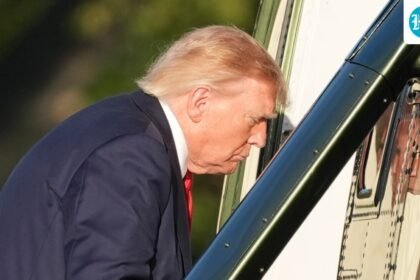
2. Don’t fall unto the trap of underestimating your enemy. “Gunboat diplomacy” did not work in 1915 and so far it is not working in 2026. It is possible that US president Donald Trump was seduced by the ease of US military actions against Venezuela. But Washington has significantly underestimated Tehran’s resolve and strategic position.
3. Mission creep: Once initial resources prove inadequate, powerful states are likely to scale up, not scale down, their efforts – the definition of the dreaded “mission creep”.
4. War is costly in terms of human life. This is a point often forgotten when calculating for a perceived easy win. Gallipoli led to horrific military casualties. The current war has left mostly civilian casualties. And if the conflict escalates, even if ostensibly at sea to control merchant shipping, further civilian casualties will occur.
Furthermore, we are yet to comprehend the scale of the harm being caused due to the wider economic costs of disrupting crucial energy and fertiliser supplies, not least to disadvantaged areas of the world.
Australians have options in the Iran war
–
Naval forces at maritime choke points are more vulnerable than ever. The proliferation of cheap, land-based systems such as drones and missiles means traditionally much weaker states – and even non-state actors – can effectively contest seaways against the most costly, sophisticated militaries.
We should be as critical of the current Iran war as we are of the Gallipoli campaign today. It is unlikely to be solved quickly, and not at all by military means alone.
The difference between 1915 and 2026 is that Australia is no longer automatically drawn in by the interests of others. Now, a sovereign Australia has the right to make its own decisions.
GSP
This article was generated from an automated news agency feed without modifications to text.