



India
oi-Oneindia Staff

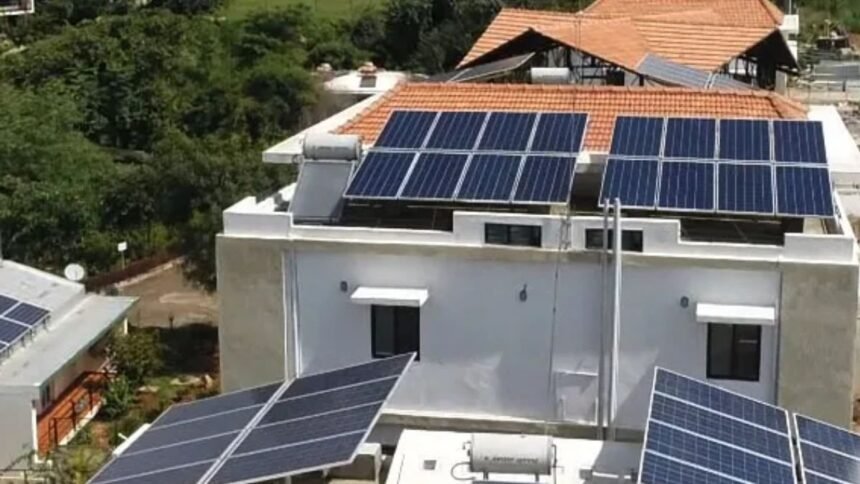
India’s clean-energy transition is increasingly moving beyond large solar parks and utility-scale projects to the rooftops of ordinary households. Under the PM Surya Ghar: Muft Bijli Yojana, residential rooftop solar capacity has reached 16.25 GW as of 2 September 2026, marking a significant expansion of decentralised solar generation across the country. The growth reflects the rapid implementation of the world’s largest rooftop solar programme, with an outlay of ₹75,021 crore.

India’s PM Surya Ghar: Muft Bijli Yojana achieved 16.25 GW of residential rooftop solar capacity by September 2, 2026, with a ₹75,021 crore outlay, enabling households to become electricity ‘prosumers’ through a rapid, end-to-end digital process.
The scheme is today benefiting 1 lakh households every six days, making it one of the fastest growing clean energy programmes anywhere in the world.
The pace of installation has increased 3.2 times over the last nine months, rising from 5,038 installations a day in October 2025 to nearly 16,328 installations a day in July 2026.
The development is changing the traditional relationship between households and the electricity system.
Instead of remaining only consumers of electricity, households installing rooftop solar can generate electricity for their own requirements and feed surplus power into the grid, subject to applicable regulations.
Solar Moves Closer to the Consumer
India crossed 300 GW of installed non-fossil fuel power capacity as of 31 July 2026, including 164.59 GW of total installed solar power capacity.
While large-scale renewable energy projects remain central to India’s energy transition, residential rooftop solar is adding another dimension by bringing power generation directly to households and enabling consumers to participate in the country’s clean-energy transition.
Technology has been a key enabler of this expansion. PM Surya Ghar operates through an end-to-end digital process, covering registration, application, installation-related approvals and subsidy disbursement. Integration with Jan Samarth facilitates access to paperless loans, while integration with PFMS enables faster subsidy processing. The platform is also integrated with more than 80 DISCOMs through APIs, helping streamline applications and approvals.
Digital tools are also making it easier for households to understand whether rooftop solar makes financial sense for them before they decide to install a system.
By providing basic details such as location, sanctioned load and the previous month’s electricity bill, consumers can receive an indicative recommendation on the appropriate solar plant capacity for their home.
The tool also provides estimates of installation cost, eligible government subsidy, financing options and interest rates, along with potential long-term savings
From Consumer to ‘Prosumer’
The significance of rooftop solar goes beyond additional generation capacity. A household with rooftop solar can meet a part of its electricity requirement from electricity generated on its own roof. Under the scheme, households can obtain up to 300 units of free electricity every month, depending on system capacity, generation and consumption.
Where applicable, surplus electricity can also be exported to the distribution network, allowing households to derive additional value from their rooftop systems.
This effectively introduces the idea of the ‘prosumer’ at scale, a citizen who is both a consumer and producer of electricity.