


By using this site, you agree to the Privacy Policy and Terms of Use.
Accept
Next India Magazine
  • Home
    • Home 2
    • Home 3Hot
    • Home 4
    • Home 5New
  • Home
  • Opinion

    That Provide Critical Analysis on Political Decision-Making

    krutikadalvibiz@gmail.com

    Analyzing Global Dynamics and Unraveling Key Policy Initiatives

    krutikadalvibiz@gmail.com

    Luxurious Stays Redefining Hospitality at Hotel Havens

    krutikadalvibiz@gmail.com

    Electric Cars Subsidies by German Taxpayers End Up on Foreign Roads

    krutikadalvibiz@gmail.com

    Challenge and Inspire Future of Political Thought

    krutikadalvibiz@gmail.com

    Assessing the Diplomatic Challenges and Global Security

    krutikadalvibiz@gmail.com
  • World
  • Politics
  • Market
  • Health
  • Insurance
  • Pages
    • Blog Index
    • Contact US
    • Search Page
    • 404 Page
    • Technology
    • World
  • Pages
    • Blog Index
    • Search Page
    • 404 Page
  • Technology
    TechnologyShow More
    Ramya Sudha Vinukonda: A Biology Teacher Turning Government School Classrooms into Spaces of Possibility
    6 Min Read
    Dr. Nishant Sawant: The Mind Behind Secure Digital Progress
    4 Min Read
    NASA’s Artemis II Mission Rekindles Humanity’s Dream of Deep Space Exploration
    5 Min Read
    Buying a Car Will Soon be Like Buying a Phone, Why Your Next Car Could be an EV
    Hands-On With the iPhone 13, Pro, Max, and Mini
    4 Min Read
  • Posts
    • Post Layouts
      • Standard 1
      • Standard 2
      • Standard 3
      • Standard 4
      • Standard 5
      • Standard 6
      • Standard 7
      • No Featured
    • Gallery Layouts
      • Layout 1
      • Layout 2
      • layout 3
    • Video Layouts
      • Layout 1
      • Layout 2
      • Layout 3
      • Layout 4
    • Audio Layouts
      • Layout 1
      • Layout 2
    • Post Sidebar
      • Right Sidebar
      • Left Sidebar
    • Review
      • Stars
      • Scores
      • User Rating
    • Content Features
      • Highlight Shares
      • Inline Mailchimp
      • Print Post
      • Inline Related
      • Source/Via Tag
      • Reading Indicator
      • Content Size Resizer
    • Table of Contents
      • Full Width
      • Left Side
    • Sponsored Post
  • Contact
  • Pages
    • Search Page
    • 404 Page
Reading: In 1986, Chernobyl’s reactor blast forced residents to leave dogs behind; decades later, 302 dogs formed distinct genetic groups 15 km apart
SUBSCRIBE
Next India MagazineNext India Magazine
Font ResizerAa
  • My Saves
  • Economics
  • Technology
  • My Interests
  • World
  • My Feed
  • History
  • Business
  • Technology
  • Lifestyle
  • Fashion
  • Health
  • Technology
  • World
Search
  • Pages
    • Blog Index
    • Contact Us
    • Search Page
    • 404 Page
  • Home
    • Home 1
    • Home 2
    • Home 3
    • Home 4
    • Home 5
  • Home
  • Blog
  • Categories
    • Technology
    • Lifestyle
  • Personalized
    • My Feed
    • My Saves
    • My Interests
    • History
  • Demos
  • Categories
    • Technology
    • Business
    • Fashion
    • Economics
  • Bookmarks
  • Categories
    • Technology
    • Health
    • World
  • More Foxiz
    • Blog Index
    • Sitemap
  • Bookmarks
  • Contact
  • More Foxiz
    • Sitemap
Have an existing account? Sign In
Follow US
  • Home
  • World
  • Contact
  • Blog
© Foxiz News Network. Ruby Design Company. All Rights Reserved.
BusinessLifestyleStartup

In 1986, Chernobyl’s reactor blast forced residents to leave dogs behind; decades later, 302 dogs formed distinct genetic groups 15 km apart

India Times Now
Last updated: October 18, 2026 4:59 am
India Times Now
6 Min Read
Share
SHARE

Following the explosion at the Chernobyl nuclear power plant in April 1986, many people had to evacuate their homes, and some could not take their pets with them. Decades later, free-roaming dogs continue to live around the nuclear power plant and neighboring settlements, in a region that has changed drastically since the disaster. The relationships among these dogs, along with their genetic diversity, offer researchers an opportunity to study how animal populations develop in an environment shaped by human displacement and nuclear contamination.
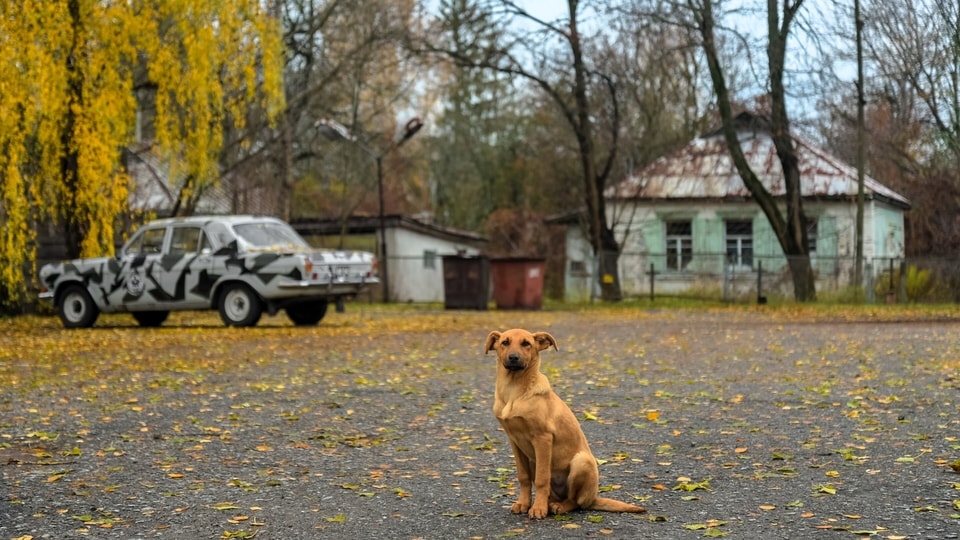
A study of dogs sampled at three sites in the Chernobyl region found distinct local genetic profiles and extensive family connections. The results help researchers examine how movement, breeding and location shape animal populations in a transformed environment, but do not establish that radiation caused the observed differences. (Wikimedia Commons)

In March 2023, a study published in Science Advances analyzed the DNA of 302 dogs at three locations in the region. The researchers found genetic differences between dogs living near the nuclear power plant and those in Chernobyl City, about 15 kilometers away. They also identified 15 family groups, revealing a complex pattern of relationships among the animals.

What the dogs’ DNA has shown

The research team collected blood samples from free-roaming dogs between 2017 and 2019. The animals were sampled near the Chernobyl Nuclear Power Plant, in Chernobyl City and in Slavutych, a city about 45 kilometers from the plant. By comparing 129,497 genetic markers, the scientists examined similarities among the dogs and investigated how closely related individuals were.

The results showed that dogs living near the power plant had genetic profiles that differed from those of dogs in Chernobyl City. The researchers also identified a distinct population in Slavutych, indicating that the sampled animals did not form one genetically uniform group across the region.

To understand family relationships, the team examined parent-offspring connections among the sampled dogs. They found that 233 of the 302 animals, about 77%, had a parent or offspring represented in the dataset. The analysis identified 15 family groups, with the largest containing more than 162 dogs and including relatives sampled at different locations.

These family connections suggest that the populations were not completely isolated. Some dogs had relatives living in different parts of the region, indicating that animals or their ancestors may have moved between locations. However, the genetic differences between the populations remained evident despite these connections. The findings show that related dogs can be spread across different locations without making the populations genetically identical.

The scientists also examined ancestry associated with Western dog breeds and found differences among the sampled populations. This provided additional information about the dogs’ genetic histories, although the analysis did not trace every animal directly to a pet abandoned during the 1986 evacuation.

Why the findings matter beyond Chernobyl

The exclusion zone contains industrial facilities, abandoned settlements, and wooded areas, creating different conditions for animals living within it. Human activity also continues at the nuclear power plant, where workers provide food to some of the dogs. As a result, the animals’ survival reflects not only their ability to find resources but also their interactions with people and the surroundings in which they live.

The genetic findings offer a way to understand how these local conditions intersect with family relationships, breeding, and movement. Comparing dogs from several locations allowed the researchers to identify differences that might have been missed by studying a single population. It also helped reveal connections between animals living in different parts of the region, alongside the genetic distinctions associated with their locations.

Importantly, the study did not establish that radiation caused the genetic differences observed among the dogs. Its focus was on population structure, ancestry and family relationships, rather than demonstrating that radioactive contamination had produced particular mutations or adaptations. Further research would be needed to determine whether long-term, low-dose radiation exposure has affected the animals’ biology and to distinguish any such effects from other influences.

Forty years after the Chernobyl disaster, the dogs offer researchers an opportunity to investigate how a domestic species persists in an unusual environment. Their DNA provides insight into both the relationships among individuals across the exclusion zone and the differences between populations living relatively close to one another. Understanding these patterns can help scientists investigate how geography, breeding history, and environmental conditions shape animal populations over time.


Share This Article
Facebook Email Copy Link Print
Previous Article Saurav Das, Ashutosh Ranka Likely To Walk Free Today Amid CJP Protests
Next Article Siddaramaiah Sting Case: Police Examine Video Origin, Seek YouTube Information
Leave a Comment Leave a Comment

Leave a Reply Cancel reply

Your email address will not be published. Required fields are marked *

You Might Also Like

BusinessLifestyleStartup

Adhikari orders probe into cremation of RG Kar rape-murder victim; names 3 TMC leaders

West Bengal chief minister Suvendu Adhikari on Sunday ordered an…

5 Min Read
BusinessLifestyleStartup

Akhilesh Yadav’s Ayodhya visit: Bhagwat Katha and a political backdrop

Samajwadi Party (SP) chief Akhilesh Yadav will attend Shrimad Bhagwat…

2 Min Read
BusinessLifestyleStartup

Padres ace Michael King has option decision to make

After an impressive postseason, San Diego Padres right-hander Michael King…

3 Min Read
BusinessLifestyleStartup

After Bryansk bus attack, Belarus flexes Oreshnik deterrent; Lukashenko warns against ‘hot tempers’

Published on Jul 07, 2026 08:43 am IST Belarusian President…

1 Min Read
Next India MagazineNext India Magazine
Follow US
© 2026 Next India Magazine powered by India Times Now. All Rights Reserved.
Welcome Back!

Sign in to your account

Username or Email Address
Password

Lost your password?