



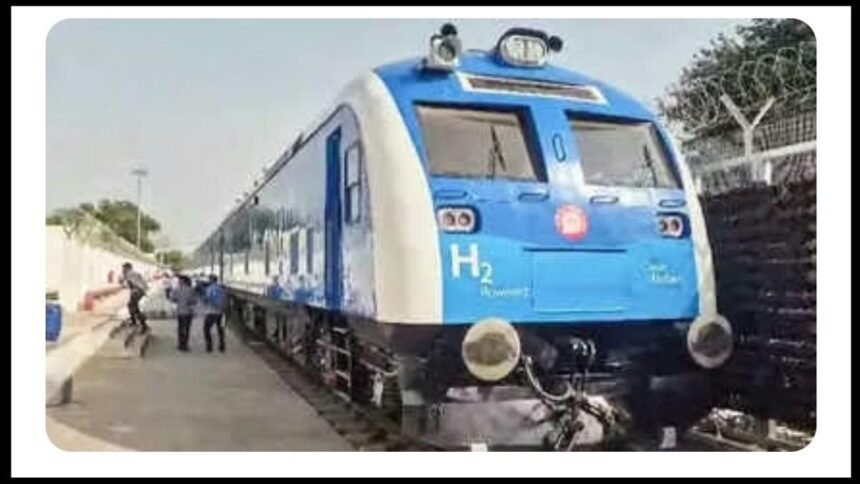
India marks a milestone for clean rail transport as its first hydrogen fuel cell passenger train covers around 900 kilometres in the first five days on the Jind-Sonipat route, while maintaining standard ticket pricing and supporting the National Green Hydrogen Mission.
India
-Oneindia Staff

India’s first hydrogen fuel cell-powered passenger train has achieved a major milestone by successfully covering approximately 900 kilometres during the first five days of its commercial operation on the Jind-Sonipat route. The achievement marks a significant step in India’s transition towards clean and sustainable rail transportation.

The hydrogen-powered train was inaugurated by Prime Minister Narendra Modi on July 17, 2026. Its successful operation has placed India among a select group of countries operating advanced hydrogen-powered railway technology.
India marks a milestone for clean rail transport as its first hydrogen fuel cell passenger train covers around 900 kilometres in the first five days on the Jind-Sonipat route, while maintaining standard ticket pricing and supporting the National Green Hydrogen Mission.
The train is equipped with two advanced 1,200-kilowatt hydrogen-electric propulsion systems, replacing conventional diesel engines. The technology significantly reduces diesel consumption and dependence on conventional electricity. Hydrogen fuel cells generate electricity by combining hydrogen and oxygen, producing only water vapour and heat as by-products, making the train a zero-emission mode of transport.
Despite using cutting-edge technology, the service has been introduced without increasing the financial burden on passengers. Ticket prices remain the same as regular Diesel Multiple Unit (DMU) services, ranging between ₹10 and ₹25, ensuring affordable and environmentally friendly travel for commuters.
The 10-coach hydrogen train is designed as a cost-effective and eco-friendly alternative to conventional fuel-powered trains. By eliminating harmful emissions and reducing dependence on imported fossil fuels, the project supports India’s National Green Hydrogen Mission and the country’s clean energy goals.
The train is supported by a dedicated hydrogen storage and refuelling facility developed indigenously in Jind. The infrastructure is expected to ensure long-term operational efficiency and economic viability for Indian Railways. The successful operation of the Jind-Sonipat hydrogen train is expected to serve as a model for expanding clean, green, and self-reliant rail transportation across the country, paving the way for wider adoption of hydrogen-based mobility solutions in India.