



International
oi-Gaurav Sharma

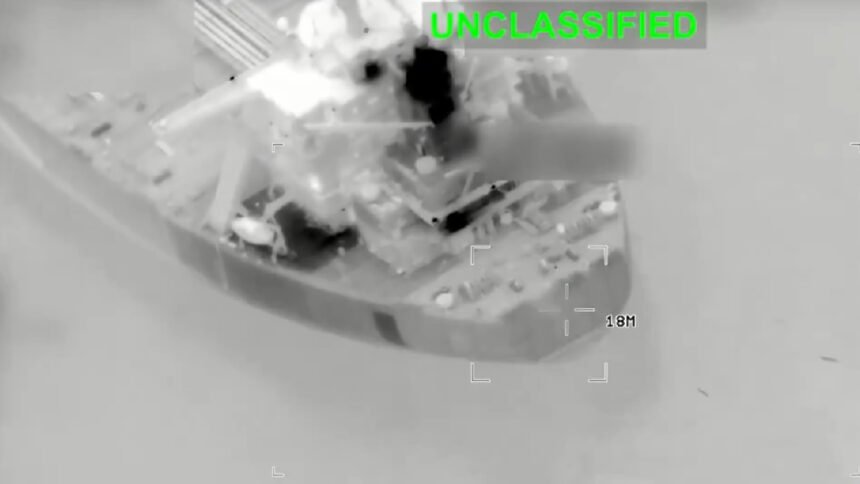
Iran carries out major retaliatory operation against commercial shipping in the Strait of Hormuz on Wednesday, after US sank five Iranian oil tankers. Exchange marks sharpest escalation of tensions in a six-month-long conflict.
Attacks trigger concerns in energy markets, pushing Brent crude to above $100 a barrel for the first time since July. Maritime officials also report casualties – one sailor died aboard oil products tanker Hercules Star, while another was reported missing after apparently being hit near Dubai.
Iran retaliated Wednesday with attacks on commercial shipping in the Strait of Hormuz and missiles near Jordan, following US strikes on Iranian oil tankers, escalating a six-month conflict, causing casualties, and impacting oil prices.

Iran’s Islamic Revolutionary Guard Corps (IRGC) also claims to have fired ballistic missiles at facility used by US forces near Al Azraq in eastern Jordan. Jordanian authorities said their air defences shot down 18 out of 20 missiles, while the remaining two landed in sparsely populated areas with no casualties.
Latest escalation comes after attacks by US forces which sank five Iranian oil tankers. Washington said the strikes were in retaliation for the fact that Iranian forces had fired ballistic missiles at its Navy vessel on two occasions. US officials said that no American personnel were injured.
US MISSILES POUND IRANIAN TANKER AFTER TANKER
MASSIVE BLASTS ERUPT as MULTIPLE VESSELS HIT
IRAN NOW STRIKES US BASES in RETALIATION https://t.co/IAK0MIXG0x pic.twitter.com/W5Sl0o4XBs
— RT Intl (@RT_on_X) September 8, 2026
US Secretary of State Marco Rubio warns that Washington will continue to target Iranian tankers if attacks continued against US naval assets. Meanwhile, Tehran threatens a far-reaching escalation of military measures, saying that if further attacks were carried out against its installations, it would respond in a much more significant manner.
Shipping has been severely disrupted around the Strait of Hormuz, a vital global energy route which normally carries roughly one-fifth of the world’s oil supplies. Iran has closed off passage through the waterway, while the US has imposed a blockade on Iranian ports.
The situation has been exacerbated with a renewed conflict between Saudi Arabia and Iran-backed Houthi movement in Yemen, with attacks on Saudi oil installations causing renewed concerns over the stability of Middle East energy supplies and putting further pressures on already-turbulent oil markets.