


By using this site, you agree to the Privacy Policy and Terms of Use.
Accept
Next India Magazine
  • Home
    • Home 2
    • Home 3Hot
    • Home 4
    • Home 5New
  • Home
  • Opinion

    That Provide Critical Analysis on Political Decision-Making

    krutikadalvibiz@gmail.com

    Analyzing Global Dynamics and Unraveling Key Policy Initiatives

    krutikadalvibiz@gmail.com

    Luxurious Stays Redefining Hospitality at Hotel Havens

    krutikadalvibiz@gmail.com

    Electric Cars Subsidies by German Taxpayers End Up on Foreign Roads

    krutikadalvibiz@gmail.com

    Challenge and Inspire Future of Political Thought

    krutikadalvibiz@gmail.com

    Assessing the Diplomatic Challenges and Global Security

    krutikadalvibiz@gmail.com
  • World
  • Politics
  • Market
  • Health
  • Insurance
  • Pages
    • Blog Index
    • Contact US
    • Search Page
    • 404 Page
    • Technology
    • World
  • Pages
    • Blog Index
    • Search Page
    • 404 Page
  • Technology
    TechnologyShow More
    Dr. Nishant Sawant: The Mind Behind Secure Digital Progress
    4 Min Read
    NASA’s Artemis II Mission Rekindles Humanity’s Dream of Deep Space Exploration
    5 Min Read
    Buying a Car Will Soon be Like Buying a Phone, Why Your Next Car Could be an EV
    Hands-On With the iPhone 13, Pro, Max, and Mini
    4 Min Read
    Explained: What are Smart Glasses and How Do It Work?
    4 Min Read
  • Posts
    • Post Layouts
      • Standard 1
      • Standard 2
      • Standard 3
      • Standard 4
      • Standard 5
      • Standard 6
      • Standard 7
      • No Featured
    • Gallery Layouts
      • Layout 1
      • Layout 2
      • layout 3
    • Video Layouts
      • Layout 1
      • Layout 2
      • Layout 3
      • Layout 4
    • Audio Layouts
      • Layout 1
      • Layout 2
    • Post Sidebar
      • Right Sidebar
      • Left Sidebar
    • Review
      • Stars
      • Scores
      • User Rating
    • Content Features
      • Highlight Shares
      • Inline Mailchimp
      • Print Post
      • Inline Related
      • Source/Via Tag
      • Reading Indicator
      • Content Size Resizer
    • Table of Contents
      • Full Width
      • Left Side
    • Sponsored Post
  • Contact
  • Pages
    • Search Page
    • 404 Page
Reading: Japan Revises Imperial Succession But Still Excludes Women
SUBSCRIBE
Next India MagazineNext India Magazine
Font ResizerAa
  • My Saves
  • Economics
  • Technology
  • My Interests
  • World
  • My Feed
  • History
  • Business
  • Technology
  • Lifestyle
  • Fashion
  • Health
  • Technology
  • World
Search
  • Pages
    • Blog Index
    • Contact Us
    • Search Page
    • 404 Page
  • Home
    • Home 1
    • Home 2
    • Home 3
    • Home 4
    • Home 5
  • Home
  • Blog
  • Categories
    • Technology
    • Lifestyle
  • Personalized
    • My Feed
    • My Saves
    • My Interests
    • History
  • Demos
  • Categories
    • Technology
    • Business
    • Fashion
    • Economics
  • Bookmarks
  • Categories
    • Technology
    • Health
    • World
  • More Foxiz
    • Blog Index
    • Sitemap
  • Bookmarks
  • Contact
  • More Foxiz
    • Sitemap
Have an existing account? Sign In
Follow US
  • Home
  • World
  • Contact
  • Blog
© Foxiz News Network. Ruby Design Company. All Rights Reserved.
World

Japan Revises Imperial Succession But Still Excludes Women

India Times Now
Last updated: July 18, 2026 11:21 pm
India Times Now
7 Min Read
Share
SHARE

Contents
Why is this an issue?What rules about imperial succession have and have not changed?Why are the changes contentious?Has Japan ever had a woman emperor?

International

dwnews-DW News

Time
Updated: Saturday, July 18, 2026, 13:52 [IST]

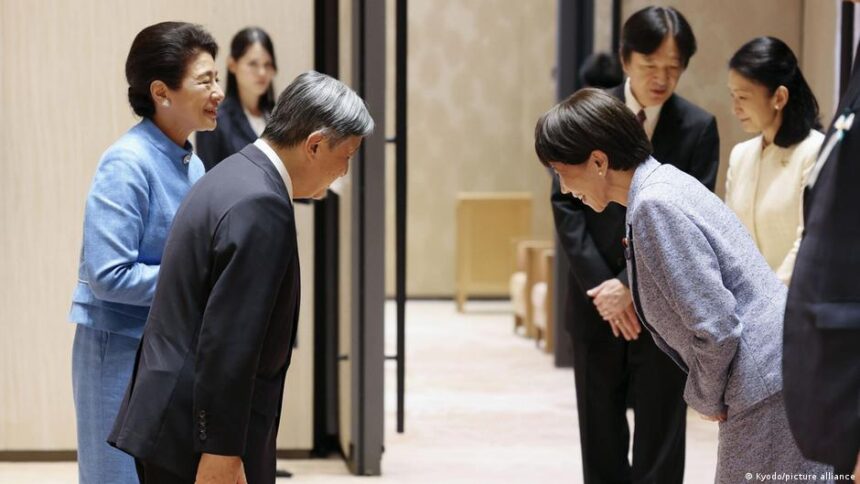
Princess Aiko is Emperor Naruhito s only child but his nephew Prince Hisahito is the young male heir on whose shoulders the bloodline rests under the current patrilineal system FILE May 27 2026

Japan’s parliament on Friday altered the imperial succession laws, making a change designed to safeguard against the eventuality of the only young male prince left in the family line failing to have a son.

Japan’s parliament has altered imperial succession laws, permitting the adoption of distant male relatives to ensure a male heir and allowing princesses to marry commoners without losing status. The patrilineal succession rule remains unchanged, meaning female heirs like Princess Aiko are still ineligible.

The imperial family household’s numbers have famously been dwindling for decades, not least because of rules that exclude all female heirs and their children from the purely patrilineal line of succession.

Opinion polls suggest that the compromise reached by parliament — while endorsed by Prime Minister Sanae Takaichi — is unpopular with much of the wider public, who would rather see Emperor Naruhito’s daughter inherit the throne.

Why is this an issue?

Naruhito, a 66-year-old who acceded to the Chrysanthemum Throne in 2019, and his wife Empress Masako have one child, 24-year-old Princess Aiko. She cannot inherit the throne under the current system.

Naruhito’s younger brother Akishino (also known as Fumihito) is next in line to the throne, and himself 60 years old. He has two elder daughters and only one son, 19-year-old Prince Hisahito, who is the last male heir in the bloodline as it stands and the only man aged under 60.

If Hisahito, who is not yet married, did not have a son, the line would end.

A recent newspaper poll suggested well over half of respondents would welcome Naruhito and Masako s daughter Aiko being made eligible to be empress

What rules about imperial succession have and have not changed?

The reforms to Japan’s succession agreed on Friday make no change to the purely patrilineal nature of the line of succession.

This means that Princess Aiko and her children will remain ineligible to ever accede to the throne, even in the event of the male line ending.

Two other rules have been altered instead. Firstly, Japanese princesses will be permitted to marry “commoner” husbands in future without losing their royal status. This issue came to the fore in 2021 when Fumihito’s daughter Princess Mako married her university sweetheart and gave up her royal titles.

Princess Aiko is also currently unmarried.

The rule change that seeks to enable the possibility to recruit more men to the bloodline is more complex and contentious.

The bill allows the royal family to adopt distant male relatives aged over 15 back into the imperial family — as long as they are unmarried — and for their future sons to become eligible heirs to the throne.

A total of 11 families left the imperial register after Japan’s defeat in World War II, to alleviate the financial burden on the monarchy. Those eligible to be adopted back into the fold only share a common ancestry with Emperor Naruhito if tracked back to the 15th century, or more than 30 generations, according to the Imperial Household Agency.

Prime Minister Sanae Takaichi broke the glass ceiling atop Japanese politics but endorses maintaining the 19th Century male status quo atop the Chrysanthemum Throne

Why are the changes contentious?

Sanae Takaichi, Japan’s first female prime minister, is an advocate of the male-only line of succession, but she faced resistance even from the backbenches of her own center-right Liberal Democratic Party (LDP).

Seiichiro Murakami, a veteran of the conservative LDP, said after the bill passed the lower house on July 10 that it was “utterly outrageous” to rule out Aiko becoming emperor.

Hideya Kawanishi, a professor at Nagoya University and expert in Japan’s royal family, told the AFP news agency that the bulk of the LDP had an “overriding goal” of preserving the male line.

“This is because the solid conservative base that supports them harbors attitudes akin to male chauvinism, and this measure was probably necessary in order to secure their votes in elections,” he said.

But the professor also said he believed the amendments risk “undermining public support for the symbolic Emperor system,” as they might not reflect public opinion — something recent polling also suggests.

A survey published by Japanese daily Mainchi Shimbun last month found that only 23% of respondents approved of adopting distant relatives, with 34% opposing and the largest portion declining to voice an opinion. But by contrast, it found that 72% of respondents said they would favor changing the rules to allow women to be emperor.

Has Japan ever had a woman emperor?

Yes, several — but not in modern Japan.

Given that the bloodline is mythically counted as dating back more than 2,500 years, and to be descended from the Shinto sun goddess Amaterasu, it is difficult to distinguish between reality and legend, especially in the earlier centuries.

In the full list of all 126 Japanese emperors — real, legendary, or otherwise — 12 were women.

Women emperors became much rarer as the centuries went by, but still two women sat on the Chrysanthemum Throne in the Edo period alone, most recently Empress Go-Sakuramachi from 1762-1771.

The rules that formally excluded women from eligibility to be emperor only date back to 1890 and the era of the Empire of Japan that ended with defeat in World War II.

Edited by: Rana Taha

Don’t let the algorithm hide the news. If you rely on our team for trusted reporting, please take a moment to select us as your Preferred Source on Google, so you’ll always see our verified news first.

Source: DW

TAGGED:ExcludesImperialJapanRevisesSuccessionWomen
Share This Article
Facebook Email Copy Link Print
Previous Article Virgo Horoscope Today, July 19, 2026: Your mood may shift between confidence and overthinking
Next Article Why Andrew Tate and his brother Tristan were arrested in Miami? What we know so far
Leave a Comment Leave a Comment

Leave a Reply Cancel reply

Your email address will not be published. Required fields are marked *

You Might Also Like

World

Bengaluru Power Cut Today: Residents Slam BESCOM Over Hours-Long Electricity Cuts, Is Your Area On The List?

Bengaluru oi-Madhuri Adnal Published: Monday, May 18, 2026, 10:28 Several…

3 Min Read
World

Delhi cybercrime cases fall as India reports rise in 2024, NCRB data shows

National Crime Records Bureau (NCRB) data shows registered cybercrime cases…

4 Min Read
World

Pithoragarh minor birth: Police file POCSO and BNS case after 14-year-old delivers baby

Officials in Pithoragarh said a 14-year-old delivered a baby boy…

5 Min Read
World

Why Indians Age Faster: Dr Navin’s The 100 Year Blueprint Explains Why Lifestyle Is Ageing Nody Before Its Time

Lifestyle oi-Oneindia English Desk Published: Thursday, July 9, 2026, 12:19…

10 Min Read
Next India MagazineNext India Magazine
Follow US
© 2026 Next India Magazine powered by India Times Now. All Rights Reserved.
Welcome Back!

Sign in to your account

Username or Email Address
Password

Lost your password?