



International
oi-Madhuri Adnal

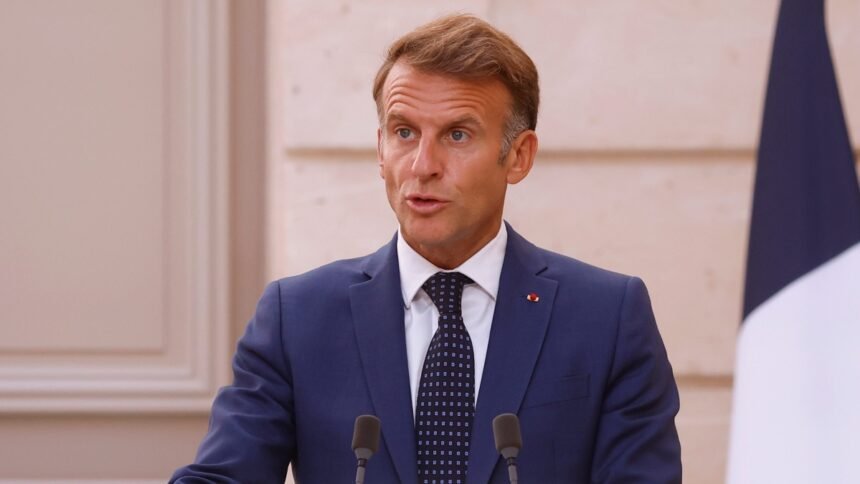
French President Emmanuel Macron has hit back at foreign leaders for using the recent unrest in France to further their political interests, in an apparent dig at US President Donald Trump and Israeli Prime Minister Benjamin Netanyahu.
Macron’s comments come as French authorities continue to enforce curfews in violence-hit areas and prepare for another round of protests over the rising cost of living.
French President Macron criticized foreign leaders, including Trump and Netanyahu, for using France’s social unrest to advance their political agendas. This comes as France enforces curfews and prepares for new cost-of-living protests, following the detention of 2,500 individuals.

According to an AFP report, Macron accused leaders seeking electoral support of making irresponsible remarks about France for their own political gain. He did not name Trump or Netanyahu directly.
“There are people who campaign at France’s expense,” Macron said during a visit to Doha, referring to political leaders in West Asia and across the Atlantic.
His criticism comes at a difficult time for the French government. Violent clashes between masked youths and police, incidents of looting and damage to public buildings have raised questions about the authorities’ ability to maintain order.
The unrest has also affected France’s image abroad, while financial markets remain concerned about the country’s mounting debt and budget deficit.
Macron takes aim at Trump and Netanyahu
Trump has blamed migrants, jihadists and communists for the unrest in France. His comments come as he campaigns for Republicans ahead of the US midterm elections and continues to push his anti-immigration message. He has also expressed support for French far-right leader Marine Le Pen.
Netanyahu, meanwhile, claimed on Tuesday that France had witnessed an “invasion of extremist Islam”.
Macron’s remarks appeared to be a response to both leaders, as he sought to challenge what he sees as attempts to turn France’s domestic problems into political ammunition.
The timing is significant, with France’s presidential election just six months away.
An Ifop poll conducted after the recent unrest showed Le Pen leading the first round of the presidential race by a wide margin. Far-left leader Jean-Luc Melenchon emerged as her most likely rival in a potential runoff, according to the survey.
Curfews remain as authorities prepare for fresh protests
French authorities have imposed nighttime curfews in parts of Paris and several other cities to prevent further violence.
Police confirmed that restrictions in parts of the French capital would continue on Wednesday night. The measures introduced earlier in the week have helped bring some calm, although they have also disrupted late-night public transport.
Macron has called a meeting with ministers and intelligence officials on Thursday to review what happened during last weekend’s violence and assess the government’s response.
He has also ruled out declaring a state of emergency, which would allow soldiers to support police operations against rioters. Macron said the measures already in place, including curfews, were sufficient to deal with the situation.
Prime Minister Sebastien Lecornu has promised a “massive” police deployment for Saturday, when fresh demonstrations over the cost of living are expected.
More than 500,000 people took to the streets across France the previous Saturday to protest against rising living costs. The demonstrations came after weeks of student protests that had forced several schools to shut.
Justice Minister Gerald Darmanin said 174 of the 2,500 people detained during and after the unrest had been jailed. Another 917 had been formally prosecuted.
Unrest over living costs spreads across Europe
France is not the only European country dealing with protests and public anger over the cost of living.
Italy and Belgium have reported similar disturbances on a smaller scale, while thousands of students took to the streets in Greece on Wednesday to protest against rising expenses.
In Italy, the government has ordered 500 troops to Milan to help contain street violence.
The protests point to growing frustration in parts of Europe over the cost of living, public services and security. Governments are facing mounting pressure to address these concerns while preventing demonstrations from turning violent.
In France, the immediate test for Macron’s government is to keep the situation under control and prevent a repeat of the weekend’s clashes as protesters prepare to return to the streets on Saturday.