


International
oi-Gaurav Sharma

Nepal is turning to an unexpected method to supply relief goods to disaster areas as damaged roads and bridges restrict the access of trucks and helicopters to flood-devastated communities.
Authorities have deployed cargo drones to establish an aerial supply chain in the remote region.
Nepal deployed cargo drones, including four DJI FlyCart 100s via Chinese partnership, to deliver essential supplies to flood-devastated communities isolated by a Himalayan glacier fracture, supplementing rescue efforts. Over 1,367 deaths were reported following the disaster.
At least 1,367 people have died and more than 5,000 people are still missing following a Himalayan glacier fracture near the Nepal-China border last month, which caused catastrophic flooding downstream.

In turn, some areas are now facing a new threat – a humanitarian crisis. Communities, cut off by landslides and washed-away bridges, are left waiting for food, water and medical supplies, even as survivors begin to return to their villages.
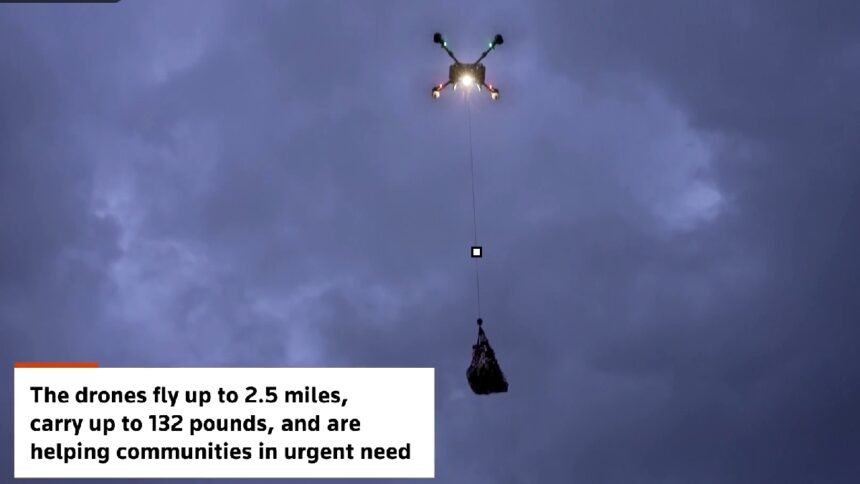
This is where Nepal’s new approach comes into play – the Nepal Army has partnered with Chinese authorities to procure four DJI FlyCart 100 cargo drones as a part of the emergency relief operation. The unmanned aircraft have been delivering roughly 10 to 16 payloads of supplies per day since their arrival in Nepal. Each mission carries up to 60 kg of cargo and can travel up to three to four kilometers.
With roads and bridges destroyed and helicopters busy with search and rescue operations after last months devastating floods, Nepal’s army is turning to drones to deliver relief to displaced people https://t.co/pFVTavQ5PW pic.twitter.com/G1LIJpswPp
— Reuters (@Reuters) September 10, 2026
“We can deliver goods, and that helps people”, said Santosh Budhathoki, a contract pilot for the Nepal Army.
It is not that the Nepal Army does not have helicopters; they do, but the aircraft are stretched thin, focusing on rescue missions. So it makes perfect sense for the cash-strapped military to utilize drones for less critical, yet still essential supplies transportation.
“Our most of the helicopters are busy with rescue operations. We should leave the transport of goods to drones”, Budhathoki added.
This approach could revolutionize disaster relief in the country, where rugged mountains and valleys have historically hampered relief efforts. A bridge may limit a truck, a road – a helicopter, but a drone can weave through the eaves of mountains to drop a payload right in the hands of the desperate.
“Nepal has this geography, this terrain where drones would be really faster, quicker and cheaper,” said Milan Pandey of Airlift Technology, a drone operator.
Although the current operation only utilizes a handful of aircraft, this could change in the future. The new method essentially allows supplies to reach locked-off communities faster, without having to wait for roads and bridges to be repaired.