


By using this site, you agree to the Privacy Policy and Terms of Use.
Accept
Next India Magazine
  • Home
    • Home 2
    • Home 3Hot
    • Home 4
    • Home 5New
  • Home
  • Opinion

    That Provide Critical Analysis on Political Decision-Making

    krutikadalvibiz@gmail.com

    Analyzing Global Dynamics and Unraveling Key Policy Initiatives

    krutikadalvibiz@gmail.com

    Lebullcasinopt.pt: dúvidas antes do primeiro depósito

    krutikadalvibiz@gmail.com

    Registo na Betclic: passos para criar conta e jogar sem erros

    krutikadalvibiz@gmail.com

    Retirar tu saldo en Gran Casino Madrid: pasos y requisitos

    krutikadalvibiz@gmail.com

    Spinbit Account Setup and First Deposit Checks

    krutikadalvibiz@gmail.com
  • World
  • Politics
  • Market
  • Health
  • Insurance
  • Pages
    • Blog Index
    • Contact US
    • Search Page
    • 404 Page
    • Technology
    • World
  • Pages
    • Blog Index
    • Search Page
    • 404 Page
  • Technology
    TechnologyShow More
    Ramya Sudha Vinukonda: A Biology Teacher Turning Government School Classrooms into Spaces of Possibility
    6 Min Read
    Dr. Nishant Sawant: The Mind Behind Secure Digital Progress
    4 Min Read
    NASA’s Artemis II Mission Rekindles Humanity’s Dream of Deep Space Exploration
    5 Min Read
    Buying a Car Will Soon be Like Buying a Phone, Why Your Next Car Could be an EV
    Hands-On With the iPhone 13, Pro, Max, and Mini
    4 Min Read
  • Posts
    • Post Layouts
      • Standard 1
      • Standard 2
      • Standard 3
      • Standard 4
      • Standard 5
      • Standard 6
      • Standard 7
      • No Featured
    • Gallery Layouts
      • Layout 1
      • Layout 2
      • layout 3
    • Video Layouts
      • Layout 1
      • Layout 2
      • Layout 3
      • Layout 4
    • Audio Layouts
      • Layout 1
      • Layout 2
    • Post Sidebar
      • Right Sidebar
      • Left Sidebar
    • Review
      • Stars
      • Scores
      • User Rating
    • Content Features
      • Highlight Shares
      • Inline Mailchimp
      • Print Post
      • Inline Related
      • Source/Via Tag
      • Reading Indicator
      • Content Size Resizer
    • Table of Contents
      • Full Width
      • Left Side
    • Sponsored Post
  • Contact
  • Pages
    • Search Page
    • 404 Page
Reading: North India getting hotter, drier, South wetter: A study of 70-year climate trends uncovers worrying climate shift
SUBSCRIBE
Next India MagazineNext India Magazine
Font ResizerAa
  • My Saves
  • Economics
  • Technology
  • My Interests
  • World
  • My Feed
  • History
  • Business
  • Technology
  • Lifestyle
  • Fashion
  • Health
  • Technology
  • World
Search
  • Pages
    • Blog Index
    • Contact Us
    • Search Page
    • 404 Page
  • Home
    • Home 1
    • Home 2
    • Home 3
    • Home 4
    • Home 5
  • Home
  • Blog
  • Categories
    • Technology
    • Lifestyle
  • Personalized
    • My Feed
    • My Saves
    • My Interests
    • History
  • Demos
  • Categories
    • Technology
    • Business
    • Fashion
    • Economics
  • Bookmarks
  • Categories
    • Technology
    • Health
    • World
  • More Foxiz
    • Blog Index
    • Sitemap
  • Bookmarks
  • Contact
  • More Foxiz
    • Sitemap
Have an existing account? Sign In
Follow US
  • Home
  • World
  • Contact
  • Blog
© Foxiz News Network. Ruby Design Company. All Rights Reserved.
BusinessLifestyleStartup

North India getting hotter, drier, South wetter: A study of 70-year climate trends uncovers worrying climate shift

India Times Now
Last updated: October 29, 2026 5:43 am
India Times Now
5 Min Read
Share
SHARE

India’s climate is turning hotter and drier, with large parts of north India changing from temperate to arid steppe and from hot and tropical Savannah to temperate, hot-summer, between 1961 and 2020, a 70-year analysis of rainfall and temperature changes conducted by researchers at the Indian Meteorological Department (IMD) has found.
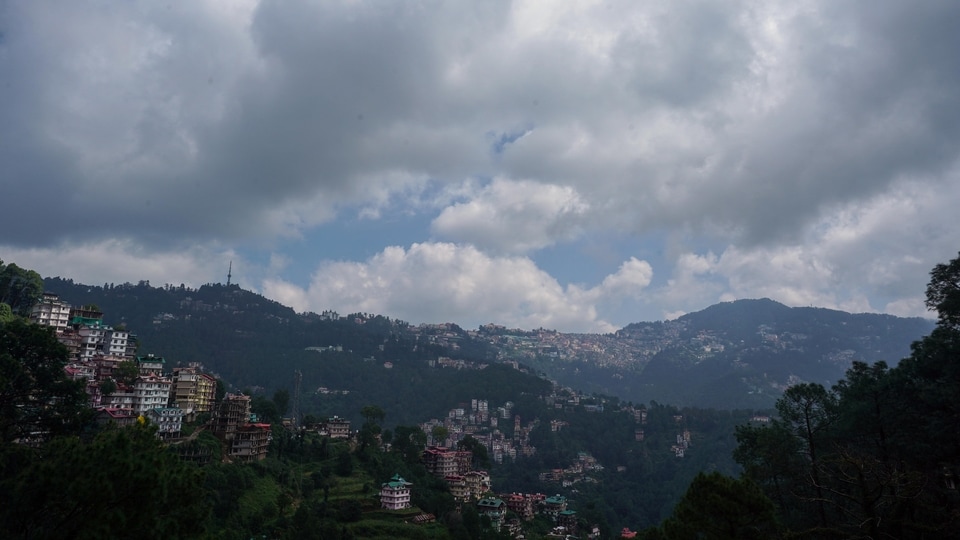
The study is titled: Identifying the climate zone shifts of Indian meteorological subdivisions: insights from historical records. (ANI Representative)

The study also found that India’s peninsular region (excluding the Central Deccan Plateau centred around Maharashtra’s Vidarbha and Marathwada regions), on the other hand, has shifted towards the wetter zone, from arid steppe hot to tropical savannah.

Marathwada and west Vidarbha, already ravaged by drought and farmer suicides, have moved into a hotter, drier climate zone.

What the study points out

The study titled: Identifying the climate zone shifts of Indian meteorological subdivisions: insights from historical records, by Ananya Karmakar, Rajib Chattopadhyay, Pulak Guhathakurta, K S Hosalikar and Mrutyunjay Mohapatra of the India Meteorological Department and the Indian Institute of Tropical Meteorology, Pune, is published in MAUSAM, IMD’s peer-reviewed journal, this month.

The study had set out to investigate historical records of shifts in climate zone modulation across Indian meteorological subdivisions, aiming to uncover the underlying drivers and patterns that have shaped India’s climate landscape by examining historical data, including meteorological observations, proxy records, and historical accounts.

“Two significant findings came out of this analysis — over the historical period 1951–2020, the major change in the climate zone is the shift to the drier region, i.e. temperate to arid steppe and hot and tropical Savannah to temperate hot summer for the North West and North East homogeneous regions, respectively. The percentage area transformed to the drier region is nearly 7% in both homogeneous regions. This modulation is mainly associated with the increasing trend in temperature and decreasing trend in rainfall,” the study has noted.

“For the Peninsular India homogeneous region, the climate zones shift towards the wetter zone, from Arid steppe hot to Tropical savannah by 15% due to a mainly increasing trend of rainfall in recent epochs,” the study also noted.

“But interior Maharashtra, including Marathwada and west Vidarbha, which lay mostly in the tropical savannah zone, which is warm throughout the year with a long dry season, but by 1991–2020 they had moved into the hot semi-arid zone, which is hot with low rainfall, a change the authors attribute mainly to rising daytime and night-time temperatures,” lead study author Ananya Karmakar said.

Climate zones are defined by temperature and rainfall, and the researchers redrew India’s climate map for successive 30-year periods (epochs), the standard span over which climate is measured, from 1951–1980 to 1991–2020, using IMD’s own observations.

The study noted that between 1961–1990, along the coast, the tropical monsoon zone, the country’s wettest, with heavy seasonal rain, has extended further across the Konkan, Goa, coastal Karnataka and Kerala.

The spread of the wettest zone along the coast is consistent with a broader pattern in the study, in which rainfall has increased over southern India even as it has declined over the northern plains, resulting in Maharashtra’s interior and its coastline changing in opposite directions.

“The current shrinking and expected disappearance of the tropical savannah and temperate climate zone will cause numerous problems related to food safety and local population displacement. This is something that must be taken into account in future socioeconomic development plans for the country. Overall, the results suggest that the increasing influence of the negative phase of the Victoria Mode plays a pivotal role in modulating rainfall variability and driving the expansion of drier climate classes over Northern India. The continued contraction of tropical savannah and temperate climate zones poses serious risks to food security, water resources, and regional livelihoods. These findings underscore the importance of incorporating large-scale climate variability into long-term agricultural planning and climate adaptation strategies in India,” Karmakar noted.


Share This Article
Facebook Email Copy Link Print
Previous Article Delhi Hot Air Balloon Ride Returns: Fares Likely To Be Cheaper This Season
Next Article Bengaluru-Mumbai Vande Bharat Sleeper Train To Launch On November 3: Timings, Fare And Stops
Leave a Comment Leave a Comment

Leave a Reply Cancel reply

Your email address will not be published. Required fields are marked *

You Might Also Like

BusinessLifestyleStartup

Ambedkar University Delhi expands courses, introduces one-year PG programmes for 2026 admissions

Dr B.R. Ambedkar University Delhi (AUD) on Tuesday announced a…

3 Min Read
BusinessLifestyleStartup

PMK welcomes TN’s decision to approach SC over Cauvery water dispute

Chennai, PMK President Anbumani Ramadoss on Saturday welcomed the Tamil…

3 Min Read
BusinessLifestyleStartup

Take immediate steps to curb illegal sand mining in Chhattisgarh: Governor Deka directs officials

Raipur, Chhattisgarh Governor Ramen Deka on Wednesday expressed deep concern…

3 Min Read

Kylian Mbappe misses penalty as Betis beats Real Madrid in La Liga

Kylian Mbappe missed a late penalty as Troy Parrott scored…

4 Min Read
Next India MagazineNext India Magazine
Follow US
© 2026 Next India Magazine powered by India Times Now. All Rights Reserved.
Welcome Back!

Sign in to your account

Username or Email Address
Password

Lost your password?