


By using this site, you agree to the Privacy Policy and Terms of Use.
Accept
Next India Magazine
  • Home
    • Home 2
    • Home 3Hot
    • Home 4
    • Home 5New
  • Home
  • Opinion

    That Provide Critical Analysis on Political Decision-Making

    krutikadalvibiz@gmail.com

    Analyzing Global Dynamics and Unraveling Key Policy Initiatives

    krutikadalvibiz@gmail.com

    Luxurious Stays Redefining Hospitality at Hotel Havens

    krutikadalvibiz@gmail.com

    Electric Cars Subsidies by German Taxpayers End Up on Foreign Roads

    krutikadalvibiz@gmail.com

    Challenge and Inspire Future of Political Thought

    krutikadalvibiz@gmail.com

    Assessing the Diplomatic Challenges and Global Security

    krutikadalvibiz@gmail.com
  • World
  • Politics
  • Market
  • Health
  • Insurance
  • Pages
    • Blog Index
    • Contact US
    • Search Page
    • 404 Page
    • Technology
    • World
  • Pages
    • Blog Index
    • Search Page
    • 404 Page
  • Technology
    TechnologyShow More
    Ramya Sudha Vinukonda: A Biology Teacher Turning Government School Classrooms into Spaces of Possibility
    6 Min Read
    Dr. Nishant Sawant: The Mind Behind Secure Digital Progress
    4 Min Read
    NASA’s Artemis II Mission Rekindles Humanity’s Dream of Deep Space Exploration
    5 Min Read
    Buying a Car Will Soon be Like Buying a Phone, Why Your Next Car Could be an EV
    Hands-On With the iPhone 13, Pro, Max, and Mini
    4 Min Read
  • Posts
    • Post Layouts
      • Standard 1
      • Standard 2
      • Standard 3
      • Standard 4
      • Standard 5
      • Standard 6
      • Standard 7
      • No Featured
    • Gallery Layouts
      • Layout 1
      • Layout 2
      • layout 3
    • Video Layouts
      • Layout 1
      • Layout 2
      • Layout 3
      • Layout 4
    • Audio Layouts
      • Layout 1
      • Layout 2
    • Post Sidebar
      • Right Sidebar
      • Left Sidebar
    • Review
      • Stars
      • Scores
      • User Rating
    • Content Features
      • Highlight Shares
      • Inline Mailchimp
      • Print Post
      • Inline Related
      • Source/Via Tag
      • Reading Indicator
      • Content Size Resizer
    • Table of Contents
      • Full Width
      • Left Side
    • Sponsored Post
  • Contact
  • Pages
    • Search Page
    • 404 Page
Reading: Panchkula MC to upgrade waste segregating vehicles
SUBSCRIBE
Next India MagazineNext India Magazine
Font ResizerAa
  • My Saves
  • Economics
  • Technology
  • My Interests
  • World
  • My Feed
  • History
  • Business
  • Technology
  • Lifestyle
  • Fashion
  • Health
  • Technology
  • World
Search
  • Pages
    • Blog Index
    • Contact Us
    • Search Page
    • 404 Page
  • Home
    • Home 1
    • Home 2
    • Home 3
    • Home 4
    • Home 5
  • Home
  • Blog
  • Categories
    • Technology
    • Lifestyle
  • Personalized
    • My Feed
    • My Saves
    • My Interests
    • History
  • Demos
  • Categories
    • Technology
    • Business
    • Fashion
    • Economics
  • Bookmarks
  • Categories
    • Technology
    • Health
    • World
  • More Foxiz
    • Blog Index
    • Sitemap
  • Bookmarks
  • Contact
  • More Foxiz
    • Sitemap
Have an existing account? Sign In
Follow US
  • Home
  • World
  • Contact
  • Blog
© Foxiz News Network. Ruby Design Company. All Rights Reserved.
BusinessLifestyleStartup

Panchkula MC to upgrade waste segregating vehicles

India Times Now
Last updated: October 13, 2026 2:49 am
India Times Now
3 Min Read
Share
SHARE

The municipal corporation (MC), Panchkula, is shifting its focus to source segregation of waste, with four-compartment garbage collection vehicles likely to be introduced in residential areas to collect wet, dry, sanitary and domestic hazardous waste separately, said MC commissioner Vinay Kumar.
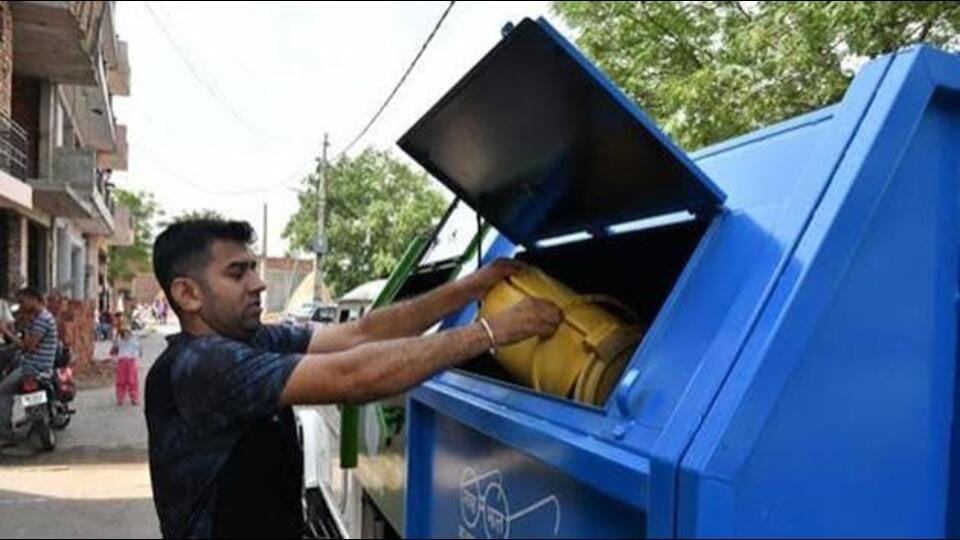
Under the proposed system, dry waste, estimated at 30%, will be collected in blue bins and sent to material recovery facilities (MRFs) for recycling. (HT File)

The MC’s existing door-to-door waste collection contract ends in December. The next contract will be based on revised request-for-proposal conditions, offering an opportunity to incorporate the new segregation requirements. Effective implementation, however, will depend on household participation and separate collection being maintained throughout the waste-processing chain.

The move follows the Solid Waste Management Rules, 2026, which came into effect on April 1, replacing the 2016 framework and mandating four-stream segregation at source for households, offices, institutions and other establishments.

Kumar said waste was currently segregated manually at the secondary collection centre in Alipur village, but the civic body was now focusing on segregation at source. Residents would need to adopt a four-bin system, supported by public awareness, he said.

Clarifying the waste flow, Kumar said Panchkula generates around 200 tonnes of waste daily, but most of it is transported directly to Patvi in Ambala district for processing. Around 40-50 tonnes collected from households is brought to Alipur in smaller vehicles before being transported further. Source segregation is expected to reduce mixed-waste accumulation at the centre and improve processing efficiency.

Under the proposed system, wet waste, accounting for around 55% of the total, will be collected in green bins and processed through composting or bio-methanation. Kumar said the MC will encourage home composting and use compost produced through its own initiatives in nurseries and other suitable locations. Dry waste, estimated at 30%, will be collected in blue bins and sent to material recovery facilities (MRFs) for recycling. Sanitary waste, around 10%, will be collected separately, while the remaining 5% of domestic hazardous waste will require specialised handling and disposal.

The civic body will have to expand the existing two-bin arrangement, upgrade collection vehicles with two compartments, and strengthen composting and material recovery facilities. Separate storage and appropriate treatment arrangements for sanitary and hazardous waste, along with training and protective equipment for sanitation workers, will also be required.

According to details, integrated waste-to-energy plants were planned for Haryana’s Hisar, Ambala, Faridabad and Gurugram clusters. The Ambala cluster, covering urban local bodies in Ambala, Yamunanagar and Panchkula districts, will have an integrated waste-to-energy plant with a processing capacity of 900 tonnes of waste per day. The plant is expected to generate at least 9 megawatt (MW) of electricity once operational.


Share This Article
Facebook Email Copy Link Print
Previous Article Old Monk Claims ₹500 Crore Loss Over FSSAI Labelling Dispute; Next Hearing on Oct 23
Next Article IMF Turns More Optimistic on India, Raises FY27 Growth Forecast from 6.4% to 7%
Leave a Comment Leave a Comment

Leave a Reply Cancel reply

Your email address will not be published. Required fields are marked *

You Might Also Like

BusinessLifestyleStartup

Is AI a 'first world problem' right now? | Number Theory

What do people at large think about AI though? Most…

0 Min Read
BusinessLifestyleStartup

Is AI about to shape the way we really look? Dermatologist Dr Priyanka Sharma explains its role in aesthetic treatments

In recent times, AI has allowed people to modify their…

4 Min Read
BusinessLifestyleStartup

Nashik police share BPO case details with NIA, ATS

The Nashik City Police have shared details of the alleged…

4 Min Read
BusinessLifestyleStartup

Four killed, 14 injured as speeding dumper hits tractor-trolley in Moradabad

Four people were killed and 14 others were injured after…

2 Min Read
Next India MagazineNext India Magazine
Follow US
© 2026 Next India Magazine powered by India Times Now. All Rights Reserved.
Welcome Back!

Sign in to your account

Username or Email Address
Password

Lost your password?