


Lifestyle
oi-Swastika Sruti

It is the month of Pitru Paksha, the period when Hindu families remember and pay respect to their ancestors through rituals such as Shradh, Tarpan and Pind Daan. And during these days, one place becomes the centre of this ancient tradition – Gaya in Bihar.

Gaya, Bihar, is a central pilgrimage destination for Hindu Pitru Paksha ancestral rituals like Shradh and Pind Daan, attracting prominent figures and over 1.2 million devotees recently. The 2026 Pitru Paksha Mela is scheduled from September 25 to October 10.
From different parts of India and even from abroad, devotees travel to Gaya to perform rituals for their departed parents, grandparents and other ancestors. Gaya is regarded as one of the most important pilgrimage destinations for Pind Daan, with the Vishnupad Temple, Falgu River and several sacred vedis forming the heart of the rituals. The official Gaya Pind Daan portal lists the 2026 Pitru Paksha Mela from September 25 to October 10.
The scale of the pilgrimage can be seen in the crowds gathered across Gaya. In just four days, around 12 lakh pilgrims reportedly visited the city for Pitru Paksha rituals, showing how large the annual gathering has become.
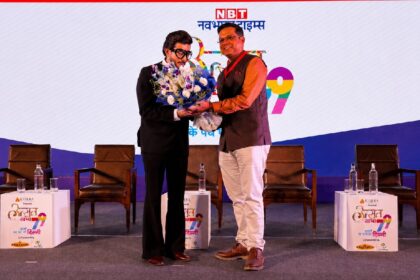
Gaya has also seen prominent personalities perform these ancestral rituals. In September 2025, President Droupadi Murmu performed Pind Daan and Shradh for her ancestors at Vishnupad Temple and Phalgu Akshayavat. This year, Smita Thackeray performed Pind Daan and Shradh at Vishnupad Temple for her father-in-law and Shiv Sena founder Balasaheb Thackeray, as well as her father, Madhukar Chitre.
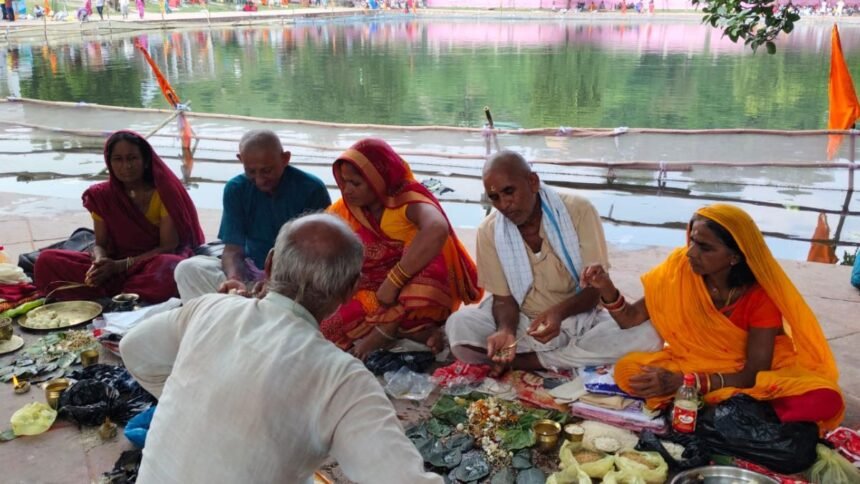
And now, as Pitru Paksha 2026 continues, exclusive visuals from Rukmini Talab in Maranpur, Gaya, show the sheer number of devotees who have gathered here to remember their ancestors and complete the traditional rituals.


The Age Old Cultural Tradition Since Ramayana And Mahabharata
The Mahabharat Story:
According to religious tradition, Yudhishthira (the eldest of the five Pandava brothers) performed pind daan and tarpan here after the Mahabharata war for the peace of those who had died in the conflict. This belief is one reason the site continues to hold a special place in the traditional pilgrimage circuit.
Devotees visiting the Dharmaranya Vedhi perform rituals for their ancestors and pray for their peace and salvation.
Special Pind Daan Rituals At Three Gaya Vedhis
On the fourth day of the Pitru Paksha schedule, devotees traditionally visit three important vedhis in Gaya – Brahmasat, Kagbali and Amraschen – for pind daan.
Brahmasat, located near the Vaitarani pond, has its own religious significance in local tradition. According to belief, Lord Brahma performed a yajna at the site.
After completing the rituals at Brahmasat, devotees also visit nearby Gadakhand. Religious traditions prescribe offering pind and performing a parikrama at the site.
According to the traditional belief, completing the parikrama of Gadakhand gives devotees the spiritual merit associated with performing a yajna.
The Ramayana Story:
According to Hindu tradition, Lord Rama travelled to Gaya with Sita and Lakshmana to perform pind daan for his father, King Dasharatha. Gaya’s religious traditions continue to associate Rama’s visit with the city’s importance as a centre for ancestral rituals.
The legend says that while Rama and Lakshmana went to arrange the necessary materials for the ritual, Sita stayed near the banks of the Falgu River.
It was then, according to the story, that Dasharatha’s spirit appeared before Sita and asked her to perform his pind daan because he was hungry and wanted the ritual to be completed.
Sita told him that Rama and Lakshmana had gone to collect the materials and would soon return. But Dasharatha asked her not to wait.
With the ritual materials unavailable, Sita is believed to have made pind offerings from the sand of the Falgu River and offered them to Dasharatha.
Rama Returned But Was Unsure
When Rama and Lakshmana returned, Sita told them that she had already performed Dasharatha’s pind daan. Rama was surprised because the traditional materials for the ritual had not been available.
According to the legend, Sita then called upon witnesses who were present at the time of the offering. These are traditionally said to have included the Falgu River, a cow, a Tulsi plant, a Brahmin and the Akshay Vat tree.
The legend says that most of these witnesses did not support Sita’s account, while Akshay Vat stood as the truthful witness.
Sita then blessed Akshay Vat, while the story associates her anger with curses upon the other witnesses. The Gaya district administration itself records the tradition that Sita cursed the Falgu River, resulting in its water flowing beneath the sandy surface. It also says that Sita blessed Akshay Vat to remain immortal.