


India
oi-Swastika Sruti

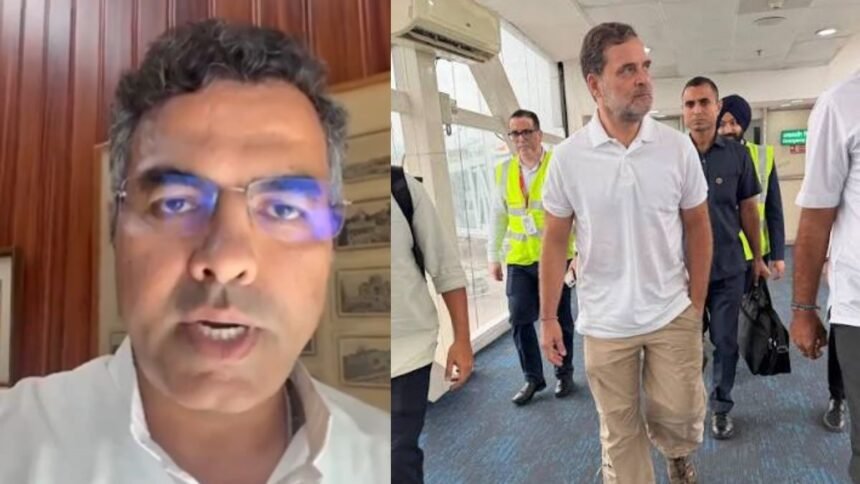
Congress leader Rahul Gandhi has lambasted Delhi minister Parvesh Verma following the viral social media footage of Verma allegedly slapping a man during his road inspection in Tilak Nagar.

On Sunday in Tilak Nagar, Delhi minister Parvesh Verma reportedly slapped a man filming his road inspection, prompting political debate and criticism from Congress leader Rahul Gandhi regarding accountability and official conduct.
This happened on Sunday as Verma was undertaking an inspection of road construction work being carried out in the area. In the video, the minister is seen yanking the mobile phone of a man taping the scene before allegedly slapping him. The security personnel intervene after the situation gets tensed.
The incident has resulted in political war between BJP and AAP as the ministers’ behavior has been questioned by opposition party leaders.
🚨BREAKING🚨
Delhi Cabinet Minister Parvesh Verma Slaps a Young Boy on Camera.
Only Because the guy was asking questions on Corruption in Road Construction.
BJP is a herd of Goons from top to bottom, they are slapping GenZ now for asking questions.
SHAME SHAME pic.twitter.com/yYH74Dqnpd
— राहुल तंवर (@RahulTavar_) September 27, 2026
What Happened During The Road Inspection?
As per media reports, the row started when an inspection of the construction work of the road in Tilak Nagar took place. AAP MLA Jarnail Singh too was there and raised questions about the road construction work.
The video doing the rounds on social media sites shows an altercation at the site, which then culminated into the minister hitting a young man who was filming the whole drama with his mobile. After that, it looks like the young man hit back at the minister, before the security guards intervened.
दिल्ली की BJP सरकार के एक मंत्री वीडियो में एक नौजवान को थप्पड़ मारते दिख रहे हैं।
उसका गुनाह? वो वीडियो बना रहा था।
मंत्री के सामने सड़क खोदकर दिखाई जा रही थी, और उसके हाथ में कैमरा था।ये उस सत्ता का चेहरा है जिसे अब वोटर से डर लगना बंद हो गया है।
सड़क पर सवाल पूछो – थप्पड़।…
— Rahul Gandhi (@RahulGandhi) September 27, 2026
What happened in between is not clear.
Verma has provided his side of the story wherein he stated that an AAP worker insulted his family members and in a fit of rage, he did what he did. He further alleged that Jarnail Singh pressured PWD officials regarding the road.
Rahul Gandhi Questions The Use Of Power
Reacting to the controversy, Rahul Gandhi criticised the incident and used it to raise broader questions about how those in power respond to citizens who question them.
His remarks focused on the idea that elected representatives should remain accountable to the public and should be able to face questions and criticism without intimidation.
Gandhi also connected the incident to his wider political allegations about democratic institutions and elections. He has previously raised allegations of irregularities in the electoral process, which the BJP has rejected.
The immediate issue, however, remains the video from Tilak Nagar and the conduct of a sitting minister during a public inspection.
A Phone Camera Becomes The Centre Of The Controversy
The incident has also raised a simple question: what happens when an ordinary citizen records a public official in a public place?
Mobile phones have become an important tool for documenting incidents involving public authorities. Videos recorded by citizens can bring attention to issues that might otherwise remain unseen.
In this case, the presence of a camera became part of the confrontation itself.
The video has since been widely circulated, with AAP leaders using it to target the BJP government in Delhi. The BJP side, meanwhile, has pointed to the events that preceded the altercation and Verma’s claim that he was provoked.
The Larger Question Is Accountability
The controversy is no longer only about a road inspection or a viral video. It has become a political debate over how elected representatives should respond when citizens, local politicians or journalists question government work.
For a government official, public criticism is part of democratic life. At the same time, allegations made by political opponents also need to be established through evidence and due process.