By using this site, you agree to the Privacy Policy and Terms of Use.
Accept
Next India Magazine
  • Home
    • Home 2
    • Home 3Hot
    • Home 4
    • Home 5New
  • Home
  • Opinion

    That Provide Critical Analysis on Political Decision-Making

    krutikadalvibiz@gmail.com

    Analyzing Global Dynamics and Unraveling Key Policy Initiatives

    krutikadalvibiz@gmail.com

    Luxurious Stays Redefining Hospitality at Hotel Havens

    krutikadalvibiz@gmail.com

    Electric Cars Subsidies by German Taxpayers End Up on Foreign Roads

    krutikadalvibiz@gmail.com

    Challenge and Inspire Future of Political Thought

    krutikadalvibiz@gmail.com

    Assessing the Diplomatic Challenges and Global Security

    krutikadalvibiz@gmail.com
  • World
  • Politics
  • Market
  • Health
  • Insurance
  • Pages
    • Blog Index
    • Contact US
    • Search Page
    • 404 Page
    • Technology
    • World
  • Pages
    • Blog Index
    • Search Page
    • 404 Page
  • Technology
    TechnologyShow More
    Ramya Sudha Vinukonda: A Biology Teacher Turning Government School Classrooms into Spaces of Possibility
    6 Min Read
    Dr. Nishant Sawant: The Mind Behind Secure Digital Progress
    4 Min Read
    NASA’s Artemis II Mission Rekindles Humanity’s Dream of Deep Space Exploration
    5 Min Read
    Buying a Car Will Soon be Like Buying a Phone, Why Your Next Car Could be an EV
    Hands-On With the iPhone 13, Pro, Max, and Mini
    4 Min Read
  • Posts
    • Post Layouts
      • Standard 1
      • Standard 2
      • Standard 3
      • Standard 4
      • Standard 5
      • Standard 6
      • Standard 7
      • No Featured
    • Gallery Layouts
      • Layout 1
      • Layout 2
      • layout 3
    • Video Layouts
      • Layout 1
      • Layout 2
      • Layout 3
      • Layout 4
    • Audio Layouts
      • Layout 1
      • Layout 2
    • Post Sidebar
      • Right Sidebar
      • Left Sidebar
    • Review
      • Stars
      • Scores
      • User Rating
    • Content Features
      • Highlight Shares
      • Inline Mailchimp
      • Print Post
      • Inline Related
      • Source/Via Tag
      • Reading Indicator
      • Content Size Resizer
    • Table of Contents
      • Full Width
      • Left Side
    • Sponsored Post
  • Contact
  • Pages
    • Search Page
    • 404 Page
Reading: Seemapuri collapse: Why Delhi’s blanket amnesty law needs a rethink
SUBSCRIBE
Next India MagazineNext India Magazine
Font ResizerAa
  • My Saves
  • Economics
  • Technology
  • My Interests
  • World
  • My Feed
  • History
  • Business
  • Technology
  • Lifestyle
  • Fashion
  • Health
  • Technology
  • World
Search
  • Pages
    • Blog Index
    • Contact Us
    • Search Page
    • 404 Page
  • Home
    • Home 1
    • Home 2
    • Home 3
    • Home 4
    • Home 5
  • Home
  • Blog
  • Categories
    • Technology
    • Lifestyle
  • Personalized
    • My Feed
    • My Saves
    • My Interests
    • History
  • Demos
  • Categories
    • Technology
    • Business
    • Fashion
    • Economics
  • Bookmarks
  • Categories
    • Technology
    • Health
    • World
  • More Foxiz
    • Blog Index
    • Sitemap
  • Bookmarks
  • Contact
  • More Foxiz
    • Sitemap
Have an existing account? Sign In
Follow US
  • Home
  • World
  • Contact
  • Blog
© Foxiz News Network. Ruby Design Company. All Rights Reserved.
BusinessLifestyleStartup

Seemapuri collapse: Why Delhi’s blanket amnesty law needs a rethink

India Times Now
Last updated: October 8, 2026 10:45 am
India Times Now
4 Min Read
Share
SHARE

In a statement hours after a five-storey building collapsed in northeast Delhi’s Seemapuri on Wednesday, the Municipal Corporation of Delhi (MCD) claimed that the structure was 20-25 years old, a claim contested by the victims and people living in the neighbourhood.
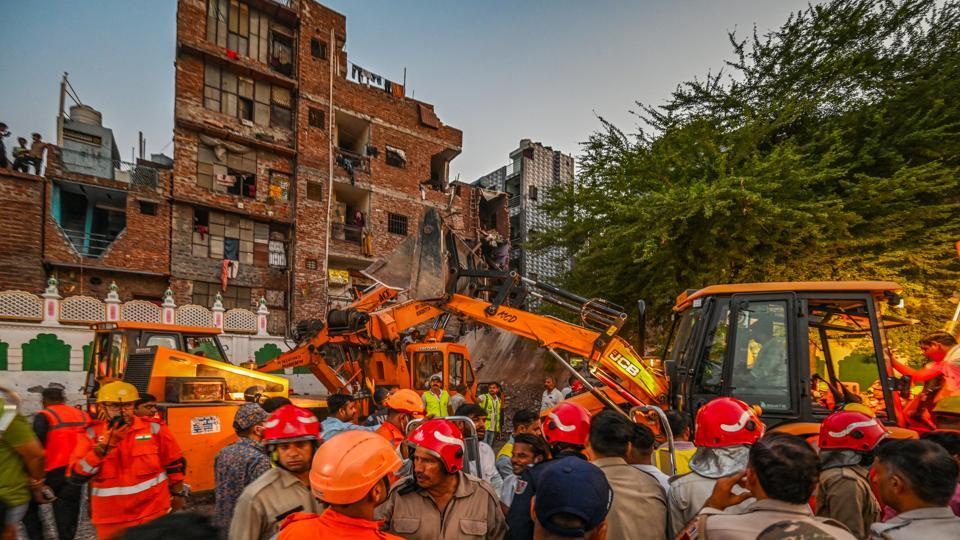
A view of NDRF, Delhi Fire Service, Civil Defence and Delhi Police personnel carrying out rescue operations after a five-storey building collapsed in the Seemapuri area of New Delhi on October 7 (RAJ K RAJ /HT PHOTO)

The distinction is critical. Claiming that a collapsed structure is old implies that it cannot be accused of inaction since these are protected from demolition by a central law.

Under the National Capital Territory of Delhi Laws (Special Provisions) Act passed by Parliament, unauthorised structures built before June 2014 are protected from punitive action, including demolition and sealing. At the time, it was argued that this would give government agencies time to finalise norms and come up with feasible strategies to implement Delhi’s Master Plan.

Also Read: Another Delhi building collapse, same-old script: How enforcement gap has failed to prevent mishaps

The regulatory shield dates back to February 2006, when the MCD launched a city-wide sealing drive following court orders. The scale of unauthorised construction and other violations was so large that the government enacted a law to grant a temporary, one-year reprieve.

It was subsequently extended in 2007, 2009, 2011 and thereafter every three years until 2023. The National Capital Territory of Delhi Laws (Special Provisions) Second (Amendment) Act, 2023, extended protection for unauthorised buildings for another three years, until December 31, 2026.

A senior MCD official dealing with building regulations said preparations for another extension have already started among the urban local bodies.

“Most of the urban villages, abadi areas, resettlement colonies, unplanned trans-Yamuna areas and even Old Delhi have buildings with illegalities and no sanctioned building plans. In unauthorised colonies, even seven- and eight-storey buildings have been constructed, but a large chunk of these are protected under one provision or another. No government has found it electorally conducive to take tough steps,” the official added.

Former MCD works committee chairman Jagdish Mamgain said the law had created a mess of its own.

“It was supposed to be a temporary provision, but it has been extended every few years, increasing the blanket protection. It has been 19 years since the law came into force, and it has created its own mess. What was meant to maintain the status quo has become a loophole for expanding illegal construction. How can one decide whether a building was constructed in 2015 or 2014?” he added, underlining that it was time to find a solution to this mess rather than just keep extending the blanket.

Each successive government responded with regularisation schemes, amnesty provisions and special laws that allowed these settlements to maintain status quo without addressing the underlying shortage of planned housing and commercial space.

On April 7, 2026, the central government also announced the regularisation of 1,511 unauthorised colonies in Delhi on an ‘as-is-where-is’ basis, with an estimated population of 4.5 million. “Most of these buildings don’t conform to building byelaws, but the as-is-where-is provision leaves the vulnerable structures open for regularisation,” an official added.


Share This Article
Facebook Email Copy Link Print
Previous Article Sensex-Nifty Crash: Market Loses Over ₹10 Lakh Crore As Crude Tops $104, RBI Tightens Policy
Next Article Madhya Pradesh Travel Mart 2026 Highlights And Government Initiatives
Leave a Comment Leave a Comment

Leave a Reply Cancel reply

Your email address will not be published. Required fields are marked *

You Might Also Like

BusinessLifestyleStartup

Indian Idol 16 grand finale: Vishal Dadlani to miss crowning the winner; take a look at top 6 finalists

After months of performances, emotional moments and inspiring stories, Indian…

4 Min Read
BusinessLifestyleStartup

4-year-old raped, strangled; body dumped in Shalimar Garden

Ghaziabad: The autopsy of the four-year-old girl whose body was…

3 Min Read
BusinessLifestyleStartup

TMC leaders attend administrative meeting chaired by West Bengal CM Adhikari

Veteran Trinamool Congress (TMC) MP Kakoli Ghosh Dastidar and three…

4 Min Read
BusinessLifestyleStartup

Chitkara University launches digital campus on Google Cloud 4.0, emerges as one of India’s early agentic AI universities

Chitkara University has announced a strategic collaboration with Google Cloud…

4 Min Read
Next India MagazineNext India Magazine
Follow US
© 2026 Next India Magazine powered by India Times Now. All Rights Reserved.
Welcome Back!

Sign in to your account

Username or Email Address
Password

Lost your password?