



The Supreme Court’s landmark directions to crack down on uninsured vehicles have put the spotlight on a basic question many vehicle owners may now face – how to buy or renew motor insurance.

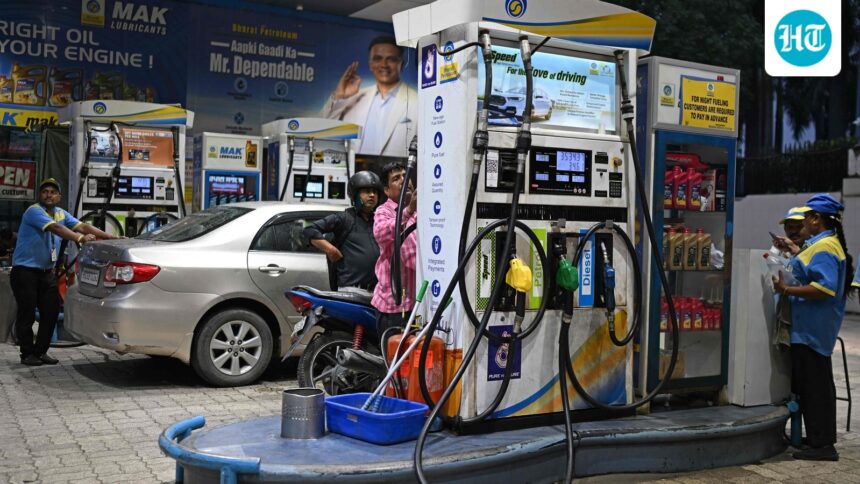
A bench of justices Sanjay Karol and Prashant Kumar Mishra on Tuesday directed the Centre and the Insurance Regulatory and Development Authority of India (IRDAI) to evolve a pilot project under which uninsured vehicles could be denied fuel at petrol pumps, HT earlier reported. It also ordered a technology-driven enforcement mechanism to automatically identify and penalise uninsured vehicles.
Observing that nearly 56 per cent of vehicles plying on Indian roads remain uninsured, the bench said the statutory safeguard of compensating road accident victims was often “delayed, if not defeated”, forcing victims and their families into prolonged litigation.
“The object behind mandatory insurance under Section 146 of the Motor Vehicles Act is not just that victims of road accidents are compensated, it is also that they are not drawn into prolonged litigation,” the court noted.
Against this backdrop, here is how vehicle owners can buy or renew motor insurance.
How to get your vehicle insured
Buying insurance with a new vehicle
Many buyers get the insurance through the dealership itself while purchasing a vehicle. Car and two-wheeler dealers typically have tie-ups with one or more insurance companies and offer policies at the time of delivery. Buyers can choose between the mandatory third-party insurance and a comprehensive policy, along with optional add-ons such as zero depreciation, roadside assistance and engine protection.
However, buyers are not bound to purchase insurance offered by the dealer. They can opt for a policy from another insurer before the vehicle is registered.
Buying insurance online
Vehicle owners can also buy insurance directly through an insurance company’s website or mobile application, or through online insurance comparison platforms such as Policybazaar, Acko, InsuranceDekho.
Typically, buyers need to provide the vehicle registration number or chassis details for a new vehicle, owner details and, in the case of renewals, previous policy information, including details of claims. Policies are generally issued digitally within minutes after payment.
Renewing an existing policy
Insurance can be renewed with the existing insurer by visiting its website, mobile application, branch office or authorised agent.
Vehicle owners can also switch insurers at the time of renewal by comparing premiums and purchasing a new policy. If eligible, the No Claim Bonus (NCB) earned under the previous policy can usually be transferred to the new insurer.
Those preferring offline services can renew policies by visiting an insurer’s branch or through authorised agents, carrying the vehicle’s registration certificate and previous insurance policy.
Public sector insurers
Motor insurance is offered by several public sector general insurance companies, including National Insurance Company, New India Assurance, Oriental Insurance Company and United India Insurance. Policies can be purchased online, at branch offices or through authorised agents.
Private insurers
Several private insurers also offer motor insurance, including ICICI Lombard, HDFC ERGO, Bajaj Allianz General Insurance, TATA AIG, ACKO, Reliance General Insurance, Kotak Mahindra General Insurance and Go Digit General Insurance.
Policies are available online, through agents, banks and dealerships.
Government vs private insurers
Both public and private insurers are regulated by IRDAI and offer mandatory third-party as well as comprehensive motor insurance policies. While public sector insurers generally have an extensive branch network, private insurers often focus on digital services, including online purchase, renewal and claim tracking.
Premiums are not fixed by ownership. They vary depending on factors such as the vehicle, location, claim history, insured value and optional covers selected.
If your policy has expired
Vehicle owners whose insurance has lapsed can renew or purchase a fresh policy. In cases where the lapse is significant, insurers may require a physical or video inspection of the vehicle before issuing the policy.
Driving an uninsured vehicle remains a violation of the Motor Vehicles Act and can attract penalties.
The Supreme Court has also directed the Ministry of Road Transport and Highways (MoRTH) and IRDAI to examine a pilot project under which fuel supply would be linked to a vehicle’s insurance status.
“In the absence thereof, the vehicle concerned would be refused fuel at petrol pumps until such time that valid insurance is obtained,” the bench ordered, noting that the Ministry of Petroleum and Natural Gas had, in principle, expressed no objection to the proposal.
The court further directed that Automatic Number Plate Recognition (ANPR) cameras be integrated with insurance databases to enable automatic issuance of e-challans to uninsured vehicles, while states have been asked to equip traffic police with handheld devices or mobile applications to verify insurance status on the spot. It also directed strict implementation of proposed amendments prescribing steeper penalties for driving uninsured vehicles once notified by the Centre.