India
oi-Swastika Sruti

As this is the month of Independence, did you know that the first Independence day of India was not celebrated all over the nation?

India’s independence on August 15, 1947, was overshadowed by the Partition, which caused mass displacement and violence, preventing many from celebrating, while Mahatma Gandhi focused on peace efforts in Calcutta.
On August 15, 1947, India finally broke free from nearly 200 years of British rule. Across the country, people celebrated with joy, waved the Tricolour, and dreamed of a new future. But while Delhi was witnessing one of the happiest moments in the nation’s history, many parts of India were not celebrating at all.
For millions of people, India’s first Independence Day was not a day of joy – it was a day of fear, loss and uncertainty.
A Historic Midnight That Changed Everything
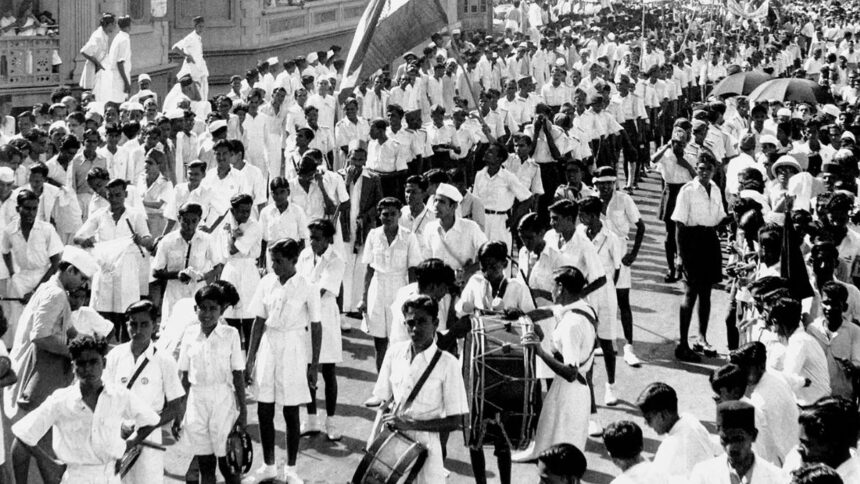
On the midnight of August 14, 1947, Jawaharlal Nehru delivered his famous “Tryst with Destiny” speech in the Constituent Assembly. The moment clock struck midnight, India officially became an independent nation. In Delhi, celebrations began immediately. Crowds gathered, flags were hoisted, and people filled the streets to welcome freedom after decades of struggle.
Partition Overshadowed Independence
India’s independence came with one of the biggest and most painful events in modern history-the Partition of British India.
The country was divided into India and Pakistan, forcing millions of people to leave their homes almost overnight. Families who had lived together for generations suddenly found themselves on opposite sides of a newly drawn border. As trains, bullock carts and long columns of refugees moved across Punjab and Bengal, violence erupted on an unimaginable scale.
Historians estimate that around 10 to 15 million people were displaced, making it one of the largest mass migrations in human history. More than a million people are believed to have lost their lives in communal violence, though exact figures remain debated.
Gandhi Chose Peace Over Celebration
One of the most remarkable facts about India’s first Independence Day is that Mahatma Gandhi did not attend the celebrations in Delhi.
Instead of joining political leaders in the capital, Gandhi was in Calcutta (now Kolkata), where communal tensions between Hindus and Muslims had turned deadly.
He spent the day praying, meeting people from both communities, and appealing for peace.
When journalists asked him for a message to mark Independence Day, Gandhi reportedly said he had no message to give, as his heart was heavy with the suffering caused by Partition.
Refugees Had No Time to Celebrate
In August 1947, thousands of refugee camps sprang up across northern India.
People arrived carrying little more than a few belongings. Many had lost family members during the violence. Others had no idea whether their loved ones were alive.
Food, clean water and medical care were scarce.
For these refugees, the first Independence Day was spent searching for missing relatives, standing in relief lines and trying to rebuild shattered lives.
The Tricolour may have been flying high across the country, but many people were too overwhelmed by grief to celebrate.
India’s first Independence Day was a moment of triumph for a nation-but for millions of ordinary people, it was also a day they remembered with tears rather than celebrations.