



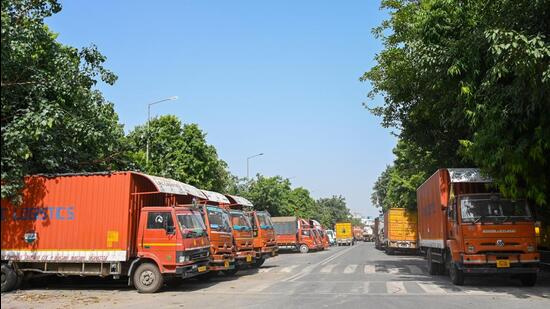
Day One of the three-day strike called by the All India Motor Transport Congress (AIMTC) against the hike in environment compensation cess (ECC) and the proposed restrictions on older commercial vehicles had limited impact across Delhi-NCR on Thursday, even as the transporters’ body claimed large-scale participation in the protest.
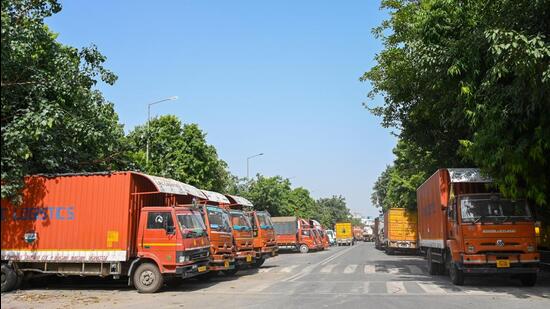
The strike on May 21, 22 and 23 was called in protest against the recent increase in ECC on commercial vehicles entering Delhi and the proposed restrictions on BS-4 and older vehicles. AIMTC has alleged that the measures are adversely affecting transport operators and increasing operational costs.
In a statement issued on Thursday, AIMTC said around 70,000 trucks usually enter Delhi every day through various border points in the National Capital Region, but the number was drastically low on Thursday.
“During the protest period today, only around 100-200 trucks entered Delhi, most of which were already in transit or on the route before the strike commenced… This clearly reflects the massive participation and success of the strike and strong agitation among the transport fraternity against the unjust policies,” it added.
The association said it represents nearly 9.5 million truckers and around 2.6 million operators of private buses, taxis and maxi-cabs through over 3,500 transport associations and unions across the country.
“We hope that the government awakens to the gravity of the situation, empathises with the genuine concerns of the transport fraternity, and initiates constructive dialogue to resolve these issues in a fair, practical and sustainable manner,” AIMTC said.
However, transport groups said freight movement into Delhi continued through the day and disputed the figures cited by the transporters’ body. Indian Foundation of Transport Research and Training (IFTRT) senior fellow and coordinator SP Singh said the strike had little impact on the movement of goods vehicles into the capital.
According to Singh, nearly 5,000 diesel trucks carrying fruits, vegetables and general merchandise entered Delhi through 13 major entry points between midnight and 7am on Thursday.
HT checked some transit hubs for any commuter inconvenience, including the New Delhi railway station (NDLS) and Anand Vihar ISBT, and found cabs operating as usual. At NDLS, black and yellow taxis lined up in the parking area just a few steps away from the main entrance, waiting for passengers.
“Online app-based platforms have already taken away half our business, and CNG prices have seen a steady increase in the last one week. In these circumstances, we cannot afford to go on strike,” said Raj Verma, a taxi driver at the station.
Similar sentiments were shared by cab drivers at Anand Vihar railway station, including 50-year-old Jagatpal Singh, who has been driving the black and yellow cab since the early 1990s.
“I came around 6am at the station, and we are working like we do regularly. The strike is only for bigger commercial vehicles and in the outer Delhi area, not for us,” said Singh.
Last month, the Delhi government increased ECC on commercial vehicles by over 50% and announced a 5% annual increase in the fee structure. Under the revised rates, effective April 19, ECC on light commercial vehicles and two-axle trucks was increased from ₹1,400 to ₹2,000.
The charge for three-axle and heavier vehicles was increased from ₹2,600 to ₹4,000. AIMTC has demanded exemption from ECC for BS-6 vehicles, those carrying essential commodities, as well as empty trucks entering Delhi for loading. The association has also opposed the proposed ban on BS-4 commercial vehicles, stating that the move lacks scientific and legal basis.