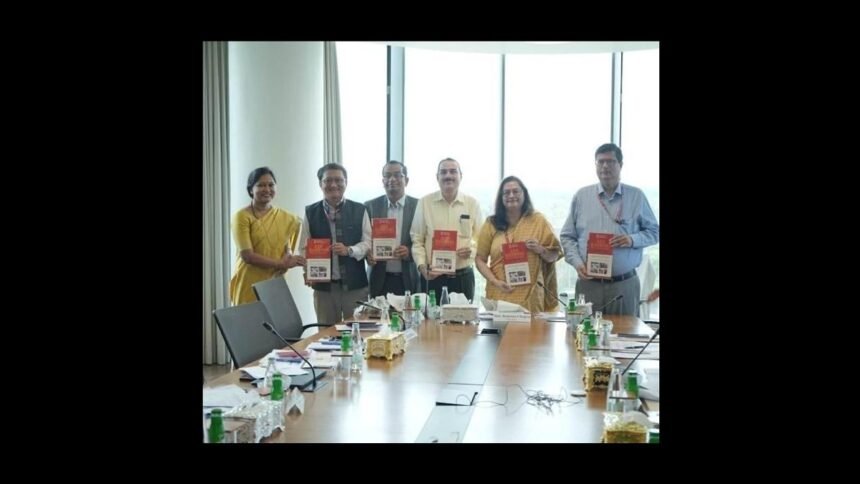
The Ministry of Tribal Affairs assessed the progress of PM-JANMAN and DA-JGUA, reviewed ITDA guidelines, and emphasized faster fund utilisation and better convergence with line ministries, aiming to enhance implementation and accountability in tribal development.
India
-Oneindia Staff

The Ministry of Tribal Affairs reviewed the physical and financial progress of its key schemes, including the Pradhan Mantri Janjati Adivasi Nyaya Maha Abhiyan (PM-JANMAN) and Dharti Aaba Janjatiya Gram Utkarsh Abhiyan (DA-JGUA), with a focus on strengthening implementation, improving convergence, accelerating fund utilisation and addressing bottlenecks across states and implementing agencies.

The review meeting was held under the chairpersonship of Secretary, Ministry of Tribal Affairs Ranjana Chopra. Additional Secretary Manish Thakur, senior officials of the Ministry, the National Programme Management Unit (NPMU), representatives of state governments and implementing agencies participated in the meeting. During the meeting, component-wise progress of PM-JANMAN and DA-JGUA was reviewed, along with physical and financial achievements, convergence with various line ministries and implementation challenges.
The Ministry of Tribal Affairs assessed the progress of PM-JANMAN and DA-JGUA, reviewed ITDA guidelines, and emphasized faster fund utilisation and better convergence with line ministries, aiming to enhance implementation and accountability in tribal development.
The Roadmap for Integrated Tribal Development Agencies/Projects (ITDAs/ITDPs) along with comprehensive ITDA Operational Guidelines was shared with states and ministries. The framework aims to strengthen planning, governance and monitoring mechanisms and promote greater convergence of Central and State interventions at the district and block levels. The initiative is expected to support decentralised planning, improve utilisation of funds, reduce implementation delays and facilitate the adoption of replicable models for tribal development across states.
Adi Darpan released
The meeting also saw the release of Adi Darpan, a comprehensive compendium highlighting the progress of the Ministry’s schemes and programmes, along with the ground realities and development profile of tribal communities across the country. The publication is intended to serve as a ready reference on tribal development, strengthen transparency and facilitate evidence-based planning. It will also provide policymakers, researchers and citizens with greater visibility into the implementation and outcomes of various tribal development interventions.
Wayanad, Dima Hasao, Palghar and Palakkad win District Agri DPR Challenge
The Ministry announced the winners of the District Agri Detailed Project Report (DPR) Challenge, which invited districts to prepare high-quality, implementation-ready DPRs for agriculture and allied livelihood interventions benefiting tribal farmers. The winning districts are Wayanad, Dima Hasao, Palghar and Palakkad, representing Kerala, Assam and Maharashtra. The initiative aims to promote innovation and improve the quality of agricultural livelihood planning, particularly in areas such as horticulture, water management and value-chain development. The selected models are expected to encourage replicable interventions and support sustainable improvement in farm incomes in tribal areas.
National conclave for tribal women entrepreneurs
The upcoming Rani Durgavati Adivasi Mahila Sammelan – National Conclave on Tribal Women Entrepreneurswas also presented during the meeting by DA-JGUA Director Dr Varnali Deka. Named after tribal warrior-queen Rani Durgavati, the proposed national conclave will focus on strengthening opportunities for tribal women entrepreneurs through market linkages, access to credit, skilling and mentorship. The initiative reflects the Ministry’s emphasis on promoting women-led enterprises, economic self-reliance and Nari Shakti in tribal regions.
Focus on fund utilisation and implementation
The review also focused on the status of Utilisation Certificates (UCs) and expenditure commitments under DA-JGUA, PM-JANMAN and Article 275(1). Officials were directed to accelerate fund utilisation during the remaining period of the financial year. Progress of the TMMC initiative, Centre of Competence for Sickle Cell Disease and CSIR-NBRI bioresource initiative was also reviewed. These initiatives seek to strengthen health-related interventions for tribal communities while leveraging traditional knowledge and bioresources for developmental outcomes.
Adi Karmayogi Abhiyan reviewed
The implementation of the Adi Karmayogi Abhiyan was also assessed, including registrations at Adi Sewa Kendras and enrolment of Adi Karmayogi Volunteers. Officials also demonstrated the iGoT microsite developed for capacity-building of volunteers. The initiative aims to create a trained, responsive and service-oriented grassroots cadre to improve delivery of services to tribal communities. The meeting concluded with the identification of specific action points to strengthen implementation, improve coordination among stakeholders and accelerate outcomes under the Ministry’s flagship tribal development programmes. The review reaffirmed the Ministry’s commitment to effective, accountable and outcome-oriented tribal development in line with the vision of Viksit Bharat.