



New Delhi
oi-Swastika Sruti

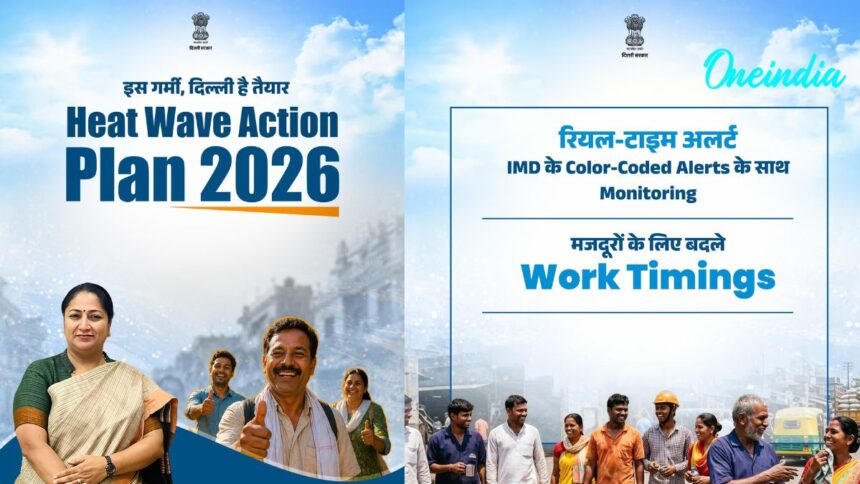
As temperatures continue to rise across the capital, Delhi Chief Minister Rekha Gupta has reviewed the city’s readiness under the Heat Wave Action Plan 2026. The government has directed all departments to ensure that safety measures are not just planned but clearly visible on the ground and implemented on time.

Delhi Chief Minister Rekha Gupta reviewed the city’s Heat Wave Action Plan 2026, focusing on strengthened health services, 330 specialized ambulances, over 13,000 cooling points, and public awareness campaigns to combat rising temperatures.
The move comes as Delhi faces intense summer conditions, with authorities aiming to reduce health risks and protect vulnerable groups.
Focus on Health Infrastructure and Emergency Response
A major part of the plan focuses on strengthening healthcare facilities. Hospitals have been instructed to maintain adequate bed capacity to handle heat-related illnesses. Special “cool rooms” have been prepared in several hospitals to provide immediate relief to patients suffering from heat exhaustion or heatstroke.
भीषण गर्मी और Heatwave की चुनौती को देखते हुए, दिल्ली सरकार द्वारा Heat Wave Action Plan 2026 को जमीनी स्तर पर तेजी से लागू किया जा रहा है।
339+ हेल्थ सेंटर्स पर जरूरी दवाइयों और मेडिकल सप्लाइज की व्यवस्था की गई है। 30+ अस्पतालों में ‘कूल रूम’ तैयार किए गए हैं। 330 एम्बुलेंस… pic.twitter.com/lVmnepQioY
— Rekha Gupta (@gupta_rekha) April 26, 2026“>
Ambulance services have also been upgraded, with 330 ambulances deployed for round-the-clock service. These ambulances are now equipped with heatwave treatment facilities, and medical staff have been specially trained to deal with emergencies caused by extreme heat.
Additionally, essential medicines and medical supplies have been stocked at more than 339 health centres across the city to ensure quick treatment.
Public Awareness and Safety Measures
The government has placed strong emphasis on spreading awareness among citizens. Campaigns are being launched to educate people about the dangers of heatwaves and ways to stay safe.
The Chief Minister has urged residents to stay hydrated, avoid direct sunlight during peak hours, and take care of their families and communities during this period.
Water and Cooling Facilities Across the City
To tackle dehydration and provide relief, the government is expanding access to clean drinking water. Water ATMs, over 1,900 water coolers, and more than 11,000 cooling points are being installed across Delhi.
Clean drinking water is being ensured at key public locations such as hospitals, schools, construction sites, Atal canteens, police stations, post offices, and DTC bus stands.
Authorities have also been directed to keep water tankers running without interruption to meet increased demand during peak summer days.
Special Arrangements in Schools and Workplaces
Schools in Delhi have introduced the “Water Bell System,” which reminds students to drink water at regular intervals. This step is aimed at preventing dehydration among children.
In addition, work timings in certain sectors have been adjusted to reduce exposure to extreme heat, especially for outdoor workers.
ORS (Oral Rehydration Solution) is also being made available at multiple locations to help people maintain hydration levels.
Care for Animals and Birds
The Heat Wave Action Plan also includes measures for the welfare of animals and birds. Authorities have been instructed to ensure proper shade and availability of drinking water for them across the city.
This reflects a broader approach to managing the impact of extreme heat on all living beings.
A Coordinated Effort to Beat the Heat
The Delhi government’s Heat Wave Action Plan 2026 highlights a coordinated and proactive approach to dealing with extreme weather. By focusing on healthcare, water access, awareness, and infrastructure, the administration aims to minimise the impact of rising temperatures.
With heatwave conditions expected to continue, authorities are urging citizens to follow safety guidelines and remain cautious in the coming days.