


India
oi-Swastika Sruti

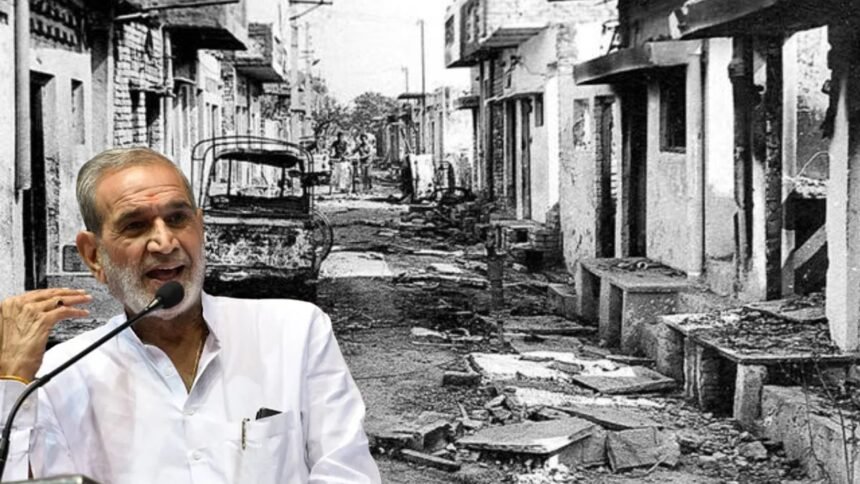
Former Congress Member of Parliament (MP), Sajjan Kumar was always associated with the 1984 anti-Sikh riots. These riots broke out in Delhi following the murder of Prime Minister Indira Gandhi on October 31, 1984. Thousands of Sikhs were killed in these riots across India, with some of the worst incidents occurring in Delhi.

Former MP Sajjan Kumar received life imprisonment after being convicted in December 2018 by the Delhi High Court for conspiracy and murder linked to the 1984 anti-Sikh riots, and again in February 2025 for another related case.
Sajjan Kumar had faced several cases related to the violence of those days. Some cases ended in acquittals while others resulted in convictions. However, the most important judgement related to him was passed in December 2018, where the Delhi High Court convicted him in a case related to the killings of five members of a Sikh family.
What Was Sajjan Kumar Accused Of?
2018’s case was about the violence carried out in the Delhi Cantonment area after the assassination of Indira Gandhi. There were five Sikh members of a family who were killed, and the gurdwara was burned down too.
The prosecution’s claim was that Kumar had taken part in organizing and instigating the mob. Witnesses gave testimonies in which they claimed that he addressed the mob and incited violence against the Sikhs.
In this case, the Delhi High Court was hearing the appeal by the CBI against the acquittal of Kumar in the trial court.
Why Did The Delhi High Court Convict Him?
Kumar was acquitted by the trial court in the year 2013, along with the conviction of a few others in the same case. An appeal by the CBI was initiated against the acquittal order of Kumar in the High Court of Delhi.
In the judgment delivered by the High Court on December 17, 2018, Kumar was found guilty of criminal conspiracy, abetment, and offenses involving murder, arson, and incitement to enmity, among other things. He was awarded life imprisonment.
In this case, special emphasis was given by the court on the statements of witnesses regarding the presence and involvement of Kumar in directing the mob.
The judgment also criticised the manner in which the 1984 cases had been handled over the years and described the mass violence against Sikhs as “crimes against humanity.”
Allegations Of Political Influence
The case further posed queries regarding the investigations done on the violence of 1984.
There were several pending cases at the time. The Special Investigation Team set up in 2015 had been charged with re-investigating such serious cases that had been closed previously. The court records in Delhi High Court point out that previous investigations in certain cases with Kumar had already been closed as “untraced.”
In the proceedings of 2018, the CBI contended that the previous investigation had been tampered with and that political influence had played its role.
Kumar Maintained His Innocence
Kumar continued to deny all the allegations made against him. While facing trials for other cases related to the 1984 riots, Kumar claimed that he was not even present at the locations where the crime took place and further stated that there was no evidence against him.
Additionally, his legal record comprised mixed verdicts in individual cases. In January 2026, a court in Delhi exonerated him of any charges of instigating a violent mob in the regions of Janakpuri and Vikaspuri.
Another Life Sentence In 2025
Kumar was later convicted in another case arising from the 1984 violence.
In February 2025, a Delhi court convicted him in connection with the deaths of Jaswant Singh and his son Tarundeep Singh during the riots. The court subsequently sentenced him to life imprisonment.
This conviction meant Kumar continued to remain in Tihar Jail even though he had secured relief in another riot-related case.
Sajjan Kumar’s Legacy In The 1984 Riots Cases
Sajjan Kumar’s role in the 1984 riots remains one of the most prominent examples of how criminal cases arising from the violence continued through the courts for decades.
His 2018 conviction was particularly significant because it overturned an earlier acquittal and held him criminally responsible for conspiracy and abetment in the killing of five Sikh family members.
At the same time, the different verdicts in separate cases show why each case has to be considered on its own evidence. Kumar’s conviction in the 2018 case and his later conviction in 2025 were judicial findings in specific cases, while he was acquitted in other proceedings.