


India
oi-Ashish Rana

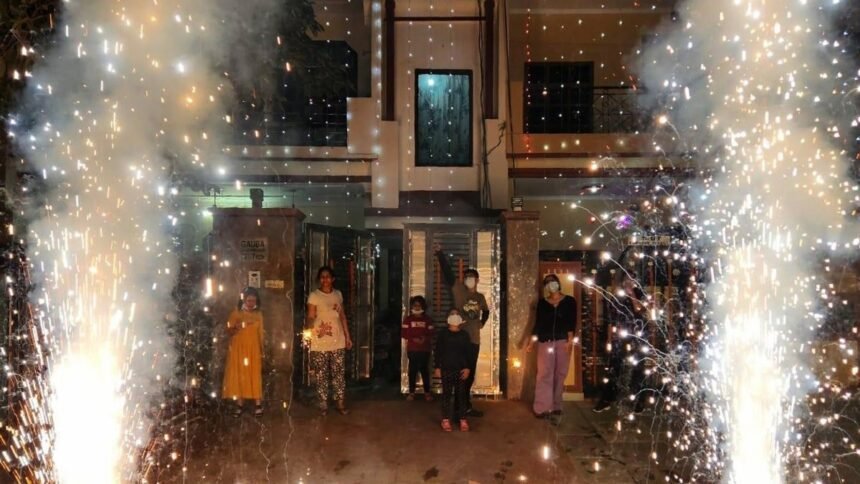
The Supreme Court on Monday, 12 October questioned the religious significance of bursting firecrackers as it examined ways to control air pollution in Delhi-NCR ahead of Diwali. The court said it was not inclined to impose a complete ban and called on people to choose safer ways to celebrate the festival.

Ahead of Diwali, the Supreme Court questioned the religious significance of firecrackers, urging safer celebration methods for Delhi-NCR’s air pollution control instead of a complete ban. The court, including CJI Surya Kant, also discussed stubble burning and solid waste management, with the next hearing on October 15.
SC Questions Firecrackers In The Name Of Religion
The issue came up before a bench of Chief Justice of India Surya Kant, Justice Joymalya Bagchi and Justice V Mohana during a hearing on air pollution. The court is also examining stubble burning and solid waste management.
Justice Bagchi raised questions about the connection between firecrackers and religious practices after the amicus curiae highlighted their health risks.
“What is religious about bursting of crackers?” Justice Bagchi asked.
The amicus curiae said air pollution caused by firecrackers could make children sick and affect vulnerable people. “Gods would be aghast if they knew that children were suffering and getting sick in their name,” he said.
CJI Urges People To Choose Safer Celebrations
Chief Justice Surya Kant said the court wanted people to protect their religious sentiments while also taking responsibility for public health.
“We will not hurt religious sentiments, but at the same time, people should themselves come forward and opt for safer practices,” he said.
The CJI also questioned the practicality of restrictions that were difficult to enforce. The amicus curiae pointed out that police officers could not remain present on every street to ensure people followed the rules.
The court suggested creating awareness about harmful firecrackers, limiting the sale of highly polluting varieties and encouraging less harmful alternatives. It also called for promoting sparklers and traditional lamps.
SC Examines Steps To Stop Stubble Burning
The bench also discussed ways to prevent stubble burning before the winter pollution season. Justice Bagchi referred to proposals to buy crop residue and explore its commercial use.
CJI Surya Kant said crop residue could provide additional income to farmers if proper markets were developed.
Additional Solicitor General Aishwarya Bhati told the court that the Centre had policies for in-situ and ex-situ treatment of crop residue. She said the government would submit a detailed affidavit explaining the steps already taken, preventive measures and future plans.
The Supreme Court will hear the air pollution case next on 15 October.