


By using this site, you agree to the Privacy Policy and Terms of Use.
Accept
Next India Magazine
  • Home
    • Home 2
    • Home 3Hot
    • Home 4
    • Home 5New
  • Home
  • Opinion

    That Provide Critical Analysis on Political Decision-Making

    krutikadalvibiz@gmail.com

    Analyzing Global Dynamics and Unraveling Key Policy Initiatives

    krutikadalvibiz@gmail.com

    Luxurious Stays Redefining Hospitality at Hotel Havens

    krutikadalvibiz@gmail.com

    Electric Cars Subsidies by German Taxpayers End Up on Foreign Roads

    krutikadalvibiz@gmail.com

    Challenge and Inspire Future of Political Thought

    krutikadalvibiz@gmail.com

    Assessing the Diplomatic Challenges and Global Security

    krutikadalvibiz@gmail.com
  • World
  • Politics
  • Market
  • Health
  • Insurance
  • Pages
    • Blog Index
    • Contact US
    • Search Page
    • 404 Page
    • Technology
    • World
  • Pages
    • Blog Index
    • Search Page
    • 404 Page
  • Technology
    TechnologyShow More
    Ramya Sudha Vinukonda: A Biology Teacher Turning Government School Classrooms into Spaces of Possibility
    6 Min Read
    Dr. Nishant Sawant: The Mind Behind Secure Digital Progress
    4 Min Read
    NASA’s Artemis II Mission Rekindles Humanity’s Dream of Deep Space Exploration
    5 Min Read
    Buying a Car Will Soon be Like Buying a Phone, Why Your Next Car Could be an EV
    Hands-On With the iPhone 13, Pro, Max, and Mini
    4 Min Read
  • Posts
    • Post Layouts
      • Standard 1
      • Standard 2
      • Standard 3
      • Standard 4
      • Standard 5
      • Standard 6
      • Standard 7
      • No Featured
    • Gallery Layouts
      • Layout 1
      • Layout 2
      • layout 3
    • Video Layouts
      • Layout 1
      • Layout 2
      • Layout 3
      • Layout 4
    • Audio Layouts
      • Layout 1
      • Layout 2
    • Post Sidebar
      • Right Sidebar
      • Left Sidebar
    • Review
      • Stars
      • Scores
      • User Rating
    • Content Features
      • Highlight Shares
      • Inline Mailchimp
      • Print Post
      • Inline Related
      • Source/Via Tag
      • Reading Indicator
      • Content Size Resizer
    • Table of Contents
      • Full Width
      • Left Side
    • Sponsored Post
  • Contact
  • Pages
    • Search Page
    • 404 Page
Reading: What is the 14th Amendment? The 158-year-old US law behind Trump’s birthright case
SUBSCRIBE
Next India MagazineNext India Magazine
Font ResizerAa
  • My Saves
  • Economics
  • Technology
  • My Interests
  • World
  • My Feed
  • History
  • Business
  • Technology
  • Lifestyle
  • Fashion
  • Health
  • Technology
  • World
Search
  • Pages
    • Blog Index
    • Contact Us
    • Search Page
    • 404 Page
  • Home
    • Home 1
    • Home 2
    • Home 3
    • Home 4
    • Home 5
  • Home
  • Blog
  • Categories
    • Technology
    • Lifestyle
  • Personalized
    • My Feed
    • My Saves
    • My Interests
    • History
  • Demos
  • Categories
    • Technology
    • Business
    • Fashion
    • Economics
  • Bookmarks
  • Categories
    • Technology
    • Health
    • World
  • More Foxiz
    • Blog Index
    • Sitemap
  • Bookmarks
  • Contact
  • More Foxiz
    • Sitemap
Have an existing account? Sign In
Follow US
  • Home
  • World
  • Contact
  • Blog
© Foxiz News Network. Ruby Design Company. All Rights Reserved.
BusinessLifestyleStartup

What is the 14th Amendment? The 158-year-old US law behind Trump’s birthright case

India Times Now
Last updated: June 30, 2026 7:51 pm
India Times Now
4 Min Read
Share
SHARE

The US Supreme Court has struck down President Donald Trump‘s executive order aimed at limiting birthright citizenship, ruling that it violates the US Constitution’s 14th Amendment. In a 6-3 decision, the court held that Trump’s January 20, 2025, executive order was unlawful, according to NBC News.

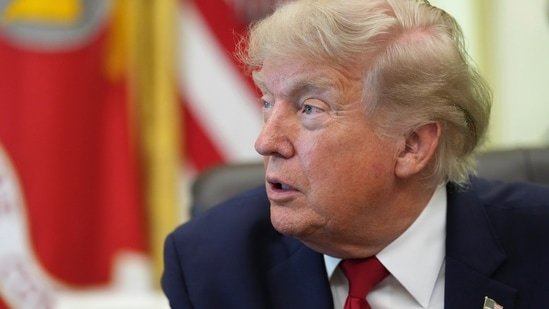
President Donald Trump speaks in the Oval Office of the White House, (AP Photo/Jacquelyn Martin)

Five justices concluded that the order conflicted with the Constitution’s long-standing interpretation of birthright citizenship, while Justice Brett Kavanaugh said it violated federal law, though not necessarily the Constitution.

The executive order sought to deny automatic US citizenship to children born in the country unless at least one parent was a US citizen or lawful permanent resident.

The policy never took effect after lower courts blocked it soon after it was signed.

Writing for the majority, Chief Justice John Roberts rejected the administration’s interpretation, saying there was “scant evidence” to support it. “Citizenship then and now, was the right to have rights; to freely participate in our political community,” Roberts wrote. “We keep that promise today.”

Also Read: Ketanji Brown Jackson vs Clarence Thomas: SC justices clash on birthright citizenship and Dred Scott implications

What is the 14th Amendment?

The 14th Amendment is one of the most significant amendments to the US Constitution. Ratified in 1868 following the American Civil War, it was designed to guarantee citizenship and equal legal protections to formerly enslaved people born in the United States, according to the BBC.

Its Citizenship Clause states:

“All persons born or naturalized in the United States, and subject to the jurisdiction thereof, are citizens of the United States and of the state wherein they reside.”

The provision forms the legal basis for birthright citizenship, also known as jus soli (“right of the soil”), under which almost every person born on US soil automatically becomes a US citizen, regardless of their parents’ immigration status.

Also Read: Is Justice Samuel Alito retiring? NPR’s retraction fiasco explained amid birthright citizenship ruling

The only widely recognized exceptions include children born to foreign diplomats.

The amendment’s interpretation was cemented in the landmark 1898 Supreme Court case United States v. Wong Kim Ark, which held that a man born in San Francisco to Chinese immigrant parents was a US citizen under the 14th Amendment.

Why did Trump challenge the amendment?

According to the BBC, the Trump administration argued that the phrase “subject to the jurisdiction thereof” should not apply to children born to undocumented immigrants or to parents who were in the US temporarily on visas.

Civil rights groups, including the American Civil Liberties Union (ACLU), challenged the executive order, arguing that the Constitution guarantees citizenship based on birth in the United States, not on a parent’s immigration status.

The ACLU also warned that ending birthright citizenship would create “a permanent subclass of people born in the United States.”

Following the ruling, Trump called on Congress to pass legislation reflecting his proposal, while the ACLU welcomed the decision as a reaffirmation of a long-standing constitutional guarantee.


Share This Article
Facebook Email Copy Link Print
Previous Article Norway Vs Cote D’Ivoire: Haaland’s Late Winner Sends Norway To FIFA 2026 World Cup Round Of 16
Next Article US Treasury sanctions and bank alert target Jalisco New Generation Cartel fuel smuggling
Leave a Comment Leave a Comment

Leave a Reply Cancel reply

Your email address will not be published. Required fields are marked *

You Might Also Like

BusinessLifestyleStartup

Muslim population in India may match Indonesia after Census, says Kiren Rijiju

Union minister Kiren Rijiju on Saturday said that the Muslim…

3 Min Read
BusinessLifestyleStartup

Concern for Gurugram: Sector 22 locals flag roads, garbage, stray cattle woes

Residents of Sector 22, a well-connected residential locality in Gurugram,…

6 Min Read
BusinessLifestyleStartup

Panchang Today, August 24, 2026: Shukla Dwadashi under Purva Ashadha Nakshatra, auspicious and inauspicious timings

For August 24, 2026, traditional Panchang guidance suggests a day…

6 Min Read
BusinessLifestyleStartup

Colonial-era New Delhi club ordered to move, sparking debate on India’s elites

* Authorities order the Delhi Gymkhana Club to leave prime…

4 Min Read
Next India MagazineNext India Magazine
Follow US
© 2026 Next India Magazine powered by India Times Now. All Rights Reserved.
Welcome Back!

Sign in to your account

Username or Email Address
Password

Lost your password?