



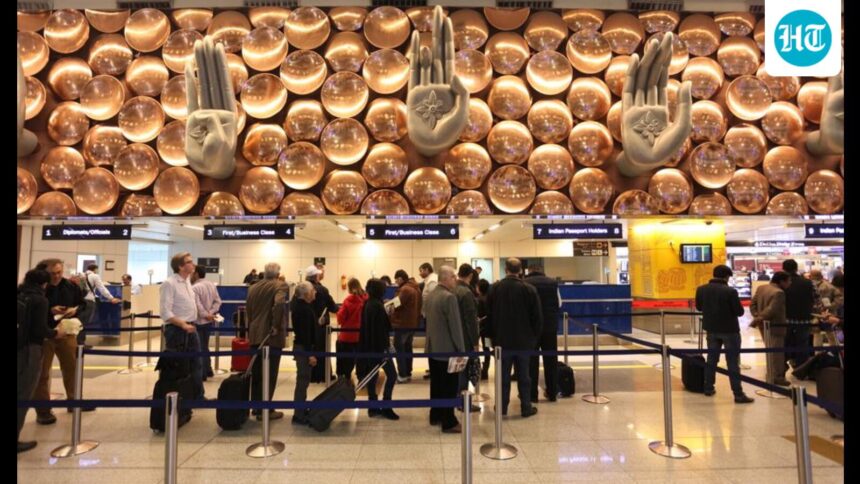
India has introduced a mandatory health declaration for all international air passengers as part of its response to the current outbreak of Bundibugyo Ebola in parts of Africa. The form asks travellers to fill out personal details, seat numbers, symptoms, recent travel, and possible exposures. Although it appears to be a sensible precaution, whether it will meaningfully reduce the risk of a patient with Ebola entering India is unclear.
Traveller questionnaires have long been part of the public health response in India to emerging infectious diseases but their effectiveness depends on whether the information provided is accurate. At Indian airports, immigration officials collect forms with little opportunity to verify answers. Travellers forget details, misunderstand questions, or simply choose not to disclose information that they think could delay their journey. The current form is also lengthy and cumbersome, increasing the likelihood of incomplete or unreliable responses.
Even accurate information is useful only if it is digitised, linked to reliable contact details, and integrated into a surveillance system capable of tracing travellers in the even that a case is later identified. It is unclear whether the current system is able to do this.
The further question is whether the disease itself can realistically be detected at the border. Ebola cannot. The current concern is Bundibugyo ebolavirus, responsible for outbreaks in Uganda and the Democratic Republic of the Congo. The Bundibugyo strain has a 21 day incubation period before symptoms show up during the disease is not contagious. The challenge is to identify the rare, infected traveller before they transmit the disease further.
Finding that traveller is like finding a needle in the proverbial haystack. India receives about 55 million international passenger arrivals each year. Only a tiny fraction, almost certainly well below one in 1,000, originate in the countries currently experiencing Ebola transmission, even after accounting for passengers connecting through hubs such as Addis Ababa, Nairobi, Dubai, or Doha. Yet, every international passenger is required to complete the same declaration. A question worth asking is whether tens of millions of travellers each year should be made to complete forms with uncertain public health value, or could the same resources and attention provide greater protection elsewhere?
Studies of SARS, pandemic influenza, Ebola, and COVID-19 have found that entry screening is able to identify only a minority of infected travellers, even when questionnaires are completed accurately, and the information is digitised. For diseases with long incubation periods such as Ebola, most infected travellers have not yet developed symptoms when they land. A landmark study on Ebola during the previous 2014 outbreak found that screening is only able to identify travellers who are already ill, or who know they have been exposed and report it.
Temperature screening is perhaps better than forms, but also not reliable. Thermal scanners are imperfect, and fever can be temporarily reduced with common medications. More importantly, most infected travellers have no fever because they are still incubating the virus. During the 2014 Ebola epidemic, the United Kingdom introduced entry screening at Heathrow and Gatwick airports, but studies showed that even if every symptomatic traveller was prevented from boarding flights in West Africa, nearly nine out of ten infected passengers would have still entered the UK.
Public health is ultimately about prioritisation and making the best use of limited resources. The time spent by public health officials on processing low-risk declaration forms could be used for measures that are more likely to prevent an outbreak. The first step is to require emergency departments and major hospitals to routinely ask patients with unexplained fever about possible recent travel to affected regions, and have clear protocols for immediate isolation and testing when Ebola is suspected.
Second, referral laboratories in India’s major metropolitan areas should be equipped to diagnose Ebola within hours rather than days. This capacity would determine whether a suspected case is contained quickly, or allowed to spread while clinicians wait for confirmation. Simulation exercises could help check if clinical identification, test specimen transport, biosafety procedures, and reporting systems are functioning during normal times rather than being tested during emergencies.
Third, resources should be allocated to designated hospitals capable of safely managing high-consequence infectious outbreaks. After the SARS outbreak in 2003, Singapore invested in the National Centre for Infectious Diseases, a purpose-built facility with high-level isolation units, dedicated laboratory capacity, and the ability to expand rapidly during outbreaks. The facility is integrated with a national surveillance system and performs regular simulation exercises. Although India does not need to replicate this model in every city, the country does need designated hospitals in major cities to safely manage suspected outbreak patients. The experience of West Africa showed that health care facilities can amplify outbreaks when infection prevention systems are weak, but can stop them when they are prepared.
Border measures could also be more targeted. Rather than collecting declarations from every arriving passenger, public health authorities could focus follow-up on travelers with recent travel to outbreak areas. Active monitoring during the incubation period and rapid communication if symptoms develop would help focus on the small group that have meaningful risk.
The government understandably feels the pressure to demonstrate visible action during outbreaks, and perhaps airport forms reassure the public that something is being done although it comes at a significant cost of time and effort. But focusing on actions that can reasonably contain the outbreak, if it were to arrive at the borders, is better than choosing visibility that may have no effect.
Ramanan Laxminarayan is president, One Health Trust. The views expressed are personal
(This is a Hindustan Times digital exclusive)