


India
oi-Swastika Sruti

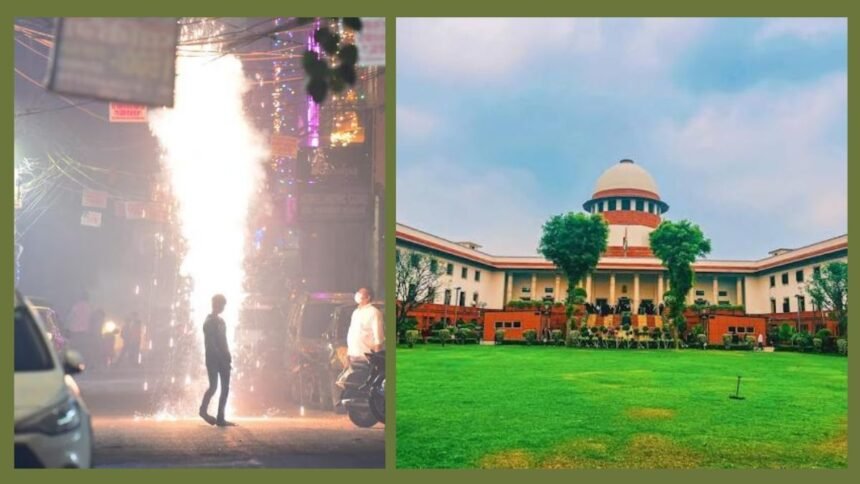
As Diwali is knocking the door and so is the poor air quality in the national capital and the National Capital Region (NCR), the Supreme Court on Thursday reviewed measures to control rising air pollution in Delhi NCR and asked the authorities to strengthen public awareness alongside enforcing existing rules. During the hearing, the court suggested involving popular personalities, including Indian cricketer Virat Kohli, in campaigns to encourage people to take pollution seriously.

The Supreme Court reviewed Delhi NCR pollution control, suggesting celebrity awareness campaigns like Virat Kohli, while the Delhi government outlined plans including restricting non-BS-VI vehicles and deploying 608 anti-smog guns, emphasizing strict enforcement of existing firecracker rules.
Representing the Delhi government, Additional Solicitor General Aishwarya Bhati told the court that the government was better prepared than in previous years to deal with the pollution season. She outlined steps including restrictions on vehicles that do not meet Bharat Stage VI (BS-VI) emission standards, changes to government office timings and the installation of anti-smog guns near construction sites.
The hearing also covered the use of firecrackers during Diwali. The Supreme Court said it was not in favour of a complete ban but stressed that existing regulations must be followed and enforced strictly to limit pollution.
Supreme Court Suggests Virat Kohli For Pollution Awareness Campaign
Amid the hearing, the Supreme Court inquired into the reasons for not approaching celebrities to spread awareness regarding air pollution in the region. In the similar connection, Supreme Court referred to Cricketer Virat Kohli as an example of a relevant celebrity whose presence could make a difference.
The Supreme Court noted that it is not possible to change behavior instantly. Campaigns would help the people learn about the harmful effects of pollution and take up the clean practices, but all of this would have to be done in conjunction with strict implementation of regulations.
The stress upon the participation of the people is made in the context of the coming period when air pollution in the region will increase. The pollution will be caused by emission of vehicles, dust from construction work, industries, and combustion.
The Supreme Court has also highlighted the need for securing the safety of vulnerable sections of society, i.e., children, elderly, and the disabled.
Delhi Government Says 608 Anti-Smog Guns Deployed
During the proceedings, Additional Solicitor General Aishwarya Bhati told the court that the Delhi government had stepped up preparations to tackle pollution.
According to the government’s submission, 608 anti-smog guns have been deployed across the capital. These machines spray fine droplets of water to help settle dust particles in the surrounding air. They are used particularly around construction sites and other areas where dust can contribute to pollution.
Bhati also informed the court that an annual pollution control plan and a dedicated control centre were in place to monitor and manage the situation. The government has also introduced the Vayu Rakshak initiative as part of its pollution-control efforts.
However, anti-smog guns are only one part of the response. Their effectiveness depends on factors such as weather conditions, the size of the affected area and the sources of pollution. Reducing emissions and controlling dust at its source remain important parts of a broader strategy.
Vehicles Not Meeting BS-VI Standards May Be Denied Entry
As stated by the government of Delhi in the Supreme Court of India, vehicles entering Delhi from other areas of India, failing to meet the BS-VI norms, would not be allowed into Delhi.
BS-VI norms are an anti-pollution norm for India, where the amount of pollution generated by the vehicle is restricted. Hence, banning vehicles that do not meet the required norm will help in reducing the emissions from the vehicles operating on the road.
In order to reduce traffic-related pollution, the government of Delhi has even introduced staggered hours of operation of offices. It is aimed at spreading out the time period during which people travel to their offices.
Vehicle emissions are one of the causes of pollution in Delhi-NCR.
Supreme Court Says No To Complete Firecracker Ban, Stresses Enforcement
The Supreme Court also discussed firecracker restrictions ahead of Diwali. The court indicated that it was not in favour of a complete ban, while emphasising that pollution-control rules must be implemented strictly.
The court acknowledged the cultural importance of Diwali and said the objective was not to hurt people’s sentiments. At the same time, it stressed the need to prevent celebrations from worsening air quality.
Authorities were directed to remain particularly vigilant during the two days surrounding Diwali and ensure compliance with the applicable regulations.
The issue remains significant because firecrackers can release particulate matter and other pollutants into the air. Their impact can be more serious when weather conditions prevent pollutants from dispersing.