


By using this site, you agree to the Privacy Policy and Terms of Use.
Accept
Next India Magazine
  • Home
    • Home 2
    • Home 3Hot
    • Home 4
    • Home 5New
  • Home
  • Opinion

    That Provide Critical Analysis on Political Decision-Making

    krutikadalvibiz@gmail.com

    Analyzing Global Dynamics and Unraveling Key Policy Initiatives

    krutikadalvibiz@gmail.com

    Luxurious Stays Redefining Hospitality at Hotel Havens

    krutikadalvibiz@gmail.com

    Electric Cars Subsidies by German Taxpayers End Up on Foreign Roads

    krutikadalvibiz@gmail.com

    Challenge and Inspire Future of Political Thought

    krutikadalvibiz@gmail.com

    Assessing the Diplomatic Challenges and Global Security

    krutikadalvibiz@gmail.com
  • World
  • Politics
  • Market
  • Health
  • Insurance
  • Pages
    • Blog Index
    • Contact US
    • Search Page
    • 404 Page
    • Technology
    • World
  • Pages
    • Blog Index
    • Search Page
    • 404 Page
  • Technology
    TechnologyShow More
    Ramya Sudha Vinukonda: A Biology Teacher Turning Government School Classrooms into Spaces of Possibility
    6 Min Read
    Dr. Nishant Sawant: The Mind Behind Secure Digital Progress
    4 Min Read
    NASA’s Artemis II Mission Rekindles Humanity’s Dream of Deep Space Exploration
    5 Min Read
    Buying a Car Will Soon be Like Buying a Phone, Why Your Next Car Could be an EV
    Hands-On With the iPhone 13, Pro, Max, and Mini
    4 Min Read
  • Posts
    • Post Layouts
      • Standard 1
      • Standard 2
      • Standard 3
      • Standard 4
      • Standard 5
      • Standard 6
      • Standard 7
      • No Featured
    • Gallery Layouts
      • Layout 1
      • Layout 2
      • layout 3
    • Video Layouts
      • Layout 1
      • Layout 2
      • Layout 3
      • Layout 4
    • Audio Layouts
      • Layout 1
      • Layout 2
    • Post Sidebar
      • Right Sidebar
      • Left Sidebar
    • Review
      • Stars
      • Scores
      • User Rating
    • Content Features
      • Highlight Shares
      • Inline Mailchimp
      • Print Post
      • Inline Related
      • Source/Via Tag
      • Reading Indicator
      • Content Size Resizer
    • Table of Contents
      • Full Width
      • Left Side
    • Sponsored Post
  • Contact
  • Pages
    • Search Page
    • 404 Page
Reading: Apprenticeship can help solve India’s jobs problem
SUBSCRIBE
Next India MagazineNext India Magazine
Font ResizerAa
  • My Saves
  • Economics
  • Technology
  • My Interests
  • World
  • My Feed
  • History
  • Business
  • Technology
  • Lifestyle
  • Fashion
  • Health
  • Technology
  • World
Search
  • Pages
    • Blog Index
    • Contact Us
    • Search Page
    • 404 Page
  • Home
    • Home 1
    • Home 2
    • Home 3
    • Home 4
    • Home 5
  • Home
  • Blog
  • Categories
    • Technology
    • Lifestyle
  • Personalized
    • My Feed
    • My Saves
    • My Interests
    • History
  • Demos
  • Categories
    • Technology
    • Business
    • Fashion
    • Economics
  • Bookmarks
  • Categories
    • Technology
    • Health
    • World
  • More Foxiz
    • Blog Index
    • Sitemap
  • Bookmarks
  • Contact
  • More Foxiz
    • Sitemap
Have an existing account? Sign In
Follow US
  • Home
  • World
  • Contact
  • Blog
© Foxiz News Network. Ruby Design Company. All Rights Reserved.
BusinessLifestyleStartup

Apprenticeship can help solve India’s jobs problem

India Times Now
Last updated: October 7, 2026 1:13 am
India Times Now
6 Min Read
Share
SHARE

The Periodic Labour Force Survey for 2025 reports an unemployment rate of 3.1% among people aged 15 years and above. The rate was 9.9% for those aged 15-29 years, 11.2% for graduates and 10% for people with postgraduate education or above. It also found that 5% of people aged 15-29 years had received formal vocational or technical training. The question to ask is: How can universities make the education-to-work journey seamless and more productive for students?
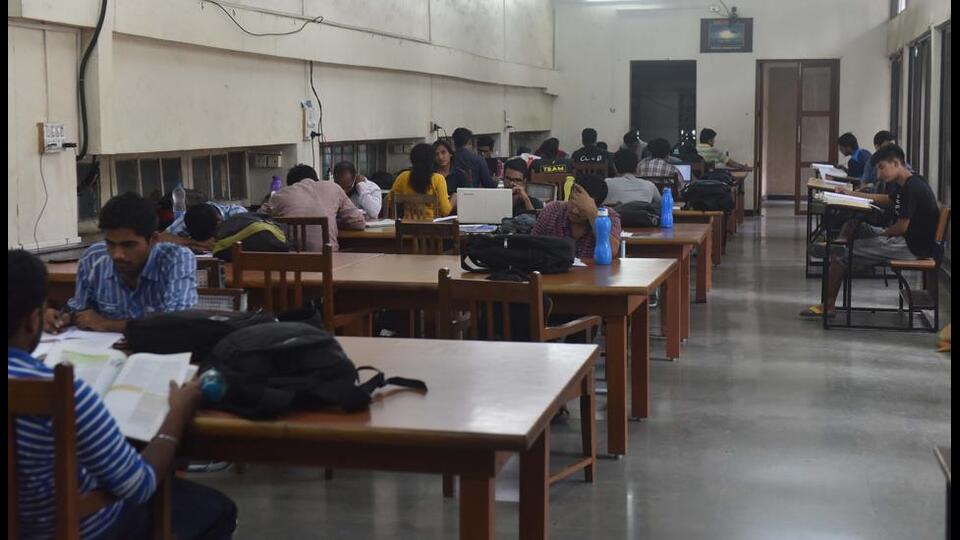
The All India Survey on Higher Education 2023-24 indicates that there are 45 million students in higher education. Undergraduate students form 76.8% of total enrolment with the arts accounting for 32.1%, Science for 13.5%, and Commerce for 12%. Students in these fields bring communication, analytical, social, scientific and commercial knowledge. An apprenticeship can help them apply that knowledge to real problems while preserving the breadth of their degree. (HT Archive)

A student may study economics in a district college while a nearby food-processing company looks for people who can manage data, accounts, or supply chains — both in the same town and yet far apart. How to create a practical bridge between them? Under the National Education Policy 2020, higher education has gained greater flexibility, and the University Grants Commission’s 2025 guidelines allow eligible institutions to offer an Apprenticeship Embedded Degree Programme (AEDP) in undergraduate disciplines. The immediate task is to turn this opportunity into dependable partnerships among colleges, universities and employers.

The UGC guidelines provide for curriculum co-design, workplace training, academic credit, and assessment shared by the institution and industry. At least one full semester, or up to three semesters, in a three-year UG programme may include apprenticeship training. The resulting degree is treated at par with a regular undergraduate degree for employment and further study. The All India Survey on Higher Education 2023-24 indicates that there are 45 million students in higher education. Undergraduate students form 76.8% of total enrolment. Among reported undergraduate programmes, Arts accounts for 32.1%, Science for 13.5%, and Commerce for 12%. Students in these fields bring communication, analytical, social, scientific and commercial knowledge. An apprenticeship can help them apply that knowledge to real problems while preserving the breadth of their degree.

What can influence employer participation to reach the scale India needs? A small or medium enterprise may have useful work and still need shared training support. A company may find that its production calendar does not fit a university semester. Managers may seek greater clarity about contracts, assessment, mentoring or safety duties. Firms may also consider whether a person trained by them will later join another employer.

Since businesses cannot sustain training efforts out of charity alone, their decision to partner with universities to train depends primarily on market dynamics, employee retention, and the return on the time invested.

Economic theory helps explain AEDP’s value to employers. Gary Becker’s theory of human capital says that education and training improve productive knowledge and skills. Michael Spence’s theory of job-market signalling adds another point. Employers often know little about a new graduate’s practical ability. So verified workplace experience gives them a clearer signal. The three economics Nobel winners in 2010, Peter Diamond, Dale Mortensen, and Christopher Pissarides, address the question: Why are so many people unemployed at even as there are a large number of job openings? Finding the right match takes information, time and coordination. AEDP addresses all three by linking classroom learning, observed performance and employer contact.

The Economic Survey 2025–26 reports a movement towards manufacturing and services in the employment pattern. At the same time, organised manufacturing employment grew by about 6% in 2023–24. A NITI Aayog study of services found that jobs tended to grow relatively strongly in computer and information services, health and financial services, with important roles for transport, trade and repair. This points to opportunities in digital services, health care, finance, logistics, retail and manufacturing.

Still, a fast-growing sector at the national level may have little presence in a particular district. State governments have a practical connecting role. Depending on the state, the higher education, skill development, labour and employment, industries and MSME departments could work with higher education councils, skill missions, universities, district industries centres, sector skill councils and regional apprenticeship boards. Groups of MSMEs could share trainers, laboratories and assessment support instead of each firm creating a full system. Universities could appoint industry experts as professors of practice. When the degree meets the workplace in this way, young people gain more than a degree. They gain a clearer path from what they learn to what they can contribute.

Mamidala Jagadesh Kumar is chairman, Review Committee for NEP 2020, ministry of education, and chairman, BoG, IIM Calcutta, and formerly vice-chancellor, JNU, and chairman, UGC. The views expressed are personal


Share This Article
Facebook Email Copy Link Print
Previous Article Zomato Supervisor Tells Bengaluru Workers ‘Learn Hindi Or Quit’, Sparks Kannada Outrage
Next Article Swirl Transit Hotel Opens At Navi Mumbai International Airport; Plans Guwahati Expansion
Leave a Comment Leave a Comment

Leave a Reply Cancel reply

Your email address will not be published. Required fields are marked *

You Might Also Like

BusinessLifestyleStartup

Hyderabad doctor debunks 10 common myths about heart attacks; highlights real concerns related to the condition

A heart attack, or myocardial infarction, is a medical condition…

6 Min Read
BusinessLifestyleStartup

Lock Upp’s Pamala Serena admits to betting on cricket matches using insider tips from cricketers: ‘Made a lot of money’

Every week on Lock Upp, a celebrity reveals a personal…

3 Min Read
BusinessLifestyleStartup

Delhi CM Rekha Gupta offers prayers at Gauri Shankar Temple to mark 75 years of Somnath reconstruction

Delhi Chief Minister Rekha Gupta on Monday offered prayers and…

2 Min Read
BusinessLifestyleStartup

Class 12 to Global MBA: Are Indian students planning early or just planning wrong?

In my years running a global business school, I have…

6 Min Read
Next India MagazineNext India Magazine
Follow US
© 2026 Next India Magazine powered by India Times Now. All Rights Reserved.
Welcome Back!

Sign in to your account

Username or Email Address
Password

Lost your password?