


India
oi-Prakash KL

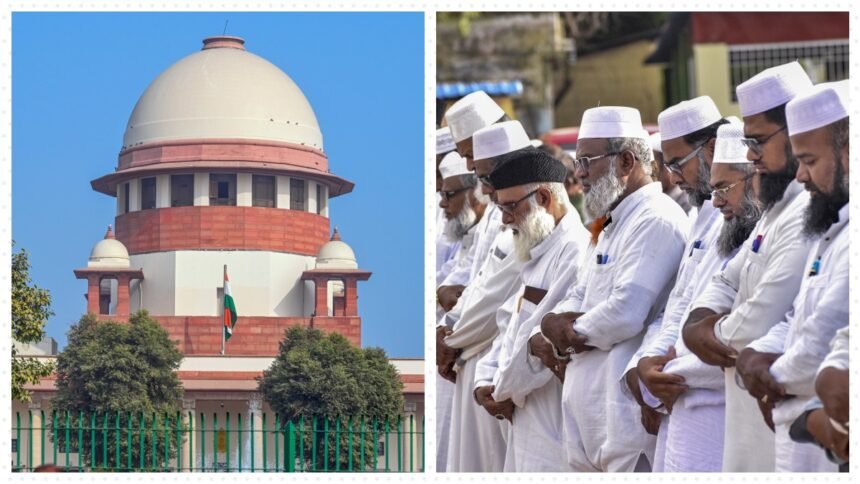
The Supreme Court has refused to allow reservation benefits to be carried over from a person’s earlier Hindu community status after they convert to Islam.
The ruling came on Thursday while hearing Tamil Nadu’s challenge against a Madras High Court order that struck down a 2024 government decision on reservation for converts.
The Supreme Court ruled converts to Islam cannot retain reservation benefits linked to their former Hindu community status, dismissing Tamil Nadu’s appeal against the Madras High Court’s cancellation of a 2024 government order allowing such claims.

The State had argued that people from socially and educationally backward communities should not lose their reservation benefits simply because they embraced Islam.
A bench of Justices PK Mishra and Shree Chandrashekhar held that a person who leaves the Hindu social order and converts to another religion cannot claim BC reservation only by relying on the backwardness associated with their earlier community.
“A person who converts from Hindu social order to a non-Hindu social order cannot claim affirmative action under article 16(4) of the Constitution merely on the basis of the social backwardness associated with his pre-conversion status,” ANI quoted the SC as saying while dismissing the State’s plea.
The bench further noted that the 1950 Constitution (Scheduled Castes) Order restricts Scheduled Caste status to persons professing Hinduism, Sikhism or Buddhism.
It added, “Backwardness suffered in the antecedent social order cannot by itself be carried forward so as to confer upon him the status of a backward class in the religion to which he has converted. By virtue of paragraph 3 of the Constitution (Scheduled Castes Order), a person who professes a religion other than Hinduism, Sikhism or Buddhism cannot be deemed to be a member of a Scheduled Caste.”
The dispute goes back to a Tamil Nadu government order issued on March 9, 2024. It allowed people belonging to certain BC, MBC, Denotified Communities and Scheduled Caste backgrounds to be considered as BC Muslims after converting to Islam.
The order covered seven recognised Muslim communities and allowed eligible converts to obtain community certificates under those categories.
The Madras High Court later cancelled the order, holding that it was contrary to earlier court rulings on the issue. Tamil Nadu then moved the Supreme Court, seeking to restore its decision.
Why did the issue reach court?
The case was triggered by Sameer Ahamed, who converted to Islam in 2015. After the conversion, he changed his name and married according to Islamic customs.
He later sought a community certificate identifying him as a Muslim Lebbai, one of the seven Muslim communities covered by the 2024 government order.
The Tehsildar rejected his application. Ahamed subsequently approached the Madras High Court, relying on the State government’s order. The case eventually led to the wider challenge against the government’s decision.
Tamil Nadu maintained that its intention was not to create a new reservation category, but to ensure that people who had already enjoyed reservation as members of backward communities were not suddenly deprived of those benefits because they had converted to Islam.
With inputs from ANI