International
oi-Gaurav Sharma

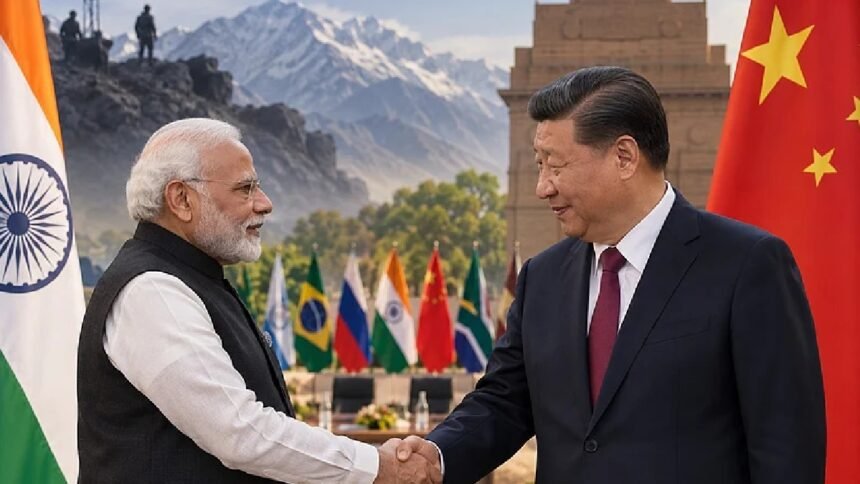
Chinese President Xi Jinping’s visit to India after a seven-year hiatus has placed India-China relations at the forefront of discussion at the BRICS summit. The visit, which is ostensibly centered on the multilateral meeting, is likely to see the state of relations between the two neighbors as a significant undercurrent to the summit talks.
The relationship, which has been under tremendous strain since the deadly 2020 clash in eastern Ladakh, has been the subject of prolonged military and diplomatic standoffs along the Line of Actual Control after the incident, which claimed the lives of 20 Indian soldiers and at least four Chinese personnel.
President Xi Jinping’s BRICS visit highlights strained India-China relations post-2020 Ladakh clash, despite disengagement efforts since 2024 and shared economic interests; overcoming mistrust is key to stabilizing ties and enhancing BRICS.

Efforts to de-escalate the situation and normalize relations have seen the two countries begin the process of disengaging forces from several friction points in 2024 after years of tense negotiations. Several measures have been taken to re-establish ties, including the resumption of direct air links, relaxation of visa restrictions and the return of the Kailash Mansarovar pilgrimage. However, the mistrust generated by the border crisis has yet to be overcome.
China’s rising economic and military power has also had an impact on the dynamics of the BRICS grouping. The grouping, which was initially a gathering of emerging economies, has undergone a significant transformation with Beijing promoting the expansion of the grouping to include more developing countries and enhancing its own influence in the organization.
For India, however, BRICS is not an anti-western alliance and New Delhi continues to pursue strategic and economic partnerships with the United States, Europe and other western countries while simultaneously seeking closer ties with countries in the Global South, as well as its Asian neighbors.
The current geopolitical climate has also seen a convergence of interests between India and China. US tariff policies have placed both countries under economic pressure, and instability in West Asia and high energy prices have threatened the economic stability of emerging economies.
This convergence of interests could pave the way for renewed dialogue between New Delhi and Beijing. However, economic cooperation and geopolitical concerns cannot replace strategic mistrust, and Xi’s visit may provide an opportunity to stabilize relations, but the larger test will be in whether India and China can consolidate the progress made since the border tensions and overcome their outstanding issues.
For BRICS, the outcome of the interactions between India and China is of significance as greater cooperation between the two Asian giants would enhance the grouping’s influence, while continued rivalry could diminish its impact as a unified voice for the developing world.