


The world’s longest written constitution may have taken 165 sittings across nearly three years to draft, but India’s founding document encountered its first controversy just six months after enactment, at the hands of a 35-year-old Brahmin woman from Tamil Nadu. Champakam Dorairajan earned a science degree from the University of Madras in 1934 but shelved her dream of studying medicine for want of money. When she revived it 15 years later, she found her path to medical college narrowed by a Madras government order that apportioned seats by caste population. Indignant before she had even applied, she petitioned the Madras High Court against the so-called communal order, alongside CR Srinivasan, another Brahmin engineering student. The ensuing case raised profound questions of equality for the infant republic and its promise of social justice. The high court struck down the order and the Supreme Court endorsed that verdict in 1951, holding that religion, race, and caste could not be grounds for admission. The ruling dealt a body blow to reservations, decided the case on a strict textual reading of fundamental rights, and established their primacy over directive principles.
Its caste-blind privileging of individual non-discrimination over State-led welfare produced a deadlock that eventually led to the first amendment to the Constitution, which, among other controversial provisions, added a clause protecting affirmative action. During the debate, law minister BR Ambedkar was a vocal critic of the verdict, arguing that the judges erred in treating caste and merit differently.
“Every Hindu has a caste — he is either a Brahmin or a Mahratta or a Kunby or a Kumbhar or a carpenter. There is no Hindu — that is the fundamental proposition — who has not a caste,” he said in Parliament.
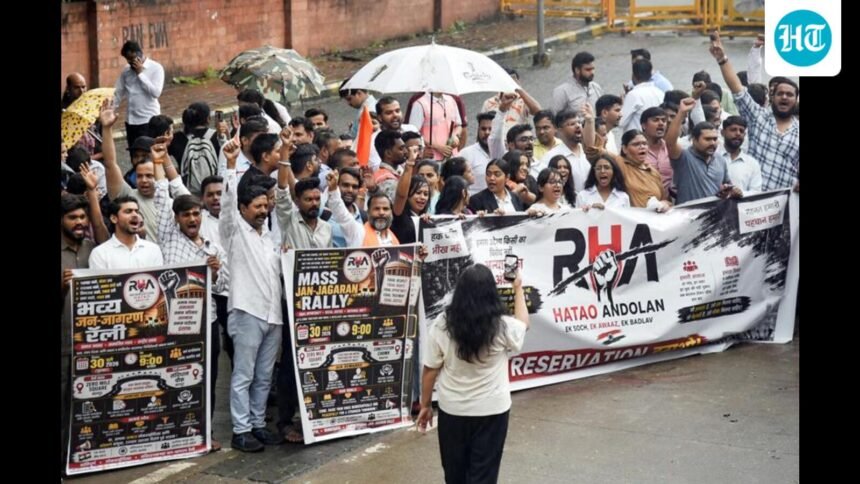
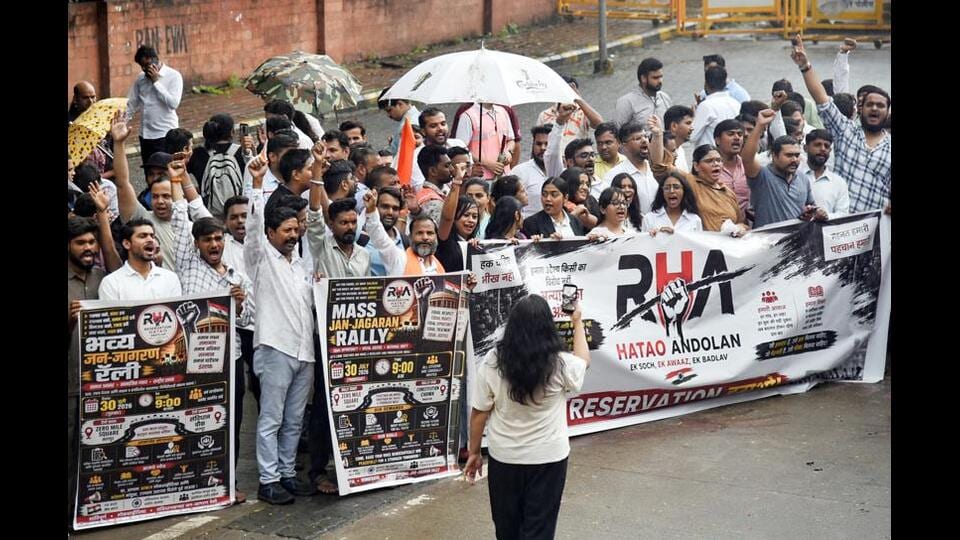
India may have transformed in the seven decades since, but feelings about reservation haven’t; if anything, the upward mobility and political empowerment of some marginalised castes have only calcified upper-caste resentment. From the spectacle of a medical student setting himself ablaze against the Mandal mandate to women students agitating on behalf of their imaginary unemployed husbands, upper-caste groups have conjured chasms between caste and merit for decades. Anti-reservation votaries don’t care that caste has mutated into more insidious but equally vicious forms — the accident of birth still governs access to classrooms and campuses, job-interview callbacks, love and loss, and even final resting places. Nor do they care that many of their own are now beneficiaries of reservation through the EWS route — effectively an upper-caste quota — which has attracted none of the stigma reserved for “quota students”. That dominant communities can now agitate for quotas after decades of violently opposing a leg up for the more marginalised is a reminder of this peculiar amnesia. It lets them attribute every connection, reference or opportunity to individual perseverance and merit rather than network effects and community mobility. As Harvard historian Ajantha Subramanian has demonstrated, this constructed intimacy between caste and merit births the assumption that identitarianism is principally a politics of the marginalised, allowing some to believe they have transcended caste.
This perverse discourse has made reservation, rather than caste, the byword for discrimination, and Dalits, rather than those who enjoy the perks of bias or actively discriminate, as its most visible marker. Electoral realities forced political parties to back reservation, but their historical ambivalence towards quotas shows in their dubious commitment to the transparent filling of reserved seats or improving the lives of marginalised students on campuses. What more damning indictment of this hollowed-out social justice is there than parties whose control remains with upper-caste politicians who rarely field Dalit candidates outside reserved constituencies — the consequence of social justice becoming an electoral totem rather than a nation-building project.
This miasma of ignorance, bias, and cynical politics has opened a gulf so wide that empathy is impossible; it is now entirely possible for an upper-caste Indian to never have Dalit friends or colleagues, fall in love with a Dalit person,share a house with one, or stand in grief at their funeral. Many upper-caste Indians feel quotas rob them of opportunities they consider theirs by right, depriving the nation of their talents. This makes reservation the culprit behind every national failing (poor air to global educational standing), instead of genuine structural shortcomings. It doesn’t matter that reservation is patchily implemented or that the public sector forms a shrinking share of employment today. Dalit communities, for their part, are aggrieved by the indifference to their daily indignities or that degrading jobs remain the preserve of their men and women, and correctly perceive the constant attack on their one ladder for social mobility as hostility to their emancipation.
Some of this disconnect is plainly visible after the suicide of an IIT-Bombay student. The precise circumstances remain under investigation, but that has not stopped unequivocal condemnation of quotas and the boy, or CCTV footage of the deceased minor being splashed across television with slanted commentary. With AI tools now ubiquitous in students’ hands, used to frame everything from emails to assignments, it is worth noting that caste bias can make the difference between a kind word and a harsh one, the discretion that affords an errant student a second chance or a lenient sentence, or the respect for due process that withholds judgment until the investigation concludes.
Caste stalks our campuses, and our leadership has done little to make education equitable. Countless testimonials from marginalised students point to visible and invisible bias, to the subterranean ways in which overt caste interrogation has evolved into subtler inquiries about rank, surname, family background or hostel allotment. On the other side of the divide stand professors and peers who believe some people don’t belong on their campuses. In the middle are academic and institutional authorities who refuse to bolster integration initiatives, mount sustained efforts to help those struggling, or even admit that non-functional diversity initiatives and government-mandated cells are symptoms of a larger malaise. Until we confront that original sin, callousness at the avoidable loss of a young Indian will remain the norm.
The views expressed are personal