


International
oi-Gaurav Sharma

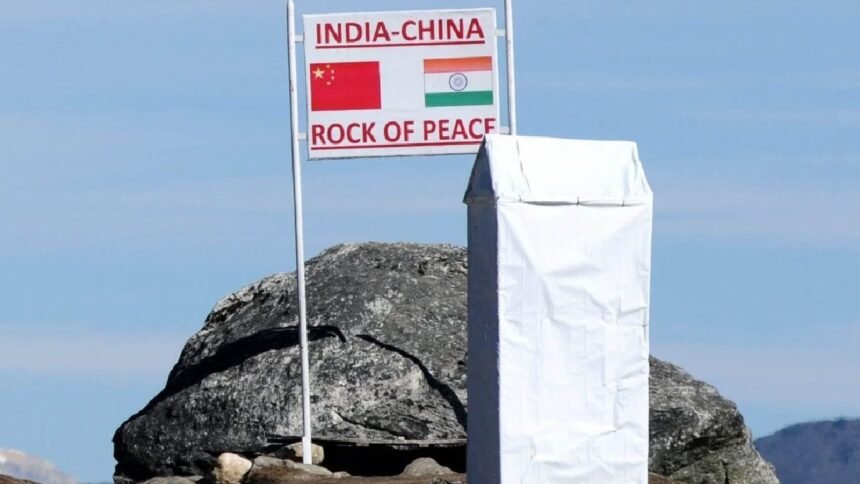
China has drawn down the size of its military deployment along India’s northern border but the fact does not imply that the military threat posed by the People’s Liberation Army (PLA) has receded, the Defence Ministry has said in its Annual Report 2025-26.
It noted that a significant cut has been made in the number of PLA formations deployed against India during the year 2025. Particularly, 10 combined-arms brigade level formations which were deployed along the Line of Actual Control (LAC) and the established military training areas have been reduced.
India’s Defence Ministry stated China reduced PLA formations deployed in 2025, but the military threat remains due to retained capabilities, even as border engagement improved following leader meetings and India developed infrastructure.
The ministry observed that the move only indicates a lowering of China’s military commitment but it warned against interpreting the cut in formations as the decrease in the number of troops deployed along the LAC because these formations were distributed across the area which includes border areas as well as military training areas.

While the number of troops deployed have gone down, China still has substantial military capability stationed in the vicinity of the border. The ministry said that the PLA possesses considerable missile systems, air defence systems including tanks apart from its troop strength.
This, it said, ruled out any diminishment in India’s military preparedness along the northern border. The report said that the LAC, which runs through the heart of China’s territory, is largely a “featureless” landscape of rolling plateaus ideal for the rapid movement of troops and military hardware.
Meanwhile, the political, diplomatic and military engagement between New Delhi and Beijing has led to an improvement in the situation at the border. The report mentioned that there has been continuous political, diplomatic and military interaction between India and China.
Prime Minister Narendra Modi and Chinese President Xi Jinping have three meetings in October 2024, while National Security Adviser Ajit Doval, India’s Special Representative on the boundary question, met Chinese Foreign Minister Wang Yi in Beijing in August 2026
In the meeting, both sides agreed to further intensify efforts to find a political solution to the boundary dispute with a view to looking at long-term interests of both countries.
India has been working on its capacity to operate in the difficult geographical conditions which exist in Ladakh as well as Arunachal Pradesh. The Border Roads Organisation has been constructing tunnels as well as other infrastructure to provide connectivity throughout the year as well as facilitate movement of troops, material and equipment.
Construction of the Mudh-Nyoma airfield in eastern Ladakh which is at a height of around 13,700 feet has given a fillip to India’s efforts at the border.
According to ministry’s assessment, while the situation may have eased out compared to the past few years, it does not indicate a diminishment of the strategic security challenge posed by China.
India continues to adopt a two track policy of staying prepared militarily along the LAC as well as engaging with the Chinese to resolve the larger boundary issue.