



India
oi-Oneindia Staff

Soap. Rinse. Again.
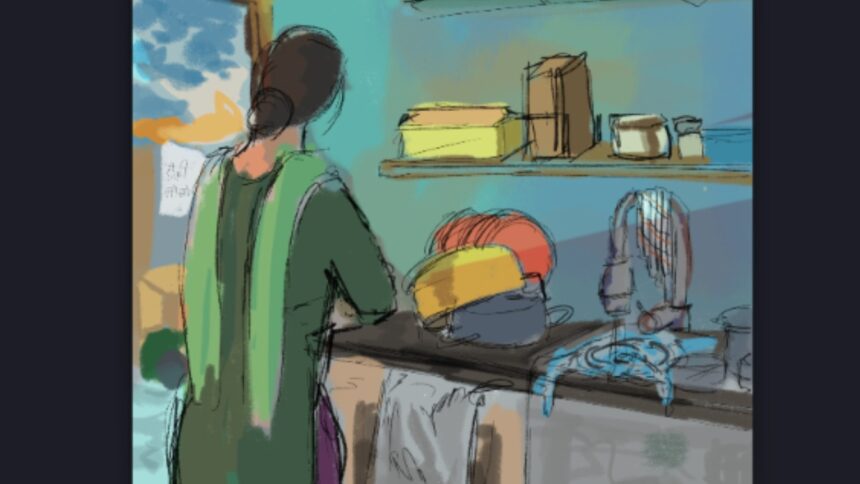
The tea cup wasn’t dirty. It was just the only thing in that small, dingy kitchen that would let her keep moving.
A mother faces repeated school rejections for her child Aaru, who has developmental differences, finding renewed determination after a moment of connection to advocate for her child’s right to education rather than beg for admission.
The broken exhaust fan had a crooked voice – a tired, uneven whine that never quite stopped. Outside the window, the world was loud in its own way: footsteps, scooters, somebody calling out to somebody else. She tried to keep her eyes on the cup.

But her mind kept returning to the same sentence, over and over – like it had been stamped on the inside of her skull:
Your child belongs in a special school.
Hope in. Rejection out. That had become the rhythm.
She couldn’t remember how many school gates they had walked up to – how many times she had straightened her dupatta at the entrance, fixed her voice, rehearsed her request in her head like a prayer she couldn’t afford to say wrong.
Every visit began with the same quiet courage.
And ended with the same polite refusal.
It wasn’t her first time begging. It probably wouldn’t be the last.
“Ma’am… my child is different, but she can learn quickly,” she would say, offering justification even though she shouldn’t have to.
“I have taught her the alphabet at home. She needs a teacher who can teach her with patience and kindness. Please take her in. I promise I will be here too. Give her a chance. She can have a bright future.”
She wasn’t lying.
Aaru was two when the silence around her became loud.
She didn’t turn around when her name was called. Words didn’t come. Walking took its time. The mother watched other children run toward their mothers, chatter, tug at sleeves, ask for snacks – and she tried not to compare, tried not to panic, tried not to make fear her only language.
For months she told the family, softly at first and then louder: something is different.
“Nothing is wrong with our child,” they said.
“Sometimes children overcome these things.”
When it became harder to deny, the story changed – and the blame found its target.
“You are not a good mother.”
“Your sins have cursed this child.”
“You should have another child. She will be a burden.”
Nobody asked what Aaru needed. Everyone had an opinion on what the mother had done.
The doctors gave Aaru a label – a condition with words the mother didn’t fully understand, but could feel in her bones. They spoke of therapies, routines, interventions, medication to manage moods.
Each word landed like a bill.
Money they didn’t have.
Time they couldn’t afford.
A future that suddenly felt like something they had to manage, not live.
Slowly, raising Aaru began to feel like a debt to be paid.
Ehsaan.
The kind of “duty” people praise from a distance – and then leave you alone with.
And yet – the mother kept noticing things no one else noticed.
How beautiful Aaru looked when she giggled – sudden light, like a window opening.
How she could be intensely present with small things: the ripple in water, the spin of a fan, the sound of a spoon against steel.
How she could be awed and scared by the same world, in the same minute.
Everyone saw the disability. No one saw the child.
The mother had dreamt of a different life – not because she needed perfection, but because she needed a map. A life that looked ordinary, and therefore safe. She had imagined her own daughter the same way: school, college, work, marriage – a future mapped with the ups and downs life promised everyone.
Then she looked at Aaru, and felt the terrifying blankness of a future she couldn’t picture.
That day was no different.
They had come back after yet another rejection.
She put water on the stove because there are things a house expects you to do even when your heart is heavy. She poured tea into two cups. Her husband sat with his shoulders tight – the kind of tightness that meant his patience was already spent.
Aaru began to cry from the corner of the room.
Not a small cry. A sharp, urgent one.
She wanted something – and she didn’t have the words for it. The sound filled the space between them, pressing into every corner of the kitchen.
Her husband tried first.
“Stop,” he said, as if volume could solve it. He reached out, then pulled back, irritated. Aaru’s crying rose.
And then the anger that had nowhere to go found the easiest place.
“She needs to go away.”
“This child is a curse. She belongs somewhere where they can handle her.”
The mother opened her mouth to respond – to defend, to explain, to beg again – but the words didn’t come fast enough.
His hand knocked the cup.
Hot tea splashed onto her cheek and neck.
The burn came first. Then the humiliation. Then the familiar taste of blame. He swore, shoved his chair back, and stormed out, leaving the door open.
She stood there, frozen – tea dripping, skin stinging – the room suddenly too quiet except for Aaru’s crying.
The mother sank to the floor, her back against the wall, and let the tears come – the tears she had been holding back for years.
For one ugly second, a thought crossed her that she hated herself for:
I can’t do this.
Not because she didn’t love her child.
But because she was exhausted from fighting a world that kept telling her there was no place for Aaru.
Then something small happened.
Aaru crawled closer and sat beside her, as if this was the most natural thing in the world. She picked up an empty glass from the floor and placed it into her mother’s hands – the way the mother did for her when she cried.
Then she took her mother’s hands and made them clap.
Clap, clap.
The way the mother did to soothe her.
It wasn’t a miracle. It wasn’t a cure.
It was a child remembering love in the only language she had.
The mother’s breath slowed. The sting on her skin was still there, but something inside her loosened – a knot softening by one thread.
She looked at Aaru and, for the first time that day, saw a world where only one thing mattered:
Am I safe with you?
In Aaru’s world, comfort didn’t need words.
Love was simple. Presence was everything.
Ehsaas.
The mother wiped her face with the edge of her dupatta. Her hands stopped trembling.
“If there is a God who thinks I am worthy of raising a child like this,” she thought, “then I will try to be worthy of her.”
She didn’t suddenly become fearless.
But she became clear.
She stood up slowly, holding Aaru’s hand, and picked up her phone. She opened her notes app and typed one line:
Tomorrow – one more school. One more conversation.
But this time, I won’t beg for permission. I will ask for her right.
Aaru leaned into her leg, calm now, as if she could feel the shift.
And in that quiet room – with the door still open to a world that didn’t understand them – the mother knew one thing for certain:
If the world didn’t have a place for Aaru – she would make one.
And without thinking, she turned back to the sink. The cup was still in her hand.
Soap. Rinse. Again.
(S. Varuni is a rehabilitation specialist at RAHII Delhi and a master trainer for the WHO Caregiver Skills Programme)