



India
oi-Swastika Sruti

The Union Cabinet has approved three major measures covering agriculture, renewable energy and Delhi’s traffic management system.

The Union Cabinet approved increased MSP for six Rabi crops for 2027-28, a Rs 1.86 lakh crore Green Energy Corridor Phase-III to strengthen renewable energy transmission, and a Rs 1,789.52 crore Intelligent Traffic Management System for Delhi.
The decisions include higher Minimum Support Prices (MSP) for all six mandated Rabi crops for the 2027-28 marketing season, a Rs 1.86 lakh crore Green Energy Corridor Phase-III, and a Rs 1,789.52 crore Intelligent Traffic Management System (ITMS) for Delhi.
Rabi MSP Increased For All Six Crops
The Cabinet Committee on Economic Affairs (CCEA) approved an increase in the MSP of all six mandated Rabi crops for the 2027-28 marketing season.
The highest increase has been announced for safflower, with its MSP rising by Rs 675 per quintal to Rs 7,215.
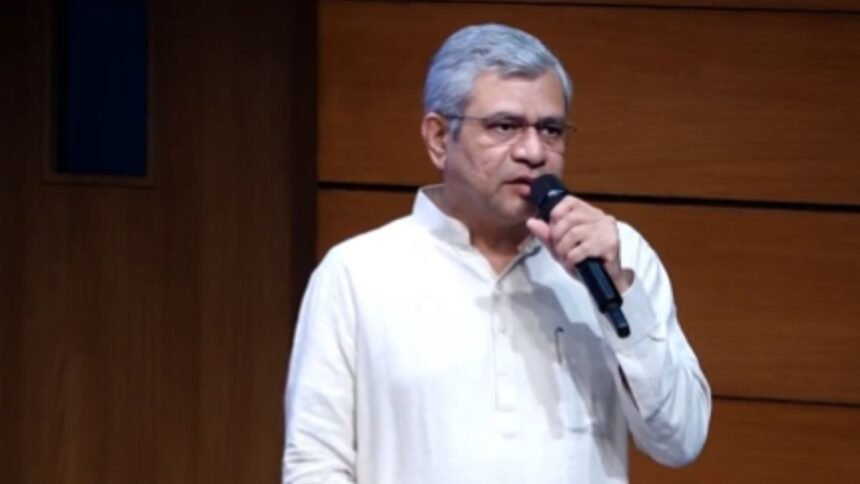
VIDEO | Delhi: Addressing a press conference on Cabinet decisions, Union Minister Ashwini Vaishnaw says, “Three major decisions were taken today, which will have a far-reaching impact across the country. The first decision is regarding the fixing of MSP for rabi crops. As you… pic.twitter.com/6jedAobYQV
— Press Trust of India (@PTI_News) September 30, 2026
| Crop | Increase | New MSP |
| Wheat | Rs 25 | Rs 2,610/quintal |
| Barley | Rs 136 | Rs 2,286/quintal |
| Gram | Rs 83 | Rs 5,958/quintal |
| Lentil | Rs 390 | Rs 7,390/quintal |
| Rapeseed & Mustard | Rs 413 | Rs 6,613/quintal |
| Sunflower | Rs 675 | Rs 7,215/quintal |
The government said the increase is intended to provide farmers with remunerative prices while encouraging crop diversification, particularly towards pulses and oilseeds.
According to the government, the MSPs continue to follow the policy of fixing the minimum support price at at least 1.5 times the all-India weighted average cost of production, a commitment announced in the 2018-19 Budget.
Safflower Gets Highest MSP Increase
Out of the six crops, the price of safflower has seen the maximum rise to Rs 675 per quintal.
According to the government, the margin over the cost of production is maximum for wheat and is 106%, whereas rapeseed and mustard, lentil, gram, barley and safflower follow respectively, which are 96%, 92%, 59%, 58% and 50%.
This higher support on pulses and oilseeds is another initiative of the government to shift farming from cereals.
Rs 1.86 Lakh Crore Green Energy Corridor-III Approved
This was followed by approval of the third phase of the Green Energy Corridor (GEC-III) project with an investment of Rs 1,86,405 crore.
This scheme shall be implemented for the strengthening of intra-state transmission system and it is estimated that this scheme will help in transporting 135 GW of renewable energy.
This project is estimated to be completed by FY 2032-33.
Out of the total investment of Rs 1,86,405 crore, about Rs 1,36,378 crore will be spent on strengthening the intra-state transmission system, whereas Rs 50,000 crore will be spent on deploying 50 GWh of BESS.
The Central Government shall provide financial assistance of Rs 54,082 crore.
Why Battery Storage Is Important
The big renewable energy resources such as the solar and wind are characterized by an intermittent production of electricity. Battery storage will allow solving this problem and storing the produced electricity for those times when less renewable energy is being produced.
According to the information from the government, this battery facility will help deal with problems like renewable energy intermittency, congestion in transmission and peak hour curtailment.
It will also help provide electricity in non-solar hours.
The greenfield transmission projects will be developed based on tariff-based competitive bidding, while the brownfield projects and those which involve upgrade of the already existing facilities will be carried out based on the cost-plus basis.
The government believes that GEC-III will allow integrating additional renewable energy in the electricity systems of states and achieve its objective of 900 GW of installed non-fossil fuel capacity by 2035.
This project will also allow creating jobs in the sectors of power transmission,
manufacturing, construction and energy storage.
Delhi To Get Rs 1,789 Crore Intelligent Traffic Management System
The third major decision concerns Delhi’s traffic system.
The Cabinet approved an Intelligent Traffic Management System worth Rs 1,789.52 crore for the national capital.
Union Minister Ashwini Vaishnaw described the system as adding a “brain” to Delhi’s traffic management, with technology being used to make better use of the city’s existing road infrastructure.
The project will cover 42 major traffic corridors and will be implemented in three phases over 24 months. This will be followed by five years of operation and maintenance.
AI And Real-Time Data To Control Traffic
The proposed system will use adaptive traffic signals that can change signal timings depending on traffic conditions.
Signals along major corridors will also be coordinated to improve traffic flow.
The system is expected to provide priority movement to ambulances and other emergency vehicles by creating green corridors when required.
Delhi currently has around 71 lakh active registered vehicles, according to the government. Vehicle numbers have been growing faster than the city’s road infrastructure, increasing pressure on existing roads.
The new system aims to reduce dependence on fixed signal timings and manual traffic management by using real-time information.
Automated Detection Of Traffic Violations
The ITMS will cover 1,092 adaptive traffic control locations and 1,029 enforcement locations.
Automated systems will be used to detect several traffic violations, including:
- Red-light violations
- Stop-line violations
- Overspeeding
- Wrong-side driving
- Illegal parking
- Riding without helmets
- Driving without seat belts
Traffic Command and Control Centres will bring traffic management, enforcement and information services onto a common platform.
The system will also include a dedicated Data Centre and Disaster Recovery infrastructure.
Commuters To Get Real-Time Traffic Information
The system is also expected to provide commuters with information about traffic congestion, diversions, parking availability and road conditions.
Variable message signs and digital platforms will be used to share this information. The government has also said that relevant traffic information may be shared with navigation service providers.
The project will be implemented by the Delhi Police through a Master System Integrator selected through competitive bidding. The Centre for Development of Advanced Computing (C-DAC) will provide technical support as the project management consultant.