


By using this site, you agree to the Privacy Policy and Terms of Use.
Accept
Next India Magazine
  • Home
    • Home 2
    • Home 3Hot
    • Home 4
    • Home 5New
  • Home
  • Opinion

    That Provide Critical Analysis on Political Decision-Making

    krutikadalvibiz@gmail.com

    Analyzing Global Dynamics and Unraveling Key Policy Initiatives

    krutikadalvibiz@gmail.com

    Luxurious Stays Redefining Hospitality at Hotel Havens

    krutikadalvibiz@gmail.com

    Electric Cars Subsidies by German Taxpayers End Up on Foreign Roads

    krutikadalvibiz@gmail.com

    Challenge and Inspire Future of Political Thought

    krutikadalvibiz@gmail.com

    Assessing the Diplomatic Challenges and Global Security

    krutikadalvibiz@gmail.com
  • World
  • Politics
  • Market
  • Health
  • Insurance
  • Pages
    • Blog Index
    • Contact US
    • Search Page
    • 404 Page
    • Technology
    • World
  • Pages
    • Blog Index
    • Search Page
    • 404 Page
  • Technology
    TechnologyShow More
    Dr. Nishant Sawant: The Mind Behind Secure Digital Progress
    4 Min Read
    NASA’s Artemis II Mission Rekindles Humanity’s Dream of Deep Space Exploration
    5 Min Read
    Buying a Car Will Soon be Like Buying a Phone, Why Your Next Car Could be an EV
    Hands-On With the iPhone 13, Pro, Max, and Mini
    4 Min Read
    Explained: What are Smart Glasses and How Do It Work?
    4 Min Read
  • Posts
    • Post Layouts
      • Standard 1
      • Standard 2
      • Standard 3
      • Standard 4
      • Standard 5
      • Standard 6
      • Standard 7
      • No Featured
    • Gallery Layouts
      • Layout 1
      • Layout 2
      • layout 3
    • Video Layouts
      • Layout 1
      • Layout 2
      • Layout 3
      • Layout 4
    • Audio Layouts
      • Layout 1
      • Layout 2
    • Post Sidebar
      • Right Sidebar
      • Left Sidebar
    • Review
      • Stars
      • Scores
      • User Rating
    • Content Features
      • Highlight Shares
      • Inline Mailchimp
      • Print Post
      • Inline Related
      • Source/Via Tag
      • Reading Indicator
      • Content Size Resizer
    • Table of Contents
      • Full Width
      • Left Side
    • Sponsored Post
  • Contact
  • Pages
    • Search Page
    • 404 Page
Reading: From eye-test to data-test: Cricket’s next evolution
SUBSCRIBE
Next India MagazineNext India Magazine
Font ResizerAa
  • My Saves
  • Economics
  • Technology
  • My Interests
  • World
  • My Feed
  • History
  • Business
  • Technology
  • Lifestyle
  • Fashion
  • Health
  • Technology
  • World
Search
  • Pages
    • Blog Index
    • Contact Us
    • Search Page
    • 404 Page
  • Home
    • Home 1
    • Home 2
    • Home 3
    • Home 4
    • Home 5
  • Home
  • Blog
  • Categories
    • Technology
    • Lifestyle
  • Personalized
    • My Feed
    • My Saves
    • My Interests
    • History
  • Demos
  • Categories
    • Technology
    • Business
    • Fashion
    • Economics
  • Bookmarks
  • Categories
    • Technology
    • Health
    • World
  • More Foxiz
    • Blog Index
    • Sitemap
  • Bookmarks
  • Contact
  • More Foxiz
    • Sitemap
Have an existing account? Sign In
Follow US
  • Home
  • World
  • Contact
  • Blog
© Foxiz News Network. Ruby Design Company. All Rights Reserved.
BusinessLifestyleStartup

From eye-test to data-test: Cricket’s next evolution

India Times Now
Last updated: August 2, 2026 2:39 pm
India Times Now
6 Min Read
Share
SHARE

Walk into any ground in India on a Sunday morning and you will see the same scene repeated a few hundred thousand times: a coach standing behind the nets, watching a young player bat or bowl, and forming a judgment in real time. That judgment–built on years of having seen thousands of players, hundreds of techniques, every kind of failure and breakthrough–is one of the most valuable assets in Indian cricket. No piece of software replicates it. But even the best-trained eye is still working from memory. And in a sport at India’s scale, memory alone is being asked to do a lot of heavy lifting.

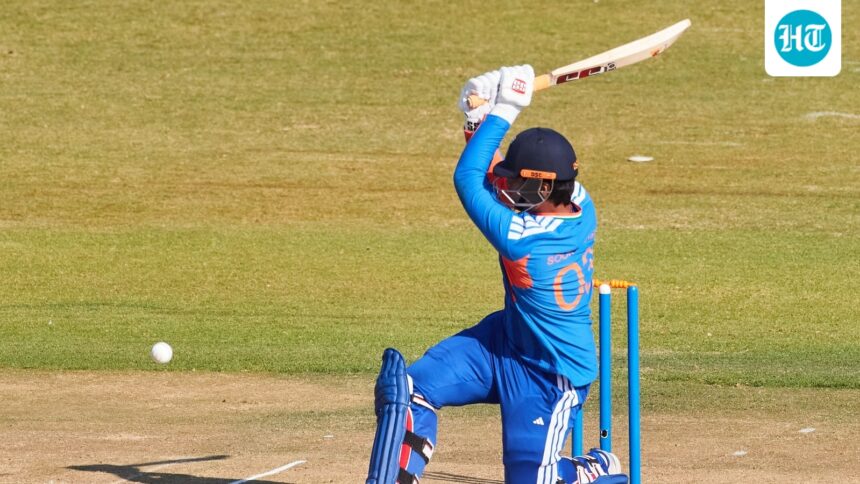
TOPSHOT - India's Vaibhav Sooryavanshi plays a shot during the first match in the One Day International cricket series played between Zimbabwe and India at Harare Sports Club on July 23, 2026 in Harare. (Photo by Jekesai NJIKIZANA / AFP) (AFP)
TOPSHOT – India’s Vaibhav Sooryavanshi plays a shot during the first match in the One Day International cricket series played between Zimbabwe and India at Harare Sports Club on July 23, 2026 in Harare. (Photo by Jekesai NJIKIZANA / AFP) (AFP)

India’s grassroots cricket ecosystem is enormous. In 2025 alone, over 1.23 crore players were recorded as active across the country, each having played at least one match that year, with nearly 48.7 lakh matches scored and tracked ball by ball. That is not a hobby. That is national infrastructure. A coach watching this much talent, across these many sessions, simply cannot retain every detail of every player’s technique over a season -not because they aren’t skilled, but because no human memory is built to hold that much information with precision. That’s not a coaching gap. It’s a bandwidth gap.

Formal coaching education in India, through structures like the National Cricket Academy, already trains coaches in biomechanics, skill periodisation, and talent identification frameworks. The expertise exists. What’s missing further down the pyramid isn’t skill, it’s support. A coach working with 50 players across a season is making the same calibre of judgment a top academy coach makes, just without footage to revisit, without a record of how a player looked three months ago, and without an easy way to compare one player’s action against thousands of others. The eye-test dominates not because coaches lack rigour, but because the tools to back up that rigour haven’t reached most of them yet.

Two experienced coaches watching the same young bowler can reach different conclusions about the same action–not because either is wrong, but because each is comparing the player to a different personal archive of players they’ve coached over the years. That’s the nature of expertise built on individual experience: It’s deep, but it’s personal. There’s currently no easy way for one coach’s years of pattern recognition to be checked against, or shared with, another’s. Giving coaches a common, measurable reference point doesn’t override their judgment–it gives every coach access to a far larger bank of comparison than any one career could build alone.

There’s also a structural gap worth naming: the difference between coaching a player and reviewing a player’s performance. Coaching happens in the moment, on the ground, often under time pressure. Performance review, the kind that should follow a season, a tournament, or even a single net session, rarely happens with the same depth. Without recorded, comparable data, review tends to default back to memory and impression, the same inputs that shaped the original coaching decision. The loop never breaks.

This is also, anecdotally, why young players in India so often carry the same technical flaw for years. A flaw that isn’t measured isn’t easy to track. A coach may flag it once, the player may feel like they’ve fixed it, and without footage or data to compare against, both move on -until the same error resurfaces in a bigger match, against better bowling, with higher stakes.

None of this requires abandoning the coach’s eye, it requires giving it company. When training and match performance can be captured, measured, and compared consistently across sessions, across players, across regions, coaching stops being a single person’s judgment call and starts becoming a shared, reviewable record. That shift matters most at exactly the points where Indian cricket loses talent today: In training feedback that doesn’t stick, in selection decisions made on incomplete information, and in regional players who never get assessed against a common yardstick.

The cricket academy industry globally is already moving in this direction, with rising investment in analytics-supported coaching and structured talent identification systems as part of its next growth phase. India, with by far the largest base of playing talent in the world, has the most to gain from making this shift -and arguably the most to lose by being late to it.

The eye-test got Indian cricket this far. The data-test is what takes it further.

(The views expressed are personal)

This article is authored by Amit Sharma, founder, Advanced Impactor.

Share This Article
Facebook Email Copy Link Print
Previous Article National Poetry Festival 2026 Deadline Extended to August 15; Classes 9-12 Students Can Apply
Next Article Veteran Mountaineer Nirmal Purja Found Dead After Broad Peak Avalanche in Gilgit-Baltistan
Leave a Comment Leave a Comment

Leave a Reply Cancel reply

Your email address will not be published. Required fields are marked *

You Might Also Like

BusinessLifestyleStartup

Sanjeev Kapoor demanded higher pay than Akshay Kumar for MasterChef India, walked away when producers refused

Celebrity chef Sanjeev Kapoor remains one of the biggest names…

3 Min Read
BusinessLifestyleStartup

Taylor Swift’s wedding dress and Travis Kelce’s attire: Full details and designers revealed

Taylor Swift officially married Travis Kelce today at Madison Square…

3 Min Read
BusinessLifestyleStartup

Mind if we drop in? Hot air balloon with 13 aboard makes emergency landing in California backyard

A balloon landed in a Southern California backyard — a…

3 Min Read
BusinessLifestyleStartup

Budget-Friendly Paneer And Soya Chunk Curry Recipe: High-Protein Vegetarian Meal For Fitness And Muscle Building

Protein-rich meals do not always require expensive ingredients. Budget friendly…

6 Min Read
Next India MagazineNext India Magazine
Follow US
© 2026 Next India Magazine powered by India Times Now. All Rights Reserved.
Welcome Back!

Sign in to your account

Username or Email Address
Password

Lost your password?